

Getting the Most Out of Your Business Directory Listing
TL;DR
A directory listing only works as hard as you make it. Here's exactly what to fill in, ask for, and update to turn a basic profile into a steady source of real customers.
Treat Your Profile Like a Landing Page, Not a Filing Cabinet Entry
For a lot of people who find you through a directory, that listing is the entire interaction before they decide to call, drive over, or scroll past you for the next result. Once you've gone through claiming your business listing, it isn't a formality you fill out once so your business technically exists online. It's doing the same job as a landing page, convincing a stranger, in about ten seconds, that you're the right business to contact right now.
That means the same rules that apply to a good landing page apply here. Say clearly what you do and where you do it. If you run a catering business out of Fresno that specializes in Hmong wedding food, "catering services" tells a browsing customer almost nothing. "Hmong wedding and funeral catering, minimum orders for 50 or more, serving the greater Fresno area" tells them everything they need to decide whether to keep reading. Vague, generic copy doesn't just fail to persuade a customer, it also gives a search engine or an AI answer tool nothing specific to match your listing against when someone searches for what you actually offer.
Think about the order someone actually scans a listing in, too. Before they ever get to the paragraph you wrote, most people check:
- Whether you're open right now
- Your phone number
- Roughly how far away you are
Make sure your business name is exactly what's on your sign and your receipts, not a shortened or nicknamed version, and if the directory gives you both a short tagline and a longer description, use the short one for the one thing that makes you worth clicking and save the fuller story for the paragraph underneath.
Write the Description the Way Someone Would Actually Search
Keywords matter for a directory listing the same way they matter for a website, but the mistake most owners make is either ignoring them completely or overcorrecting into a description that reads like it was written for a search engine instead of a person. The fix is simpler than it sounds: write your description the way an actual customer would type or say the search. Nobody searches "premier automotive service establishment." They search "Hmong-owned mechanic in St. Paul who does brakes" or "oil change near Como Ave open on Saturday."
Work these into a sentence or two of plain description rather than a list of buzzwords:
- Your service
- Your neighborhood or city
- Anything that makes you specific, like a signature dish, a language you speak fluently with customers, or a certification
That natural phrasing does two things at once. It reads like a real business to a human, and it happens to be exactly what search engines and AI tools are trying to match against when someone asks where to find what you offer near them — which is really the whole point of making sure customers can find your business.
One more thing worth being deliberate about: don't try to cram every service and every neighborhood you've ever worked in into one paragraph. A description that lists fifteen things reads as unfocused, and it's actually harder for a search tool to know what you're best known for. Pick the two or three things you most want to be found for, describe those clearly and specifically, and let your categories and tags handle the rest of what you offer.

Photos Are Doing More Convincing Than Your Text Does
A blank photo slot or a generic stock image is one of the fastest ways to lose a customer who was otherwise interested. People scanning a directory make a snap judgment based on photos before they read a word of the description, and a stock photo of a smiling stranger in a hard hat next to a business that clearly isn't a construction company reads as a placeholder, which tells a browsing customer nobody has really set this listing up yet.
You don't need a professional photographer for this. A phone photo taken during the day, with the storefront sign visible, or a well-lit shot of the actual food, product, or workspace does more for a listing than an expensive photo of the wrong thing.
- If you run a restaurant, photograph the dish you're proudest of, not an empty dining room.
- If you run a service business, photograph yourself or your crew doing the actual work.
A customer trusts a real face and a real job site more than a logo.
One photo is better than none, but a handful is better than one, such as:
- A cover photo
- A couple of interior or product shots
- A photo of you or your team
That gives a browsing customer far more to go on than a single storefront picture. Crop out whatever a social media filter or a big logo overlay added before uploading, since that dates a photo instantly and looks lifted from an Instagram post rather than taken for the listing itself. And swap in a current photo whenever something visibly changes, like a remodel, a new sign, or a seasonal display, so returning customers recognize the place you actually look like today.
Fill In Every Field, Even the Ones That Feel Optional
Every directory has a handful of fields that feel skippable:
- Service area
- Payment types accepted
- Categories or tags
- A booking or contact link
- A secondary phone number
It's tempting to leave those blank and move on, especially when you're filling out a listing between customers. But those fields usually aren't just cosmetic. A lot of directories let customers filter or search by exactly those details, which means an empty field can quietly remove you from searches you'd otherwise show up in.
The categories and tags you select matter more than most owners assume, too. If you sell paj ntaub and other Hmong textiles but only tag yourself under "gift shop," you'll be invisible to anyone specifically searching for Hmong textiles or embroidery, even though that's exactly who you want finding you. Spend the extra five minutes picking every category and tag that genuinely applies, not just the first obvious one.
Hours are worth the same care. "Call for hours" or leaving the field blank reads as closed, or worse, closed for good, to someone quickly scanning results, so list real hours for every day of the week, including the days you're closed, and update them for holidays a general directory won't know about on its own. If the listing supports a service area or radius, set it to where you'll actually go, not just your city, and add every link you have, from a booking page to a menu to your social accounts, since each one is one more reason a customer decides you're worth the call.
Ask for Reviews Like You Mean It
A listing with real reviews earns more trust than one without — that's really the whole idea behind earning trust through reviews — and for a lot of directories, review count and recency also factor into how prominently you get shown. The problem usually isn't that customers won't leave a review. It's that almost nobody does it unprompted, and a lot of owners feel awkward directly asking, especially if bragging on yourself doesn't come naturally.
The businesses that collect reviews consistently do one thing differently: they ask at the exact moment a customer is happiest, not days later in a forgettable text or email. That moment might be:
- Right after you hand over the finished order
- Right after the job is done and the customer says thanks
- Right when someone's paying at the register with a smile on their face
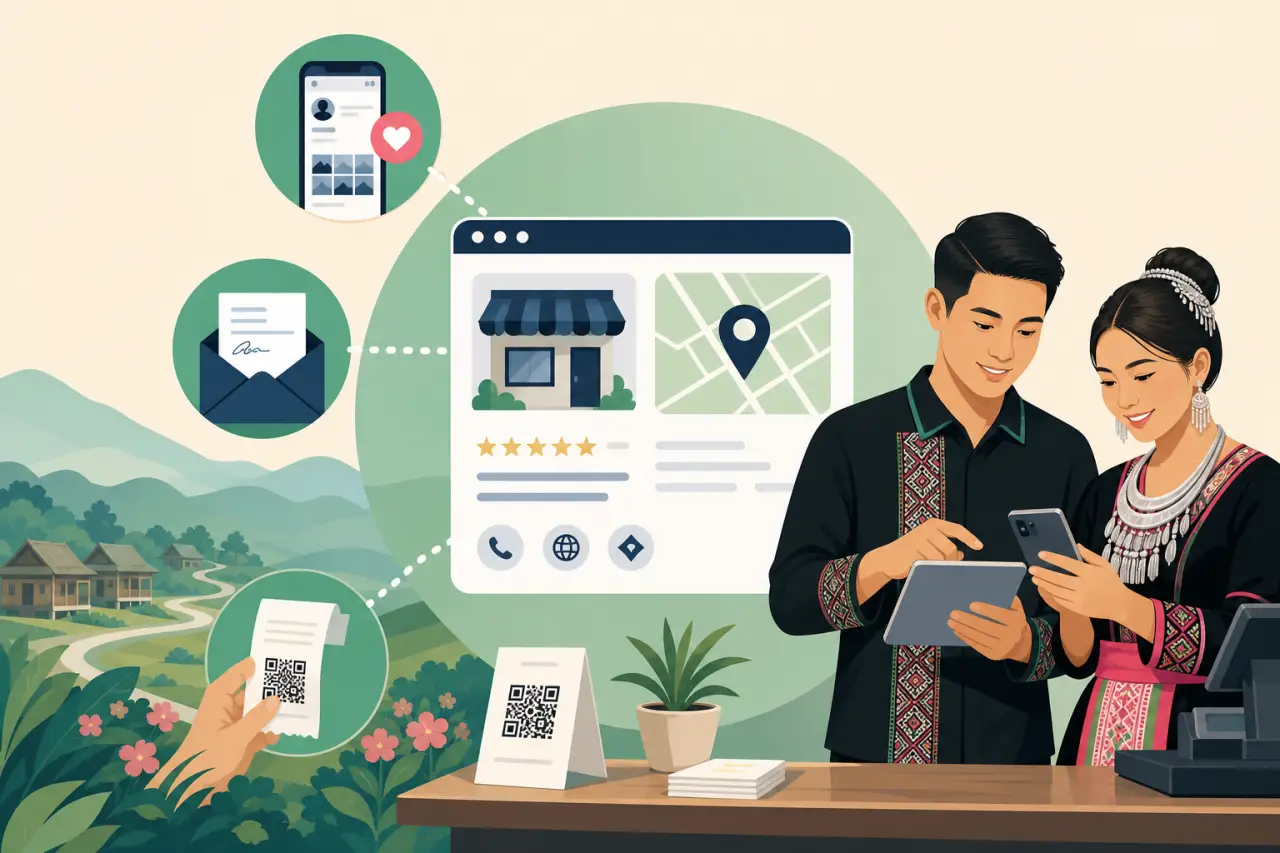
Make it as close to one click as possible. A QR code at the counter that goes straight to your review page beats "just look us up online" every time, because it removes every excuse to do it later and forget.
It's also worth being careful about how you ask. Most review platforms and directories don't allow offering a discount or freebie in exchange for a review, and even where it's technically allowed, it invites reviews that are more about the incentive than the experience. A plain, genuine ask works better anyway, and it's worth training anyone else who works the counter or answers the phone to ask the same way you would, since a review request that only happens when the owner personally remembers to say it will always be inconsistent.

Reply to Every Review, Not Just the Good Ones
Responding to reviews is the part owners skip most often, but it's doing real work. A reply to a five-star review costs thirty seconds and tells the next person reading it that a real, attentive person is behind this listing, not just a rating count. A short thank-you, hope to see you again, is enough. It doesn't need to be elaborate.
A reply to a critical review matters even more, because it's the one a hesitant customer reads most carefully before deciding whether to risk trying you. Acknowledge what went wrong, keep it brief and calm, and say what you did or will do about it. You're not really writing that reply for the unhappy customer. You're writing it for the next fifty people who read it and are trying to decide whether one bad review means avoid this place, or whether it means a business that owns its mistakes.
Try to reply within a day or two rather than letting a string of reviews pile up unanswered for weeks, and avoid pasting the exact same response under every single one. Referencing something specific the reviewer actually mentioned, even briefly, is what separates a reply that reads as genuine from one that reads as a template, and customers notice the difference between the two just as easily as they notice a listing that never replies at all.
Keep the Listing Alive, Not Just Live
A directory listing filled out once and never touched again starts to look, and function, like an abandoned storefront, even if the business behind it is thriving. Keep it current:
- Update your hours around holidays a general directory won't automatically account for, like closing early for a Hmong New Year celebration or adjusting hours during a slow winter stretch
- Add new menu items, new products, or a current promotion when you have one
- Remove anything that's out of date
This matters for more than appearances. Directories and search tools tend to treat a recently updated listing as more trustworthy than a stale one, since it's a signal the business behind it is actually operating and paying attention. Set a recurring reminder, once a month is enough, to open your listing and check that everything on it is still true today, not just true when you first filled it out.
If your directory shows you any activity around your listing, like how many people viewed it or clicked to call or get directions, treat that as a rough signal for what to work on next rather than something to obsess over. A listing that's getting views but very few calls usually points to the description or photos needing another look, while a listing that's barely getting views at all usually points back to the categories, tags, and location details from earlier being incomplete.
Connect the Listing to Everything Else You're Already Doing
A directory listing doesn't have to work in isolation, and it works better when it doesn't — it's just one piece of 5 ways to get discovered online. Link to it in a few places:
- Your Facebook or Instagram bio
- Your email signature
- The QR code, printed on receipts, business cards, or a small sign near the register
Every one of those is a low-effort way to send existing traffic, people who already know and like you, toward a page that's built to convert first-time visitors, collects reviews, and gives search engines and AI tools something structured to point new customers back to you.
The businesses that get the most out of a directory listing rarely treat it as a separate task from the rest of their marketing. It's one more channel that reinforces everything else. A customer who found you on social media can confirm your hours and read reviews on the directory before visiting, and a customer who found you on the directory can follow you on social media to see what's new. Treated that way, a listing you built once keeps paying off long after you filled it out.
If you're listed on more than one directory, whether that's a general one, a search engine's own business profile, or a niche one built specifically for a community like this one, keep the core details consistent across all of them:
- Name
- Address
- Phone number
- Hours
Mismatched information across listings doesn't just confuse a customer trying to double-check your hours before driving over, it also makes it harder for search engines to confidently connect all those listings back to the same real business.
Questions people ask
How do I write a good description for my business listing?
Write it the way a customer would actually search for you. Instead of vague buzzwords, include your specific service, your neighborhood or city, and what makes you unique—like a signature dish or language you speak fluently. Keep it to two or three things you most want to be found for, and let categories and tags handle the rest of what you offer.
What kind of photos should I put on my listing?
Use real photos you took yourself during the day, not stock images. If you run a restaurant, photograph your best dish. If you run a service business, photograph yourself or your crew actually working. A handful of photos—a cover shot, some interior or product shots, and one of you or your team—convinces customers far more than a single storefront picture.
Why should I fill in all those optional fields on my listing?
Those fields usually aren't cosmetic. Most directories let customers filter by service area, payment types, categories, and other details, so an empty field can remove you from searches you'd otherwise show up in. Spend the extra five minutes picking every category and tag that genuinely applies to your business.
How often should I update my directory listing?
Check it once a month. Update your hours for holidays, add new menu items or promotions, and remove anything outdated. Directories treat recently updated listings as more trustworthy, since it signals your business is actually operating and paying attention to your listing.
Written by
Hmong Network Team
Directory & Digital Services
We run the Hmong Network directory and do the web design and SEO/AEO work behind the results in our case studies. These guides come out of that same hands-on work with Hmong-owned businesses — not secondhand research.
