

How to Make Sure Customers Can Actually Find Your Hmong-Owned Business
TL;DR
Being a great Hmong-owned business isn't enough if customers can't find you online. Claim your Google Business Profile, keep your info identical everywhere, get listed where the Hmong community actually looks, and ask happy customers to say so publicly.
Show Up Where People Are Already Looking
Word-of-mouth still matters in the Hmong community, but word-of-mouth today usually starts online, in a Facebook group, a community directory, or a quick Google search someone does before they even ask a relative for a recommendation. If your business isn't listed where your customers actually look, you're invisible to anyone outside your existing circle, no matter how good your food, your work, or your service is. Customers who go out of their way to look for one already understand why supporting Hmong-owned businesses matters — they just need to be able to find you in the first place.
Think about the last time you needed a plumber, a caterer, or a new tailor and didn't already know one. You probably searched for it, or you posted in a local Facebook group and waited for names to show up in the comments. Your customers do the same thing about your business. The question isn't whether they're looking, it's whether you show up when they do.
Different generations of your own customer base look in different places, too. Older customers are more likely to see you mentioned in a Hmong community Facebook group or hear about you through a family member who found you in a local directory. Younger customers are more likely to find you through a Google search, an Instagram post from a friend, or a short video that happened to include your storefront. You don't need to be everywhere at once, but you do need to be visible on more than one of these, because relying on a single channel means you only reach the slice of the community that happens to use it.
List your business everywhere your customers naturally look:
- A Hmong business directory
- Google Business Profile
Keep the basics (hours, address, phone number) identical across all of them. A mismatch between what your Facebook page says and what your Google listing says quietly costs you customers who show up on the wrong day. For a fuller rundown of where to start, see our guide to 5 ways to get discovered online. This isn't a one-time task you finish and forget. It's more like keeping your shop's lights on, something you maintain because the moment you stop, people stop finding you.
Make Sure Your Google Business Profile Isn't Working Against You
For most local searches, Google Business Profile is the single most important listing you have, and it's free. If you haven't claimed and verified yours, do that first, before anything else on this list. An unclaimed or unverified profile can still show up in search results with wrong hours, no photos, and no way for you to respond to reviews, which means Google is representing your business and you have no say in how. Once you've claimed it, our guide to writing a Google Business Profile that converts covers how to fill it out well.
Once it's claimed, the details matter more than people expect. Pick the most accurate category available, even if nothing matches perfectly (a Hmong restaurant might list as "Asian Restaurant" or "Restaurant" as the primary category, then use the business description and photos to make clear what you actually serve). Fill in real hours, including seasonal changes, because nothing frustrates a customer more than driving over to a closed door that Google told them would be open.
Add real photos of your actual space, your actual food, your actual work, not stock images. Customers judge a business by its photos before they ever walk in, and blurry or generic pictures make even a great business look uncertain. If you host something the wider community would want to know about, like a Hmong New Year pop-up or a holiday schedule change, post it as a Google update. It's a small habit that keeps your listing looking active instead of abandoned.
A few minutes a month is usually enough to keep this current:
- Swap in a new photo
- Update a holiday hours change
- Reply to any new questions people have posted in the Q&A section
Businesses that never touch their profile after the initial setup tend to fall behind competitors who do, not because Google punishes them directly, but because an active, complete profile simply looks more trustworthy to the person deciding where to spend their money.
Keep Your Name, Address, and Phone Number Identical Everywhere
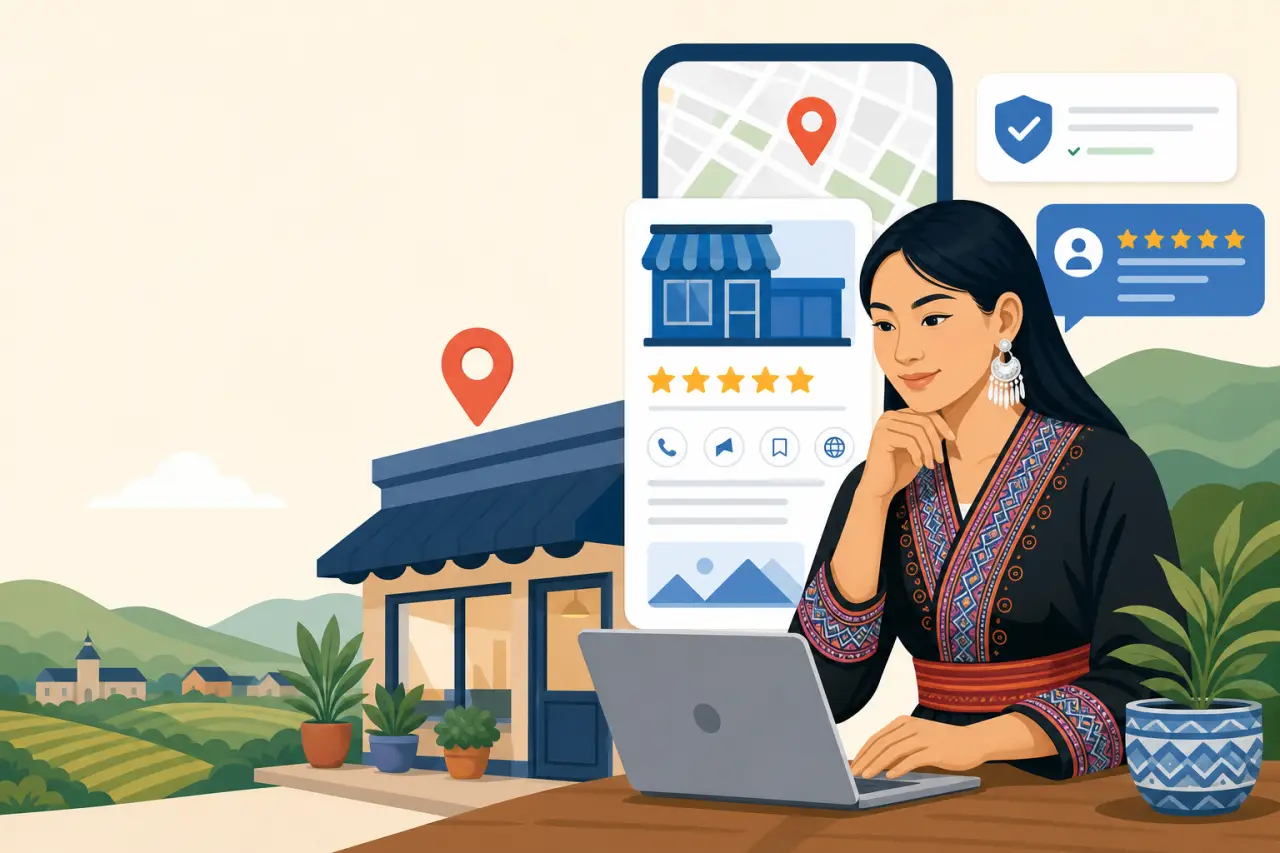
This sounds like a small detail, but it's one of the most common reasons a business with real online presence still loses customers. If your Facebook page says you're open until 8pm and your Google listing says 6pm, a customer will believe whichever one is convenient for them, show up at the wrong time, and quietly decide you're unreliable. They won't call to check first. They'll just go somewhere else and remember the experience, not the mix-up.
The same goes for your address and phone number. If you've moved locations, changed suites, or switched phone numbers, that update needs to happen everywhere on the same day, not whenever you get around to it. Old listings with your previous address don't just confuse customers, they actively send people to the wrong place, and some of those people won't try again.
A simple way to stay on top of this is to keep a short list of every place your business is listed:
- Your Hmong Network profile
- Yelp
- Any local chamber of commerce site
Check it whenever something changes. It takes fifteen minutes and prevents weeks of quietly losing customers who assumed the wrong information was correct.
Let Your Customers Do the Talking
A directory listing gets you found; a review gets you chosen over the next listing down. After a good visit, ask directly for a review. Most happy customers are glad to leave one, they just rarely think to do it unprompted. A card at checkout with a QR code straight to your Google review page, or a quick text to a regular customer asking if they'd mind leaving a few words, works far better than a generic sign that says "leave us a review" and hopes someone remembers later.
Respond to what people post about you, good or bad, since a business that visibly engages with its community online reads as more trustworthy than one that goes quiet after a five-star review. When someone leaves a great review, a short genuine thank-you shows future customers that a real person runs this business. When someone leaves a critical one, respond calmly and specifically, acknowledge what went wrong if it did, and say what you're doing about it. Customers reading reviews later aren't just judging the complaint, they're judging how you handled it.
Don't ignore reviews on platforms you don't check often. A one-star review sitting unanswered for months tells every future visitor that nobody's paying attention, even if it's not representative of how you actually run things.
Get Listed Somewhere Built for People Looking Specifically for You
General search engines don't know your business is Hmong-owned unless you tell them, and most of them have no way for a customer to filter for that even if you do. Someone searching "restaurants near me" on Google will get a wall of every restaurant in town, with no way to specifically find the Hmong-owned ones unless they already know your name.
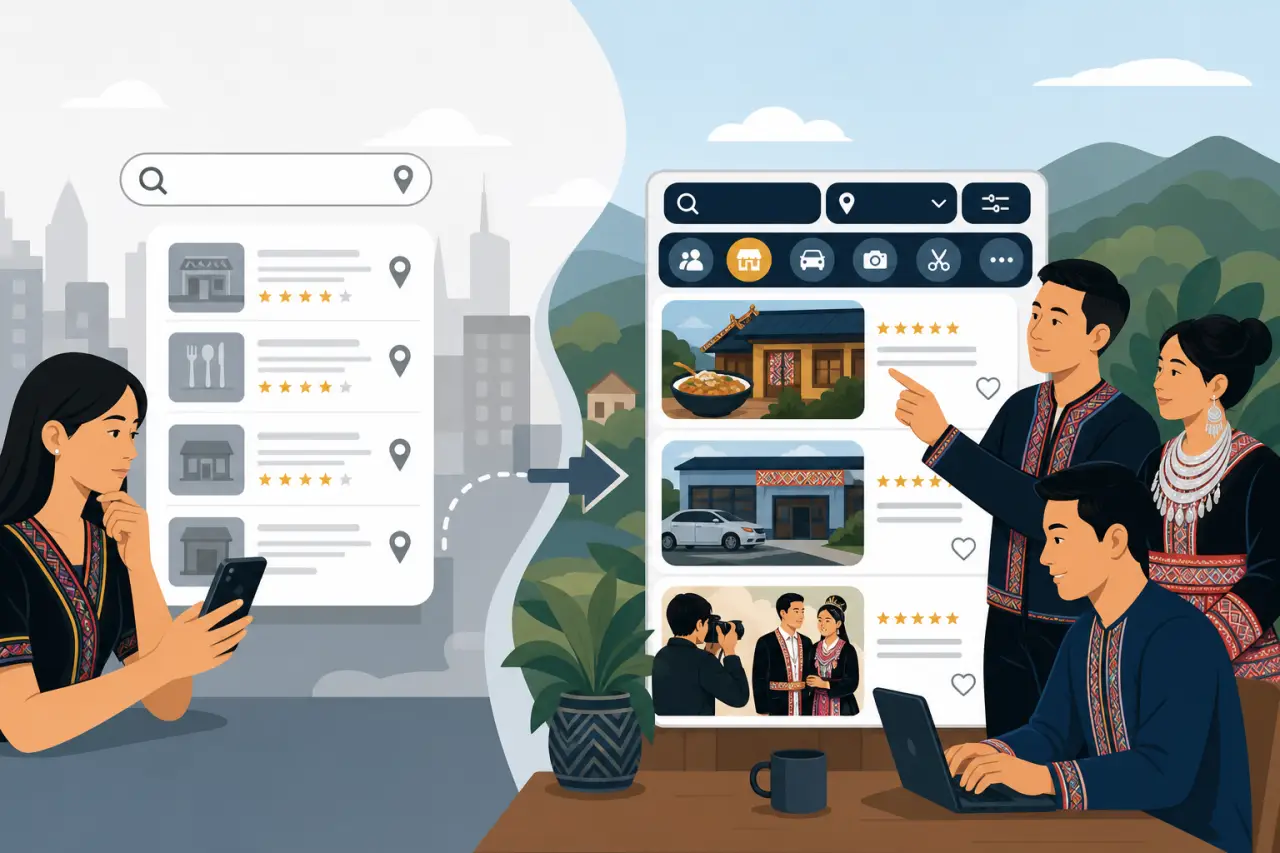
A directory built specifically for Hmong-owned businesses solves that problem from the other direction: it's already organized by category and by state, so a customer looking for a Hmong-owned auto shop in Minnesota, or a wedding photographer who understands Hmong ceremony traditions, can filter straight to businesses like yours instead of digging through generic results. That's a customer who is already looking for exactly what you offer, which is a very different kind of lead than someone stumbling onto your page by accident.
Claiming your listing matters here too. An unclaimed placeholder listing, one that just has a name, an address, and nothing else, looks abandoned next to a competitor's fully filled-out profile with photos, hours, a description, and a way to contact them directly. Fill out every field you're given:
- Add real photos
- Write a description in your own words instead of leaving it blank
- List your social links
- Keep your hours current
A complete profile doesn't just rank better, it actually convinces someone to choose you over a listing that gives them nothing to go on. For a deeper walkthrough, see our guide on getting the most out of your directory listing.
Search for Your Own Business the Way a Stranger Would
Most business owners never actually search for themselves the way a new customer would. Take out your phone, turn off wifi so you're getting a real result and not one personalized by your search history, and type in what a stranger might type, swapping in your own city and category:
- hmong restaurant near me
- hmong tailor St. Paul
- hmong owned auto repair Fresno
See what comes up. If you don't appear on the first page, or your listing shows outdated hours or no photos next to competitors who look more complete, that's exactly what a real customer sees before they ever decide whether to visit.
This also tells you what language to use in your own descriptions and posts. People rarely search using the exact words a business uses about itself. A customer isn't typing authentic Southeast Asian cuisine, they're typing hmong egg rolls st paul or where to get sausage hmong style near me. Use those same specific, plain terms, paired with your city or neighborhood, in your business description, your social captions, and your directory listing. It feels less polished than marketing language, but it matches what people are actually typing, which is the entire point.
Pay attention to who else shows up in that search too. If a competitor's listing has twenty reviews, complete hours, and a full photo gallery, and yours has none of that, you now know exactly what's separating you from them in a customer's eyes. That's more useful than any general advice, because it's specific to your actual market and your actual competition, not a hypothetical one.
Do this search every few months, not just once. Search results change as competitors update their listings, and a search that looked fine six months ago might look thin today.
Don't Let Your Listings Go Stale
Getting found once isn't the finish line. A listing that was accurate and complete a year ago can quietly become the exact thing that costs you a customer today, if your hours changed for the season, your menu shifted, or you moved and never updated your Facebook address. Treat your online listings the way you'd treat inventory or your supply orders: something you check on a regular schedule, not something you set up once and walk away from.
This matters even more around predictable seasonal moments. If you close or shift hours around Hmong New Year, a major holiday, or a family obligation that regularly affects your schedule, post that change everywhere at once, well before it happens, not the morning of. Customers who show up to a locked door during a holiday closure you didn't announce are far less forgiving than ones who saw a heads-up post a week earlier.
Set a recurring reminder, monthly is reasonable for a small business, to glance over your Google Business Profile, your directory listing, and your social pages side by side. Check that these still reflect reality:
- Hours
- Address
- Phone number
- Photos
It's a small habit, but it's the difference between a business that's easy to find and trust, and one that quietly becomes harder to find every month nobody checks.
Questions people ask
Why can't customers find my business even though it's good?
If you're not listed where customers actually look—Google, Facebook, a Hmong business directory—you're invisible outside your existing circle. Today, most word-of-mouth starts online. Different age groups search differently too. Older customers find you through Facebook groups and directories. Younger customers use Google and Instagram. You need to show up on multiple platforms where your actual customers search.
What should I do with my Google Business Profile?
Claim and verify it first—it's the most important listing you have and it's free. Fill in accurate details: pick the right category, add real photos of your space and food, and list your actual hours including seasonal changes. A few minutes monthly keeps it current: swap a photo, update holiday hours, or reply to questions. An active profile looks more trustworthy than an abandoned one.
What happens if my business information is different on Facebook versus Google?
Customers believe whichever version is convenient and show up at the wrong time. They won't call to check—they'll go elsewhere and remember you as unreliable. If you move, change your phone number, or shift hours, update everywhere on the same day. Keep a list of all your listings and check it whenever something changes. It takes fifteen minutes and prevents weeks of losing customers.
How do I know if customers can actually find me online?
Search for your business like a stranger would: turn off wifi, search "hmong restaurant near me" or "hmong tailor [your city]." If you don't appear on the first page, or your listing has outdated hours and no photos compared to competitors, that's what customers see. Do this every few months as results change. Also notice what search terms people actually use—they type "hmong egg rolls" not "authentic cuisine." Use those exact phrases in your listings.
Written by
Hmong Network Team
Directory & Digital Services
We run the Hmong Network directory and do the web design and SEO/AEO work behind the results in our case studies. These guides come out of that same hands-on work with Hmong-owned businesses — not secondhand research.
