
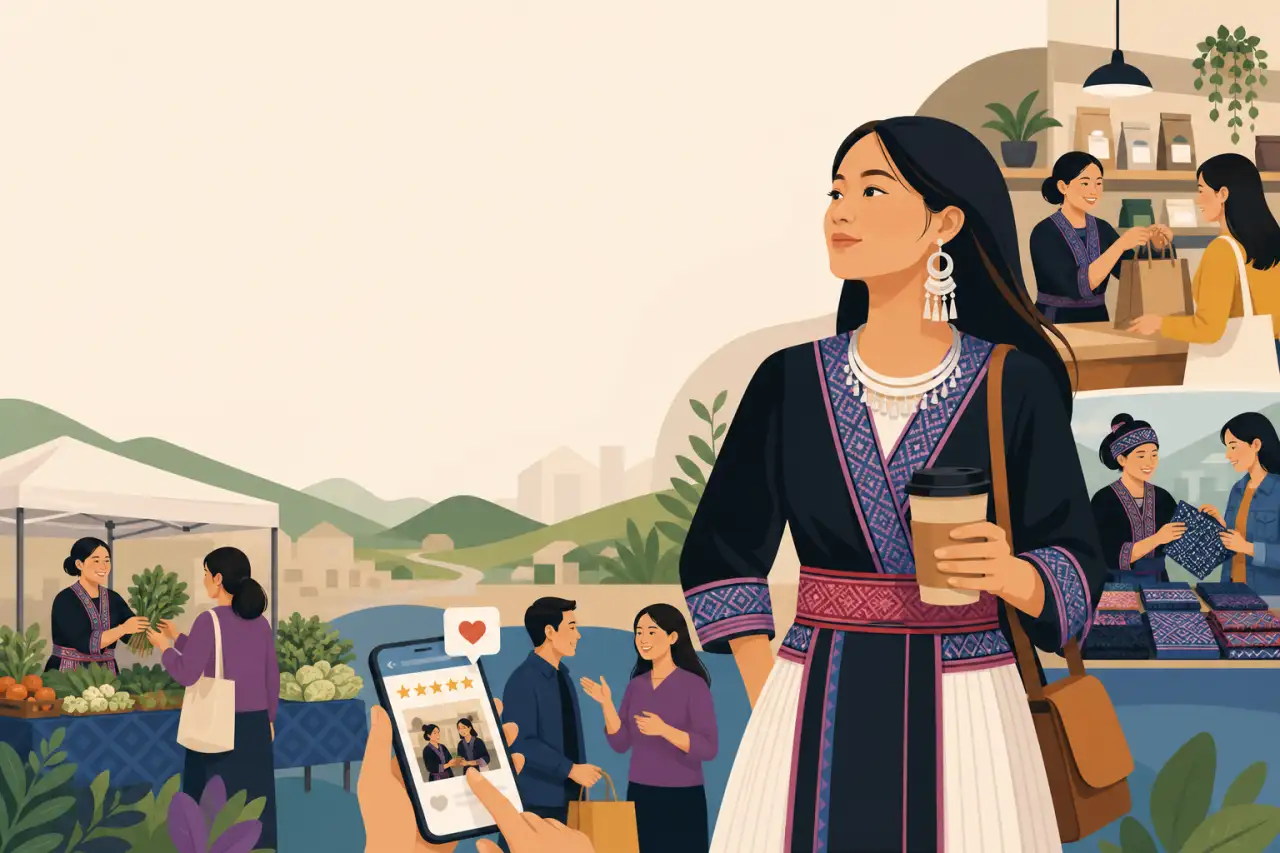
Why — and How — to Support Hmong-Owned Businesses
TL;DR
Choosing a Hmong-owned business over a bigger, better-funded alternative keeps money circulating locally and helps close a real access-to-capital gap -- and real support is far more actionable than most people realize.
Why It Matters More Than It Might Seem
Small businesses everywhere run on thin margins and thinner marketing budgets, but Hmong-owned businesses tend to start from a harder position than most. Many were founded by refugees and the children of refugees who arrived with little more than what they could carry, no inherited property to borrow against, and no built-in network of relatives who already ran businesses and could vouch for a loan application or co-sign a lease. That gap doesn't close overnight, and it shows up in ordinary ways:
- A restaurant that can't afford a second location even though it's always full.
- A salon owner who does her own bookkeeping at midnight because hiring an accountant isn't in the budget yet.
- A farmer who sells out of vegetables at the market by mid-morning because there's no cold storage to hold more inventory.
Every dollar a customer spends at one of these businesses instead of a chain alternative does something a chain purchase usually can't: it stays close, which is why shopping local really works as an economic argument, not just a feel-good slogan. It pays a local paycheck, gets deposited at a local bank, and often gets spent again nearby -- on rent, on a supplier down the street, on a kid's tuition, on the down payment for the next location. None of that is automatic, but it's a real pattern in tight-knit immigrant communities, because the owner's whole financial life, and often their extended family's, is wired into that same few square miles.
There's a second layer that's easy to miss if you're only thinking in dollars: some of what these businesses sell doesn't exist anywhere else. A restaurant serving a dish the way a grandmother used to make it, a seamstress doing paj ntaub embroidery by hand, an herbalist who still stocks the plants his mother used -- none of that survives on nostalgia alone. It survives because enough people keep buying it.
That's real, but it's also only part of the picture, and worth being precise about: "Hmong-owned" describes who owns the business, not what it sells. Hmong people have never had a country of their own -- a history of repeated displacement and resettlement, from southern China through Laos and Thai refugee camps to communities across the U.S. and beyond -- and that history shows up in the businesses themselves. Just as often as a restaurant serving khaub poob or a shop selling paj ntaub, you'll find a Hmong-owned Korean BBQ spot, a Hmong-owned insurance agency, a Hmong-owned auto shop or web design studio, competing on the same terms as anyone else in that trade. Supporting Hmong-owned business isn't limited to buying something culturally Hmong -- it's just as much about choosing the Hmong-owned option for whatever you already need.
Where the Money Actually Goes, and Why the Playing Field Isn't Level
It helps to be concrete about what "the money stays local" actually means, since it's easy to repeat the phrase without picturing anything real. A family-run restaurant's biggest expense after rent is usually payroll, and that payroll often goes to people who live within a few miles of the restaurant:
- A cousin bussing tables on weekends.
- A mother-in-law doing prep in the mornings.
- A teenager working the register after school.
That kind of family-first staffing is part of what makes the Hmong community feel like family even inside a business ledger. When that restaurant does well, those are the paychecks that grow first, not a dividend sent to shareholders in another state.
The access-to-capital gap is harder to see from the outside, but it shapes almost everything about how these businesses run. A traditional small-business loan usually wants collateral, a credit history, and a business plan reviewed by someone already comfortable with the kind of business being proposed -- a coffee shop is an easy yes for most lenders, while a shop selling handmade Hmong textiles or a farm growing specialty Southeast Asian produce can be a harder sell to a loan officer who's never encountered the product before. Add a language barrier for a first-generation owner, or a credit history that simply doesn't exist yet because the family arrived a generation or two ago, and a lot of Hmong-owned businesses end up self-funded: personal savings, a loan from relatives, sometimes a rotating community lending circle instead of a bank.
That's not meant as a sob story, it's context for why customer spending carries more weight here than it would for a business with a line of credit sitting in reserve -- researchers tracking Hmong businesses' impact on Minnesota's economy, one of the regions with the largest concentration of Hmong-owned businesses in the country, have found the same pattern. A slow month is a much bigger deal for a self-funded shop than for a franchise with a corporate cushion behind it.

What Everyday Support Actually Looks Like
The most useful form of support is also the least dramatic: redirecting purchases you were already going to make. If you need a haircut, insurance, tax prep, a wedding photographer, or a lunch spot for a work meeting, checking whether a Hmong-owned option exists before defaulting to whatever's most convenient costs you nothing extra in most cases -- pricing at these businesses is typically in line with, or lower than, comparable competitors, not a premium you're paying for a cause.
A few habits make a bigger difference than people expect:
- Becoming a repeat customer matters more than one large purchase, because predictable, recurring business is what lets an owner plan staffing and inventory with any confidence.
- Paying the listed price without negotiating it down, especially at markets and craft fairs where haggling can feel like part of the experience, respects that the price was probably set carefully against thin margins, not padded to allow for a discount.
- Bringing cash when a business is cash-preferred, rather than being annoyed by it, saves the owner a real percentage in card-processing fees on every sale.
And if you have any kind of platform, even a small one -- a neighborhood group chat, a work Slack channel, a personal social media following -- using it to mention a specific business you liked does more for that business's visibility than the same money spent on an ad campaign it likely can't afford. That's the trade a small business is implicitly making: it can't buy attention, so attention has to be earned and passed along person to person.
Reviews, Referrals, and the Quiet Power of Word of Mouth
A business with five hundred online reviews barely notices one more. A business with twelve reviews changes noticeably with a thirteenth, especially if it's detailed and specific. That's the math that makes reviews disproportionately valuable for small, newer businesses: each one moves the average further, and each one gives a search engine or map app more text to match against what someone is actually searching for.
The most useful reviews aren't the shortest ones. "Great food, five stars" doesn't tell the next customer much and doesn't give a search algorithm much to work with either. Mentioning the specific dish you ordered, the specific service you booked, or a specific detail -- the owner remembered your order from last time, the seamstress fixed a fit issue for free, the mechanic explained the repair before doing it -- does two things at once: it helps someone decide whether to visit, and it surfaces that business for people searching those exact terms.
Referrals work the same way, but faster. Telling one friend directly, you should go to this place, ask for the owner's brother, he does the alterations, carries more weight than a hundred people seeing a generic ad, because it comes with your own credibility attached. If a business doesn't have a website or shows up inconsistently in search results, you telling someone directly is often the only way they find out it exists at all -- there's no algorithm accidentally surfacing it for them instead.
Showing Up in Person: Markets, Festivals, and Pop-Ups
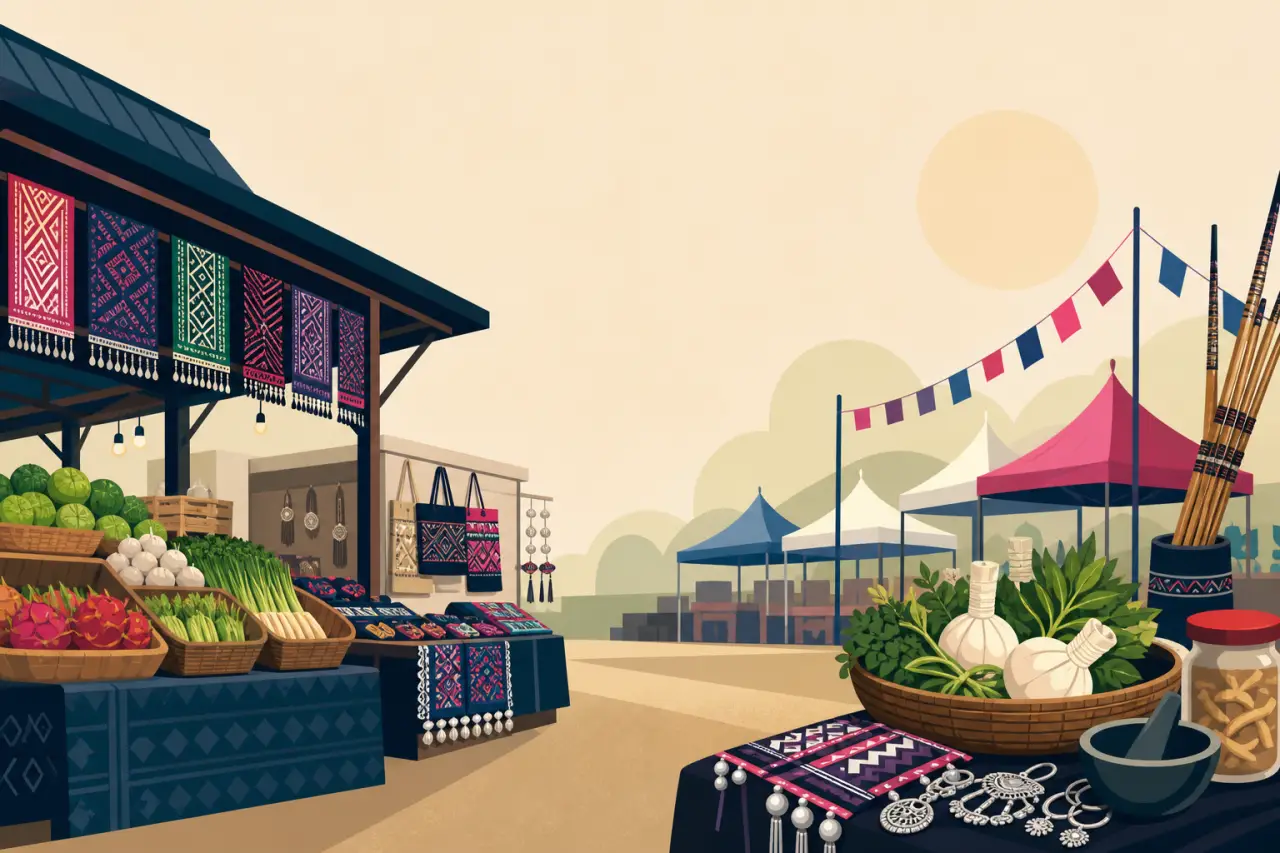
A lot of Hmong-owned businesses operate at least partly outside the standard storefront-and-website model, which means showing up in person is sometimes the only way to actually reach them. Community marketplaces built specifically around Hmong vendors -- the kind found in cities with large Hmong populations, where dozens of small stalls sell everything from fresh produce and prepared food to embroidery, jewelry, and herbal remedies under one roof -- exist partly because that format lowers the barrier to starting a business: no separate lease, no build-out, just a table and a customer base that already knows to look there.
Hmong New Year celebrations, summer festivals, and church or temple fundraisers serve a similar function on a smaller scale. These aren't just cultural events with a few vendors attached -- for a lot of small operators, especially ones selling food, crafts, or clothing, festival season is when a meaningful share of the year's income gets made in a concentrated window. Showing up, buying something, and telling the vendor you'll be back is worth more in that moment than it might be on an ordinary Tuesday.
Farmers markets deserve a specific mention too. A farm stand run by a Hmong farming family is often selling produce -- bitter melon, Thai basil, specific chili varieties -- that a regular grocery store either doesn't carry or sources from much farther away. Buying directly there skips every layer of distributor and retailer markup and puts the money straight into the hands of the person who grew it.
Cultural Preservation Is Also Economic Preservation
It's worth sitting with an idea that sounds obvious once you say it out loud: a skill or a recipe survives commercially only if enough people keep paying for it. Paj ntaub embroidery, the intricate story cloths and textile work central to Hmong tradition, takes real time to make by hand, and that time only pencils out for the maker if there's a customer base willing to pay for it instead of a mass-produced substitute. The same is true of an herbalist who's spent years learning which plants treat what, a musician who plays the qeej at community events, or a cook who makes a dish the way it was made two generations ago instead of a version simplified for a broader audience.
None of that requires becoming an expert in the tradition before you support it. It just means recognizing that when one of these businesses closes, what's lost usually isn't replaceable by a competitor opening down the street -- it's a specific skill, sometimes held by very few people, that doesn't automatically pass to the next generation unless someone made a living doing it. Buying the embroidery, ordering the dish, hiring the musician for an event is, practically speaking, one of the only mechanisms keeping that knowledge economically viable enough for someone to keep investing years into learning it.
Finding Hmong-Owned Businesses Where You Live, and What to Do Once You Do
The single biggest barrier to any of this isn't willingness, it's information. Most people who say they'd choose a Hmong-owned business if they knew one genuinely mean it -- they just don't have an easy way to find out who's out there, especially outside a handful of cities with large, visible Hmong communities. A general search for "restaurant near me" or "insurance agent" isn't going to surface ownership information at all, and a lot of these businesses don't have the marketing budget to make sure they show up prominently even when they do fit what someone searched for, which is exactly the gap that makes actually finding Hmong-owned businesses harder than it should be.
A directory built specifically around Hmong-owned businesses solves that in the most direct way possible: instead of hoping a business happens to mention its ownership somewhere, or relying on already knowing someone who knows, you can search by category and location and get a list that's already been narrowed down for you. That turns "I'd support a Hmong-owned business if I knew one existed" into something you can act on in under a minute.
Once you find one, the earlier sections here are the actual playbook:
- Become a repeat customer if it's something you'll need again.
- Leave a specific review.
- Tell a friend directly.
- Show up at the market or festival table if that's where they sell.
- Treat the relationship as ongoing rather than a single transaction.
Questions people ask
Why does my money stay local when I shop at a Hmong-owned business?
Payroll usually goes to family and neighbors living nearby. When the business does well, those are the paychecks that grow first. Money gets deposited at a local bank, then spent again on rent, suppliers down the street, tuition, or a down payment for expansion. None of that happens automatically, but it's a real pattern in tight-knit communities where the owner's financial life is wired into the same few square miles.
Why do online reviews matter more for small Hmong-owned businesses?
A business with twelve reviews changes noticeably with a thirteenth, while a business with five hundred barely notices one more. Detailed reviews that mention a specific dish, service, or detail help the next customer decide whether to visit and help search engines match what people are actually looking for. For new or small businesses, each review moves the average further and surfaces them to more potential customers.
How can I help a Hmong-owned business without spending extra money?
Become a repeat customer instead of making one large purchase — predictable business lets owners plan staffing and inventory with confidence. Pay the listed price without haggling, especially at markets where thin margins mean the price was set carefully. Bring cash when preferred to save the owner card-processing fees. If you have any platform, mention a specific business you liked — word of mouth does more than ads they can't afford.
What happens if a Hmong-owned business that makes traditional crafts or food closes?
Skills like paj ntaub embroidery, herbal knowledge, or traditional cooking methods survive commercially only if enough people pay for them. When a business closes, what's lost is often a specific skill held by very few people that doesn't automatically pass to the next generation. Buying the embroidery or ordering the dish is one of the only mechanisms keeping that knowledge economically viable for someone to invest years into learning.
Written by
Hmong Network Team
Directory & Digital Services
We run the Hmong Network directory and do the web design and SEO/AEO work behind the results in our case studies. These guides come out of that same hands-on work with Hmong-owned businesses — not secondhand research.
