
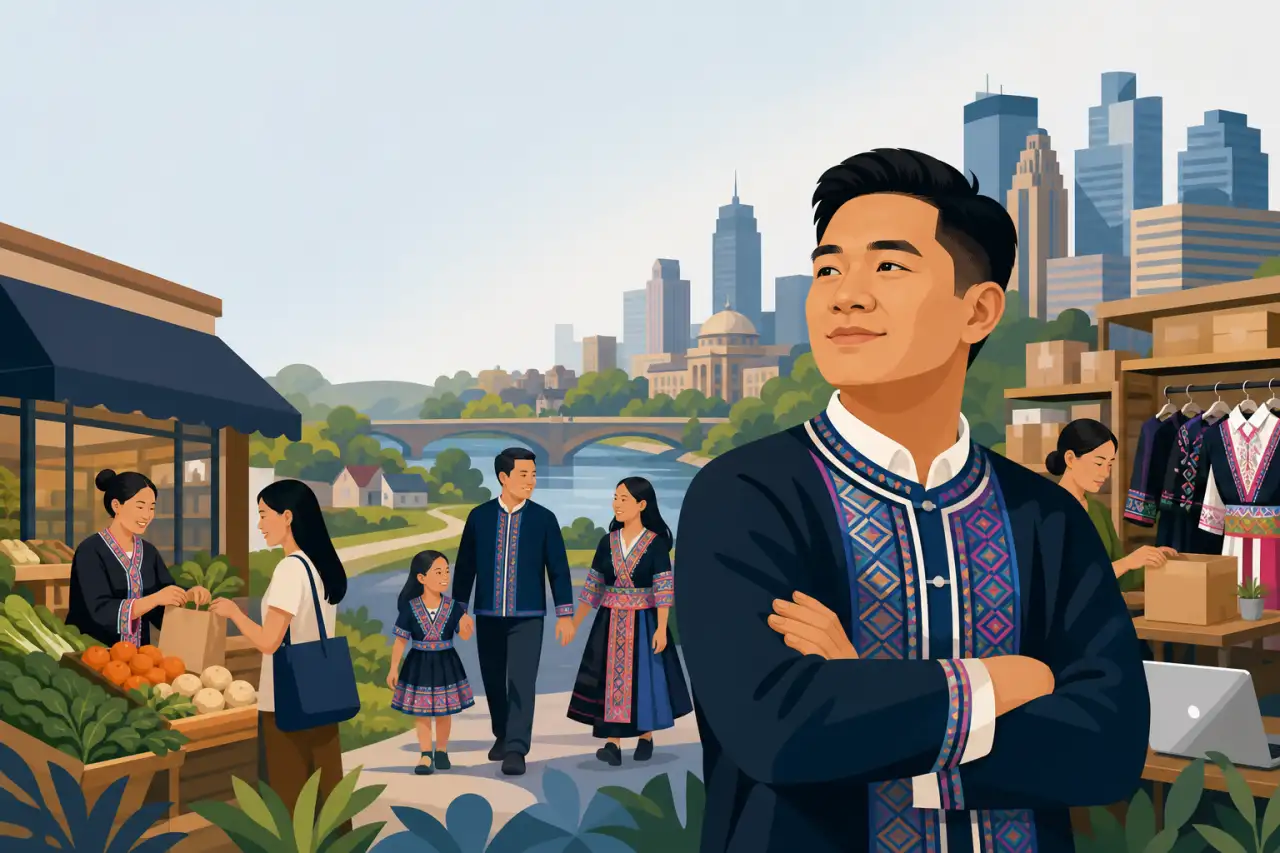
Why Hmong-Owned Businesses Matter to Minnesota's Local Economy
TL;DR
Hmong-owned businesses have grown from a handful of family shops into a real economic engine across Minnesota, anchored by places like Hmongtown Marketplace and the University Avenue corridor, and the next stage of that growth depends on showing up online.
A Neighborhood Economy Built One Storefront at a Time
Minnesota, and the Twin Cities in particular, is home to one of the largest Hmong communities in the country, and that community has built a genuinely large footprint of small businesses over the past several decades. This isn't a handful of scattered storefronts — the range includes:
- Restaurants
- Grocery stores
- Salons
- Auto shops
- Farm stands
- Insurance and real estate offices
- Clothing and fabric shops
- Professional services
In neighborhoods like St. Paul's East Side and the University Avenue corridor, they form entire commercial districts where a customer can eat, shop, get a haircut, and see a doctor without ever leaving businesses owned by Hmong families.
What makes this different from a chain retail strip is who the money belongs to and where it goes afterward. A family that owns a restaurant isn't sending profits to a corporate office in another state — they're paying a mortgage on a house nearby, buying groceries at the store down the street, and often hiring a cousin, a nephew, or a neighbor's kid for their first job. That's the part that's easy to miss if you only think about "economic impact" in terms of a single business's revenue. The real impact is what happens to that money after it's earned, and in this community it tends to stay close to home for a long time before it leaves.
None of this happened because it was easy. Most of these businesses started as one person's bet on themselves, often with savings from a previous job, a loan from family, or both. The owners who are still open ten or twenty years later did it by working hours a corporate employer would never ask for and reinvesting in the business instead of taking money out of it. That's the foundation this whole local economy sits on, and it's a big part of what Hmong-owned businesses keep getting right.
Where This Economy Actually Lives
If you want to see this in person rather than read about it, a handful of places make it obvious. Hmongtown Marketplace in Frogtown and the Hmong Village marketplace in St. Paul on the East Side are two of the clearest examples — large indoor markets built out of former warehouse and industrial space, each holding dozens of independently owned stalls under one roof selling produce, meat, textiles, jewelry, electronics, and prepared food. No single vendor could afford the traffic, the building, or the marketing on their own. Sharing the space is what makes each individual stall viable, and it's also what turns a scattered group of sellers into a destination people drive to from other cities.
The University Avenue corridor, including the Little Mekong district, is the other anchor — a stretch of Hmong-, Vietnamese-, and other Southeast Asian-owned restaurants, groceries, and shops that turned a corridor hit hard by light-rail construction into a place people specifically go to eat and shop. Beyond the Twin Cities, Hmong-owned farms are a fixture at farmers markets across the metro, including downtown St. Paul's market and Midtown Global Market in Minneapolis, where growers sell direct to the households who cook with what they grow — no distributor or grocery chain markup in between.
What ties these places together is that they were built by owners who saw a gap — an empty building, an underused corridor, a market with no representation for the produce their own community wanted — and filled it themselves rather than waiting for someone else to.
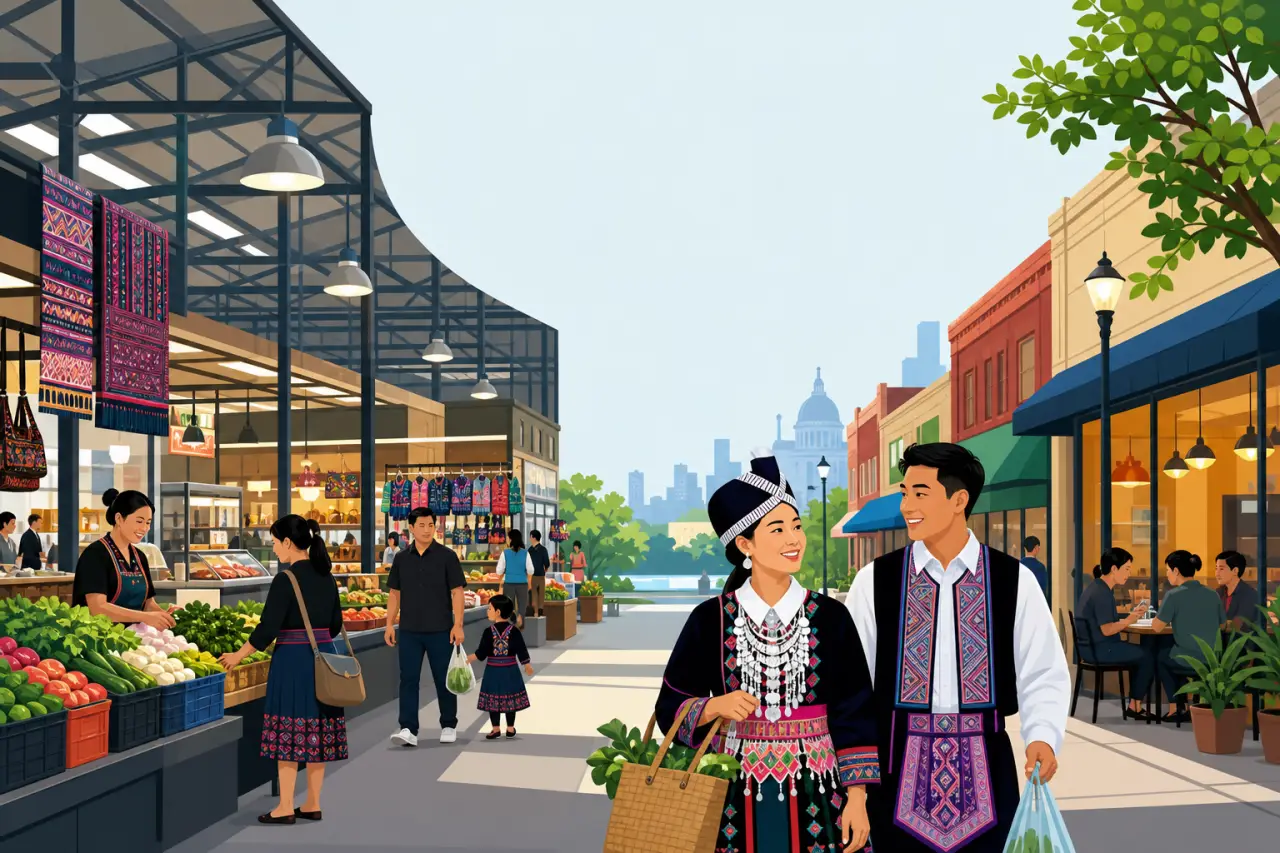
It's Not Just Restaurants — The Range Is Wider Than Most People Realize
Ask someone outside the community to name a Hmong-owned business and they'll probably say a restaurant or a produce stand. Those are real and visible, but they're a fraction of what's actually out there:
- Insurance agents and real estate agents who built their client base almost entirely by referral inside the community
- Web designers and marketing consultants who understand exactly which platforms their clients' customers actually use
- Postpartum doulas and herbalists who blend traditional practices with modern maternal care
- Lawn care and home service companies, auto repair shops, salons, and skincare lines built around traditional ingredients that never had mainstream distribution until an owner decided to sell them directly online
This range matters for the local economy for a boring but important reason: diversity of business type means the community isn't exposed to a single industry's bad year. A slow season for restaurants doesn't have to mean a slow season for real estate closings or insurance renewals. It also means there are more entry points for the next generation — a kid who grew up watching a parent run a restaurant might end up building software instead, and that's a sign of a maturing economy, not a departure from it.
It's also worth saying plainly: many of these owners are the first in their family to run a business in the United States. They didn't inherit an industry playbook, a bank relationship, or a lawyer on retainer. They figured out licensing, insurance, taxes, and hiring largely on their own or by asking someone a few years ahead of them who'd already been through it. That's a harder version of entrepreneurship than most small business owners face, and it's part of why the businesses that do survive tend to be run with real discipline.
The Ripple Effect: Jobs, Family Labor, and Money That Stays Local
A lot of these businesses run on family labor, especially in the first several years — a spouse handling the books, a teenager working the register after school, parents and adult children splitting shifts so the doors can stay open longer than any single person could cover alone. That's not a workaround; it's often the only way a new business survives its first few years without outside capital. But as these businesses grow past that startup phase, most of them start hiring outside the immediate family too — a neighbor, another Hmong family's kid looking for a first job, a cook who heard about the opening through word of mouth rather than a job board.
Those jobs matter in a specific way beyond the paycheck. A first job at a family-run restaurant or shop often comes with more flexibility around school schedules, more patience for someone still learning basic workplace habits, and a boss who's more invested in that teenager's success than a distant corporate manager would be. It's a training ground, not just employment.
The money itself tends to circulate close to where it's earned. An owner who lives two miles from their shop is paying property taxes in that city, shopping at other local businesses, and often sponsoring a youth sports team or a community event because someone they know personally asked them to. That's a different pattern than money earned by a national chain's local franchise, most of which eventually leaves the area in the form of royalties and corporate profit. None of this shows up cleanly in a single number, but anyone who's spent time in these neighborhoods can see it in how often the same names show up as both business owners and community sponsors.
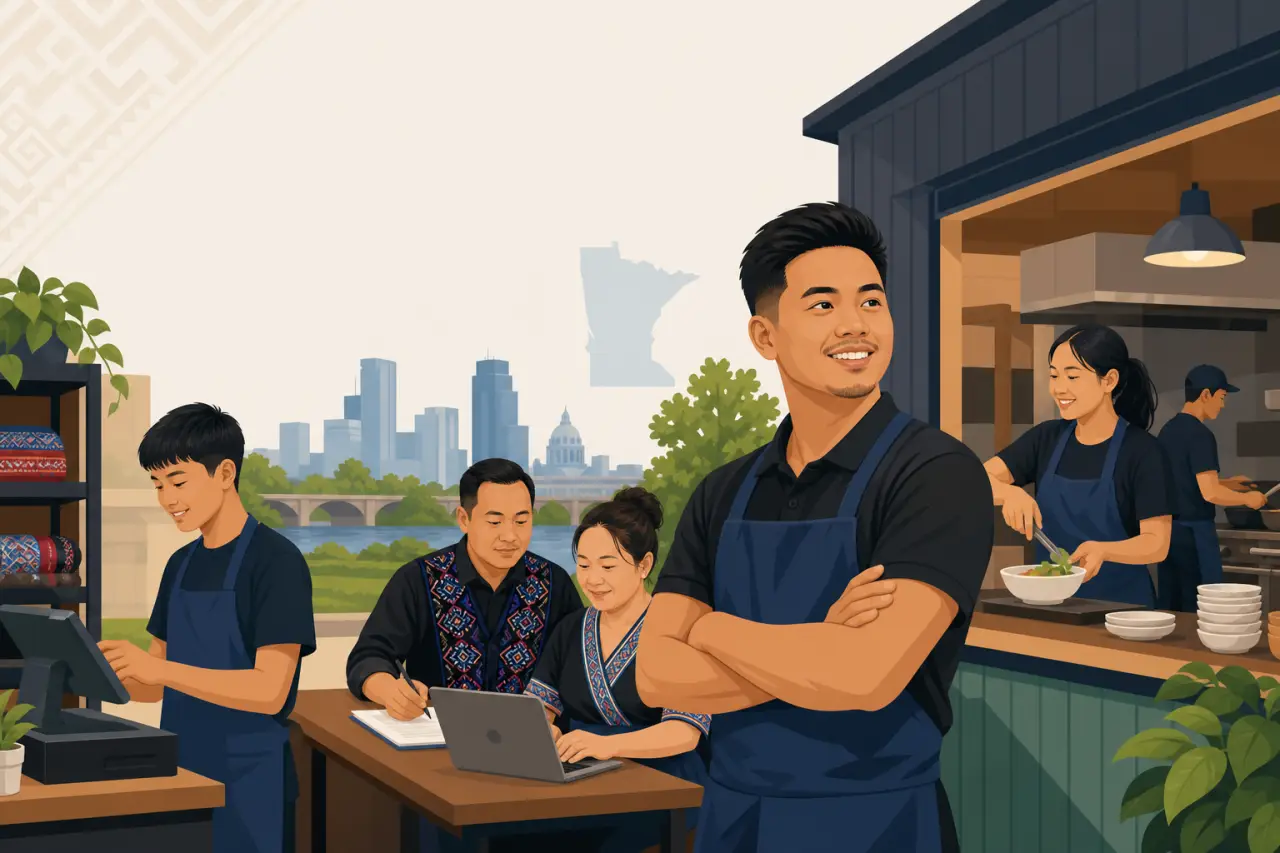
Turning Vacant Buildings Into Places People Actually Go
One of the most concrete forms this economic impact takes is real estate — specifically, what happens to a building once a Hmong-owned business moves in. Both Hmongtown Marketplace and Hmong Village started as underused industrial or warehouse space that had little foot traffic and generated little tax revenue for the city. Turning that space into a market with dozens of vendors and steady weekend crowds didn't just create business income — it changed how the surrounding blocks function, drawing other businesses, more parking demand, and more reasons for people to be in that part of the city at all.
The same pattern shows up on a smaller scale throughout St. Paul and other Minnesota cities:
- A strip mall storefront that sat empty for years becomes a restaurant with a line out the door on weekends
- An old auto shop becomes a salon
- A vacant retail unit becomes a grocery store carrying ingredients that weren't available anywhere else nearby
Cities benefit from this in very direct ways:
- Property tax revenue on a building that's actually occupied and maintained
- Sales tax on business that's happening instead of not happening
- A lower vacancy rate that makes the whole commercial corridor look healthier to the next business owner deciding where to open
This is worth naming because it's easy to talk about economic impact in the abstract while ignoring how physical it actually is. Someone had to sign a lease, take out a loan, renovate a space that needed real work, and bet that customers would show up. Every one of those buildings currently full of customers was, at some point, somebody's risk.
The Next Chapter Is Being Written Online, Not in a New Storefront
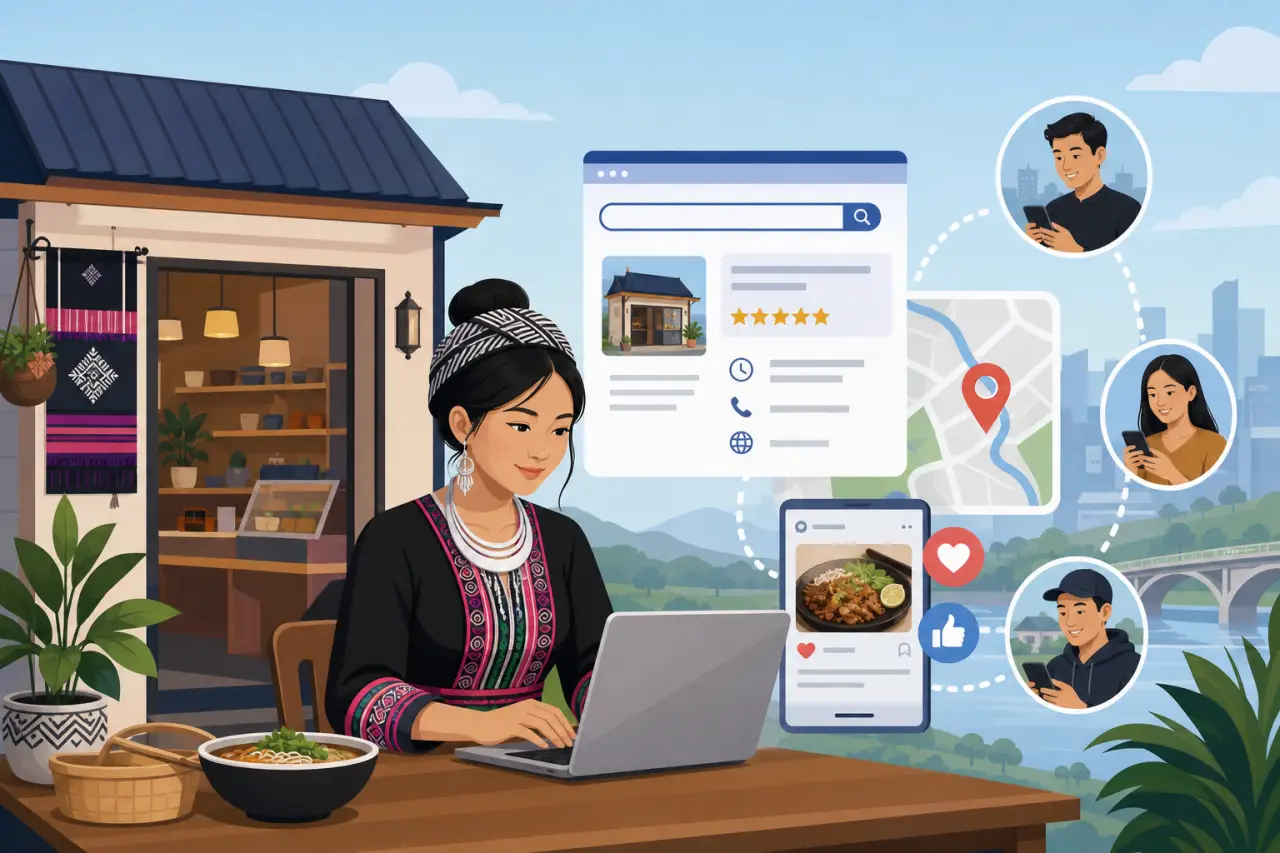
The businesses that keep growing today are increasingly the ones showing up where customers are already looking — search engines, map results, and social media — not just the ones with the best word of mouth. A well-run restaurant with no online presence can genuinely lose customers to a mediocre one that's easy to find, has its hours listed correctly, and shows up when someone nearby searches for what it sells. That's not a knock on how these businesses were built. Word of mouth and community trust got most of them this far, and that trust isn't going anywhere. It's a recognition that the next wave of customers — including people outside the Hmong community who want to discover and support these businesses — increasingly starts that search on a phone.
In practice, this means a handful of unglamorous but real steps:
- Claiming a Google Business Profile and keeping the hours accurate, especially around holidays when a wrong hour listed online sends a customer to a locked door
- Getting listed in directories that actually specialize in Hmong-owned businesses, rather than hoping to get found by accident in a general search — the whole point being that actually finding Hmong-owned businesses shouldn't be left to chance
- Posting real photos of the food, the products, or the space instead of relying entirely on a sign out front
None of this requires a big budget or a marketing agency — it requires the same kind of steady, unglamorous effort that got the physical business open in the first place, just pointed at a different channel.
The owners who treat this as basic infrastructure, the digital version of having a sign above the door, are the ones best positioned to keep growing past the customer base they already have.
Why This Is Worth Paying Attention To, Even If You're Not the One Running the Business
If you're a customer, supporting these businesses isn't charity — it's usually just the better option, whether that's fresher produce at a farmers market stall, a haircut from someone who actually knows how to work with your hair texture, or a meal made by someone who grew up eating the exact dish they're now serving you. The fact that spending money there also keeps that income circulating locally, funds a kid's first job, or helps pay down a building's mortgage is a real bonus, not the main reason to go. Either way, why — and how — to support Hmong-owned businesses is worth understanding beyond just convenience.
If you're a city official or a chamber of commerce, the practical takeaway is that this growth is already happening with very little outside support, and even modest help — faster permitting, small business loans that don't require the collateral a first-generation owner often doesn't have, translated resources — tends to produce an outsized return, because these owners have already proven they'll do the hard part themselves.
And if you're one of these business owners reading this, the honest message is that the work isn't finished just because the doors are open. The community that built this economy through decades of word of mouth is the same community that has to adapt to how the next generation of customers actually finds a business. That's not a threat to what's been built — it's the next version of the same instinct that opened the doors in the first place: seeing where customers actually are, and showing up there.
Questions people ask
What kinds of Hmong-owned businesses are there in Minnesota besides restaurants?
The range is wide: grocery stores, salons, auto shops, farm stands, insurance and real estate offices, clothing shops, web designers, marketing consultants, postpartum doulas, herbalists, lawn care companies, and skincare lines. Many owners are the first in their family to run a business in the U.S., so they built these businesses from scratch without inherited industry experience.
Where can I find Hmong-owned businesses and markets in the Twin Cities?
Hmongtown Marketplace and Hmong Village in St. Paul's East Side are large indoor markets with dozens of independent vendors. The University Avenue corridor and Little Mekong district have restaurants, groceries, and shops. Hmong-owned farms also sell at farmers markets downtown St. Paul and Midtown Global Market in Minneapolis.
How do Hmong-owned businesses help the local economy?
Money from these businesses circulates locally — owners pay property taxes, shop at other local businesses, and sponsor community events. Businesses often hire neighbors and first-time workers from the community. They also turn vacant buildings into active storefronts, increasing property tax revenue and drawing more foot traffic to neighborhoods.
What can Hmong business owners do to grow online?
Claim and maintain an accurate Google Business Profile with correct hours. Get listed in directories that specialize in Hmong-owned businesses so customers can actually find you. Post real photos of your food, products, or space. This unglamorous work is the digital version of having a sign above your door.
Written by
Hmong Network Team
Directory & Digital Services
We run the Hmong Network directory and do the web design and SEO/AEO work behind the results in our case studies. These guides come out of that same hands-on work with Hmong-owned businesses — not secondhand research.
