
What Hmong-Owned Businesses Keep Getting Right
TL;DR
The Hmong-owned businesses that grow past their first few years share a handful of habits: they treat community trust as a foundation instead of a ceiling, price family skills like the real asset they are, reinvest before they reward themselves, and build formal systems without losing what made the business personal in the first place.
Community Trust Is the First Customer Base
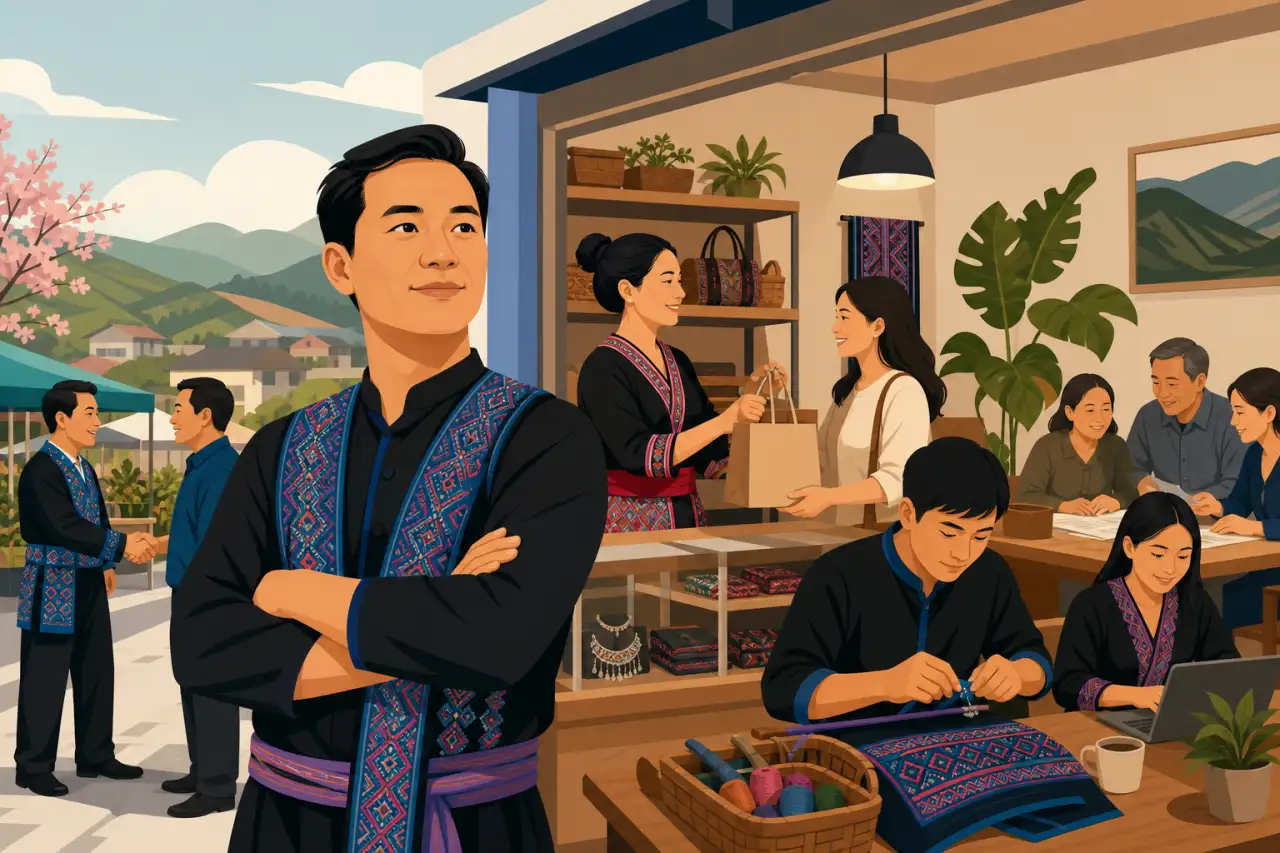
Almost every Hmong-owned business that makes it past year one starts the same way: word of mouth inside the community, long before there's a marketing budget. That's not a limitation — it's an advantage most new businesses would kill for. A customer who found you through a relative or a community group already trusts you more than a stranger who clicked an ad, and they're far more likely to become a repeat customer and refer the next one.
The businesses that grow past that initial base are the ones that treat it as a foundation, not a ceiling. They keep showing up in community spaces even after they've "made it," because that visibility is what keeps the referral engine running:
- Festivals
- Temples
- Hmong New Year events
- Local Facebook groups
What separates the businesses that plateau from the ones that keep growing is what they do with that trust once they have it. A plateauing business treats the community as the whole market and stops there. A growing one uses that same trust as proof it can bring to new customers who don't have a personal connection yet — a strong base of repeat customers and referrals is exactly the kind of thing you can point to when you're asking someone outside the community to take a chance on you for the first time. It's worth remembering why supporting Hmong-owned businesses matters in the first place — that same community investment is what built the trust a growing business eventually leans on.
Skills Passed Down Are a Real Business Asset
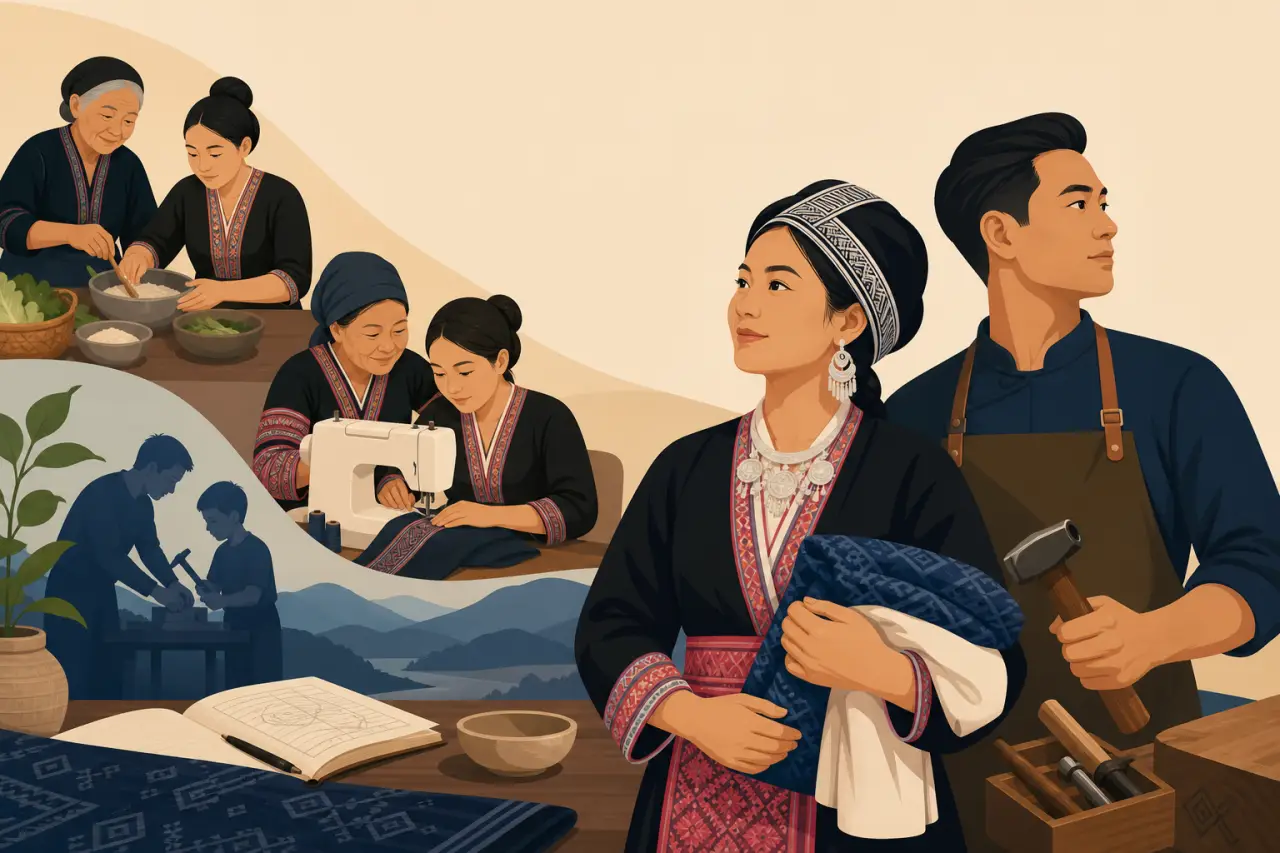
These show up constantly as the actual product being sold, not just a nice backstory:
- A recipe learned from a grandmother
- A sewing technique taught by an aunt
- A trade learned working alongside a parent
That's worth taking seriously as a competitive advantage: it's authentic, it's hard to copy, and it gives a business an identity a big-box competitor can't touch. It's a pattern especially visible among Hmong women entrepreneurs breaking barriers in their industries, many of whom built their businesses directly on skills passed down through family.
The businesses that turn this into sustained growth do two things well:
- They price the skill fairly instead of underselling it out of humility.
- They document it — recipes, techniques, processes — so the business can eventually run without depending on one person's memory.
That's the difference between a business and a hobby that happens to make money.
Underpricing is the more common mistake, and it usually comes from a good place — not wanting to seem like you're profiting off something that was a gift, or not wanting to charge community members what you'd charge a stranger. But a price that only covers ingredients and gas doesn't leave anything to reinvest, hire with, or survive a slow month on. Pricing the skill at what it's actually worth — factoring in the years it took to learn it, not just the materials that go into it — is what lets a business built on inherited skill actually grow instead of just staying busy.
Reinvestment Beats Cash-Out Instincts
The first real profit a small business makes is a genuine temptation — after months of the business barely breaking even, it's tempting to treat that first good month as proof you've made it and start drawing it out. The businesses that keep growing past that point do something less satisfying in the short term: they pay themselves a modest, steady amount and put the rest back into the business, often for a year or two longer than feels comfortable.
What that reinvestment actually buys varies by business, but it's rarely glamorous.
- A food truck owner puts the extra margin toward a second, larger truck instead of a bigger personal draw.
- A seamstress buys a commercial-grade machine that cuts production time in half instead of running the older one until it dies.
- A restaurant owner sets aside a slow-season cushion instead of spending down to zero every time business picks up, so a bad month doesn't turn into a bad quarter.
The businesses that stall usually aren't failing — they're just spending as fast as they earn, which means every setback (a slow month, a broken piece of equipment, a rent increase) turns into a crisis instead of an inconvenience. Reinvestment isn't about being frugal forever; it's about buying yourself enough runway that growth becomes a choice you make on purpose instead of something that only happens when everything goes right.
Family Labor Needs Real Structure, Not Just Trust
Family labor is one of the biggest early advantages a lot of these businesses have:
- A spouse who handles the books on weekends.
- A teenager who covers the register after school.
- Cousins who show up for a big catering order without being asked twice.
It's flexible, it's cheap, and it's built on trust that took years to earn outside the business. Early on, that's often the only reason the business survives at all.
But the businesses that keep that advantage instead of losing it to burnout are the ones that eventually give it real structure. That means:
- Being specific about who's responsible for what, instead of everyone just pitching in wherever there's a gap.
- Agreeing — out loud, even if it's a short conversation rather than a formal contract — on hours and on what "helping out" actually means.
- Eventually, once the business can support it, agreeing on real pay instead of an open-ended understanding that it'll be worth it "someday."
The risk of skipping this isn't dramatic — it rarely blows up the family. It just quietly caps the business. Family members who feel like their time isn't being valued start showing up less, and the business's flexible, no-cost labor pool shrinks right as the business needs it most. Formalizing roles and pay doesn't make the relationships less personal; it's usually what keeps them from becoming a source of quiet resentment as the business grows past what a handshake understanding can hold.
The Businesses That Outlast One Location Diversify on Purpose
A business built entirely around one storefront, one truck, or one product line is capped by the size of the community immediately around it — and in a lot of cities, that ceiling shows up faster than owners expect. The businesses that keep growing past that point almost always add something adjacent, on purpose, rather than growing the original thing indefinitely.
That looks different depending on the business.
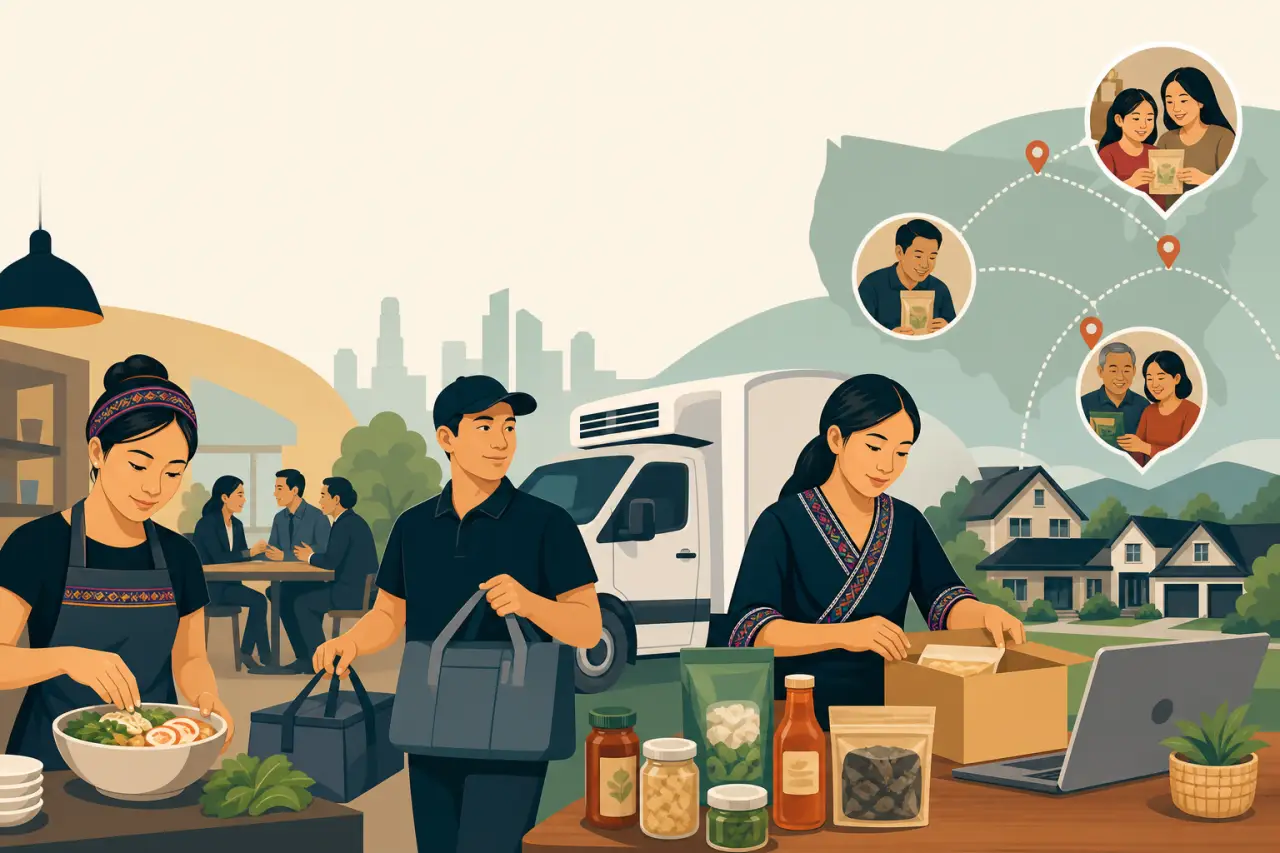
- A restaurant adds catering, which uses the same kitchen and the same skills but reaches customers — offices, weddings, community events — who were never going to walk in for a regular meal.
- A grocery store that's been serving one neighborhood for years starts selling shelf-stable specialty items online, reaching Hmong households in cities that don't have a store like it at all.
- A tailor who's built a name doing custom paj ntaub work locally starts taking orders from other cities for events, shipping finished pieces instead of requiring an in-person visit.
Multiply that kind of growth across enough businesses and it adds up to something measurable — their impact on Minnesota's economy is a real, quantifiable piece of the picture in states with large Hmong communities.
The common thread isn't "expand aggressively" — plenty of businesses that tried to open a second location too early ended up straining the first one instead of growing. It's diversifying around the thing that's actually working: the skill, the recipe, the reputation — and finding a new way to reach people with it, rather than assuming the only way to grow is a bigger version of exactly what you're already doing.
Going Beyond Word of Mouth Without Losing What Made It Work
Word of mouth gets a business to its first real customer base, but it has a ceiling too — it only reaches people who already know someone connected to you. The businesses that grow past that ceiling don't abandon word of mouth; they add a layer on top of it, usually starting with something as basic as making sure the business is actually findable online. That means a business listing with:
- Correct hours
- Real photos
- A phone number that gets answered
Not a Facebook page that hasn't been updated since it opened. Getting that layer right often means leaning on marketing built for Hmong-owned businesses specifically, since generic small-business advice rarely accounts for how trust actually moves through this community.
The next layer is asking happy customers for something they'd have given anyway if asked: a review. Word of mouth inside the community happens naturally, but a public review is what lets a stranger searching online borrow that same trust before they've ever met you. Most customers are glad to leave one; they just need to be asked at the right moment, right after a good experience, rather than left to remember on their own.
What trips businesses up here isn't the effort — it's the voice. A business that built its name on being personal and trustworthy sometimes goes online and starts sounding like a generic ad, and that mismatch is noticeable. The businesses that do this well keep the same voice they'd use talking to a customer in person — direct, warm, specific about what they actually offer — and just make sure more people can find it.
Formal Systems Are Not a Betrayal of How You Started
A lot of these businesses start on cash, trust, and a notebook, and there's real resistance to changing that once it's been working — a separate business bank account, real bookkeeping, a written agreement with a supplier or a landlord can feel like unnecessary formality being imposed on something that runs fine on a handshake. But the businesses that get past a certain size are, without exception, the ones that eventually build those systems in.
The reason is practical, not cultural.
- Without separate books, it's genuinely hard to know whether the business is profitable or just busy — revenue and personal spending blur together, and by the time a slow season hits, there's no clear picture of how much cushion actually exists.
- Without any paper trail, applying for a small loan or a lease on a bigger space becomes nearly impossible, because there's nothing to show a lender beyond "trust me."
- Without a written agreement, even with someone you trust completely, a misunderstanding about price, timing, or scope becomes expensive to untangle precisely because there was nothing written down to fall back on.
None of this requires bringing in someone who doesn't understand how the business actually runs. A bilingual accountant or bookkeeper who already works with small, family-run businesses can translate between the two worlds — keeping the relationships personal while giving the business the paperwork it needs to grow, get financing, or eventually get passed on to someone else.
Succession Planning Starts Earlier Than It Feels Like It Should
A business built around one person's skill and relationships has a quiet vulnerability built in: what happens when that person can't run it anymore. It's an uncomfortable thing to plan for while the founder is still healthy and the business is still growing, which is exactly why it tends to get put off — and why so many otherwise-successful family businesses stall out or close entirely once the founding generation steps back, not because the business itself failed, but because there was no plan for who runs it next.
The businesses that avoid that outcome start bringing the next generation in early, and not just to learn the trade. A child who's been helping in the kitchen since they were a teenager might know the recipes cold but have never seen the supplier invoices, never sat in on a lease negotiation, never had to make a call about a slow month. Real succession means handing over the financial and relationship side of the business gradually, alongside the craft — so that by the time the transition actually happens, it's not the first time the next generation has seen how the whole thing works.
This connects directly back to documenting the skills the business was built on. A recipe or technique that only lives in one person's memory is a real risk twice over — once if that person is unexpectedly unavailable, and again at the moment the business needs to be handed to someone new. Writing it down isn't a betrayal of the tradition it came from; it's what makes sure the tradition survives the transition instead of leaving with the person who first taught it.
Questions people ask
How do I price my product fairly if it's based on a skill my family taught me?
Price based on the years it took to learn the skill, not just the materials that go into it. Underpricing is the most common mistake, usually from not wanting to profit off something that was a gift. But a price that only covers ingredients and gas doesn't leave anything to reinvest or survive a slow month. Fair pricing is what lets the business actually grow.
Should I hire family members to work in my business?
Family labor is a real advantage early on, but it needs real structure to last. Be specific about who does what, agree out loud on hours and what "helping out" means, and eventually pay them actual money instead of leaving it vague. Formalizing roles doesn't make relationships less personal—it keeps resentment from building as the business grows.
How do I grow my business beyond my neighborhood?
Add something adjacent to what's already working, rather than just expanding the original thing. A restaurant can add catering. A tailor can take online orders from other cities. A grocery store can sell specialty items online. This uses the same skill or product but reaches customers in different places who would never walk in otherwise.
What online presence do I actually need to grow past word of mouth?
Start with a business listing that has correct hours, real photos, and a phone number that gets answered—not a Facebook page that hasn't been updated since you opened. Then ask happy customers for reviews right after a good experience. Keep the same warm, direct voice you'd use talking to someone in person. That's what lets strangers trust you before they've met you.
Written by
Hmong Network Team
Directory & Digital Services
We run the Hmong Network directory and do the web design and SEO/AEO work behind the results in our case studies. These guides come out of that same hands-on work with Hmong-owned businesses — not secondhand research.
