
Why 'Shop Local' Works, and How to Actually Ask for It
TL;DR
"Shop local" only moves people when you explain where the money actually goes and make it effortless to choose you — not when you rely on the slogan alone.
The Case Beyond Guilt
"Shop local" gets pitched most often as a favor to the owner, which is a weak reason for anyone to pay a little more or drive a little further. It puts the customer in the position of doing you a kindness, and most people, most of the time, choose convenience over kindness when they're tired and just need dinner on the table.
The stronger case is economic, not sentimental: money spent at a business rooted in your community is more likely to get spent again nearby, on local payroll, local suppliers, a landlord who also lives in the area, rather than routing straight out to a corporate headquarters somewhere you'll never visit. That's not guilt. That's just where the dollar goes next. Add up enough of those dollars across a whole business community and you can see their impact on the local economy directly, in jobs and other businesses that stay open because of it.
Most customers have never actually thought this through, because nobody has ever laid it out for them in a way that connects to their own choices. They know "local is good" as a vague civic value, the same category as recycling or voting, but they don't know it as something that changes what a $40 dinner check actually does for their own neighborhood. Saying that plainly, once, in a place they'll actually read it, does more than any "support local" sticker ever will.
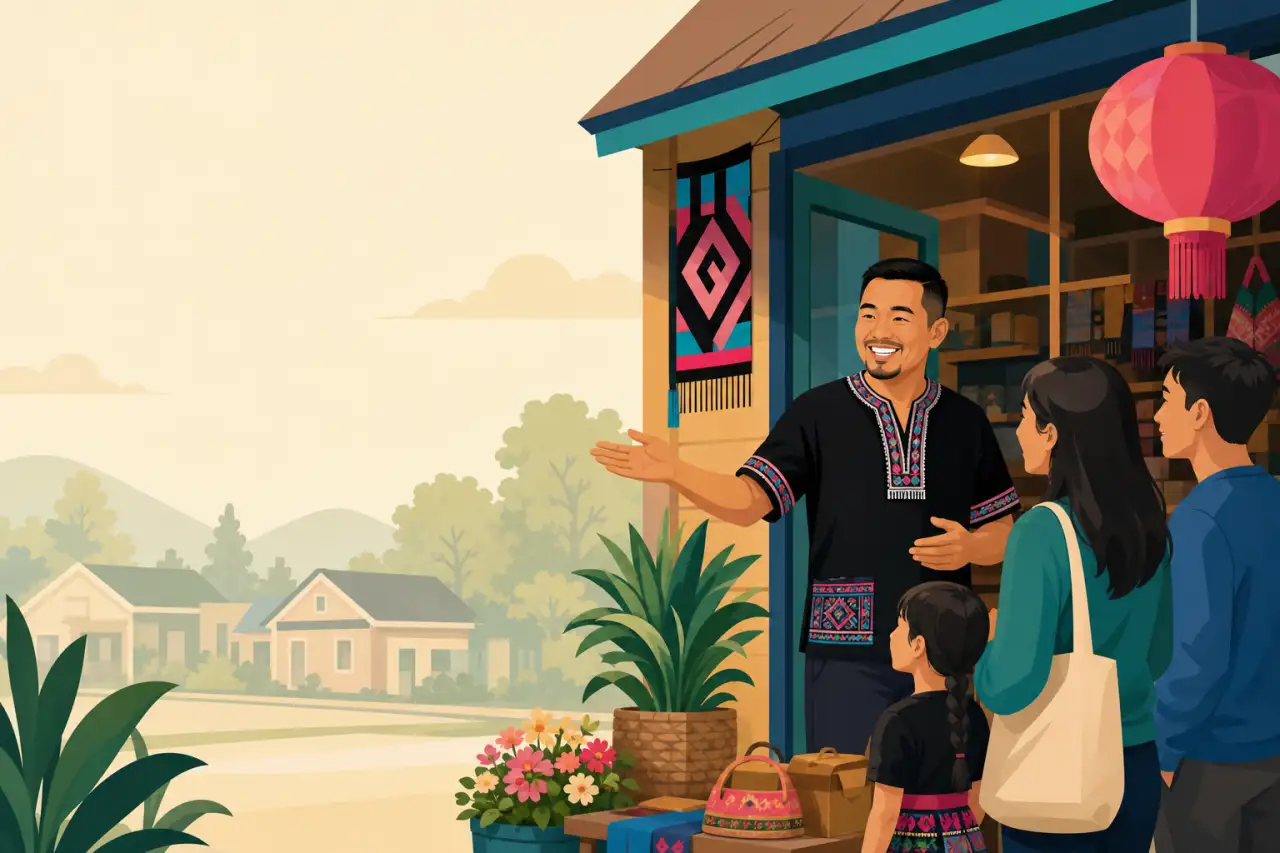
What This Looks Like for a Hmong-Owned Business Specifically
If your business also serves a specific community inside the broader local one, "local" is doing two jobs at once, and it helps to name both. There's the geographic case above, and there's a second case: you may be the place that carries a spice blend, a fabric, a style of catering, or a language of service that nobody else within an hour's drive offers at all.
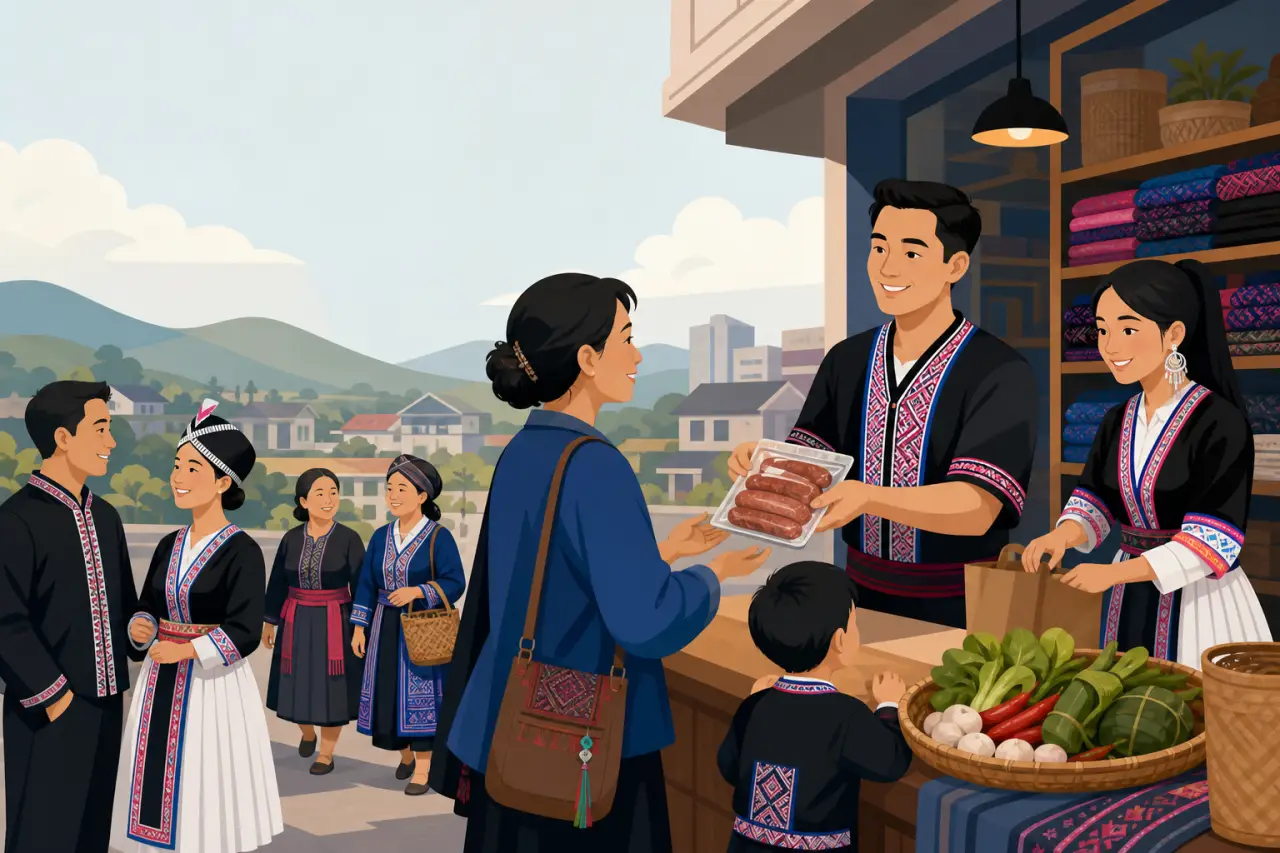
That second case is often the stronger one, and it's the one owners underplay the most. A customer who drives twenty extra minutes for pork sausage made the way their grandmother made it, or for a shop where they can explain a problem in Hmong instead of translating it in their head first, isn't choosing you out of loyalty to a slogan. They're choosing you because the alternative is a worse version of what they actually want, or no version at all.
Say that out loud too. Not as a marketing angle bolted onto the business, but as the plain truth of what you're the only option for. A new customer outside that community who hears it framed this way, we're the only shop in the metro that makes this dish the traditional way, understands something a generic "family owned" sign never communicates: that choosing you gets them something they can't get anywhere else, not just something that feels nice to support. That's the fuller version of why supporting Hmong-owned businesses matters — not abstract goodwill, but access to something genuinely unique.
How to Say the Quiet Part Without Sounding Like a Guilt Trip
The line between "here's why this matters" and "you're a bad person if you shop elsewhere" is thinner than most owners think, and customers can feel the difference in half a sentence. The guilt-trip version leads with the business's need: we're struggling, please support us, small businesses need you now more than ever. It's honest, but it puts the customer on the defensive, and defensive customers don't come back.
The version that actually works leads with what the customer gets, and treats the community benefit as a bonus fact rather than the ask itself. Compare "please shop local this holiday season" to "every order here goes through our own kitchen and gets picked up by one of three delivery drivers who live in this zip code" — the second one is just as true and twice as persuasive, because it's concrete enough to picture and makes no claim on the customer's conscience at all.
Put this kind of line somewhere a customer sees it without having to look for it:
- A line on the receipt
- A sentence on the About section of your listing
- A caption under a photo of your actual staff on your social page
One clear, specific sentence beats a paragraph of civic appeal every time, and it never needs updating unless the fact itself changes.
Make the Local Story Visible, Not Just True
Being locally rooted and looking locally rooted are two different jobs, and a lot of genuinely community-grounded businesses lose customers to competitors who simply did the second one better. If every fact about your sourcing, your staff, and your history lives only in your head, a new customer has no way to find any of it, and they'll assume you're exactly like the chain down the street because nothing tells them otherwise.
Photos do more work here than paragraphs. A picture of the actual person behind the counter, the family that started the shop, or the supplier you buy produce from communicates "local" faster than any amount of text, and it's the kind of thing a customer will screenshot and send to a friend without you asking them to. If you haven't updated your business photos in a year or two, that's the cheapest fix available to you this week.
Your listing page, wherever people find you online, whether that's here on Hmong Network, your own website, or a review site, is the one place you fully control the story. Use the actual description field to say something specific:
- How long you've been open
- Who runs it
- What you make in-house versus what you bring in
- What part of the neighborhood you're actually embedded in
A blank or generic listing is a missed chance to make the case for yourself before a customer even walks in.
Partner With Other Local Businesses Instead of Competing With Them
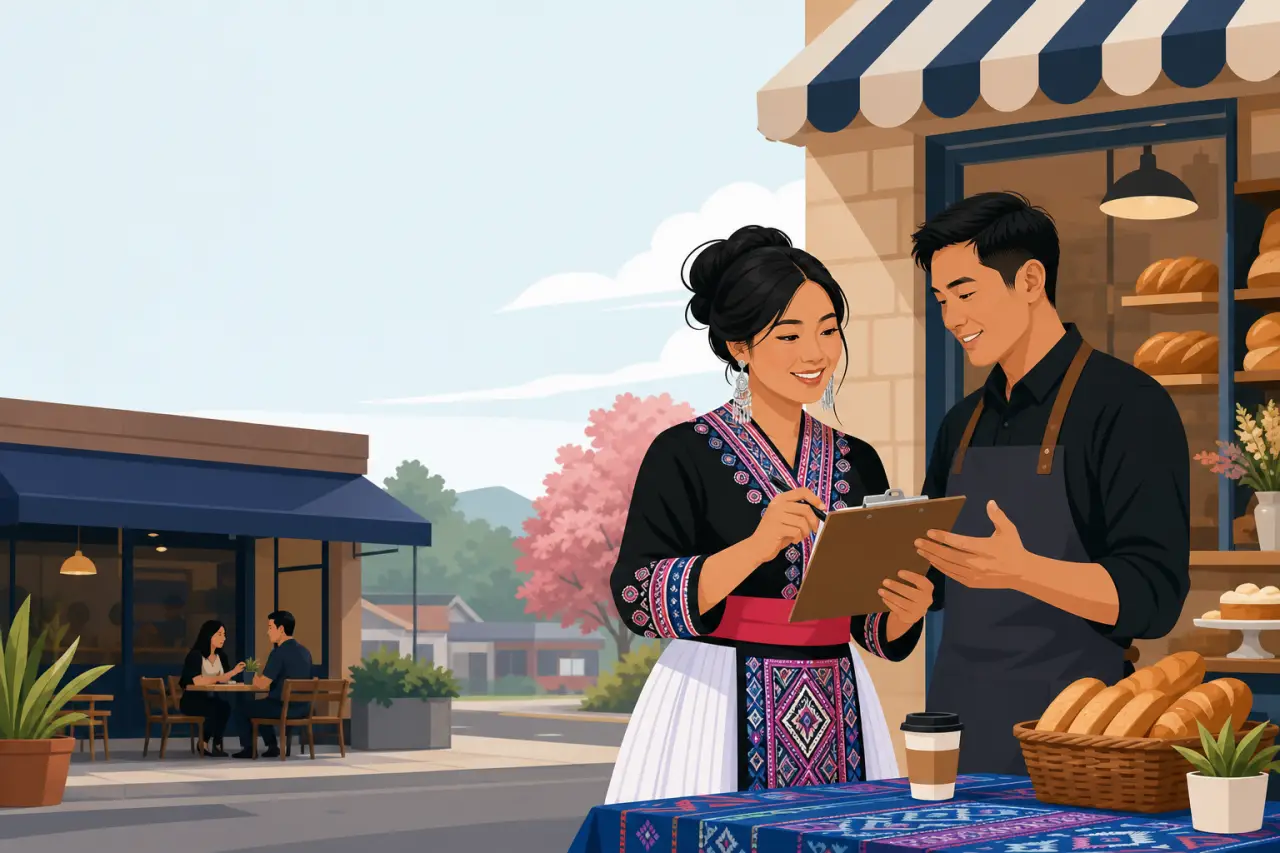
Two businesses that both benefit from "shop local" sentiment aren't really competitors, even if they sell overlapping things, and treating every nearby business as a rival wastes a resource that costs nothing to use. A restaurant and a bakery two doors down aren't fighting for the same dollar the way a restaurant and a delivery app are; they're both trying to convince the same customer that this street, this block, this community is worth choosing over a strip mall on the highway. Teaming up with other local businesses like this costs nothing to try and works precisely because you're not actually competing for the same sale.
Cross-promotion between businesses like these is close to free and reaches people who already trust a recommendation more than an ad:
- A flyer for a nearby tailor sitting on your counter
- A shoutout to a neighboring shop in your own social posts
- A joint event where two or three businesses split the cost of a tent and a folding table at a weekend market
All of these move real customers without a real budget behind them.
This matters even more inside a specific community network, where the businesses that serve it are often connected by more than proximity, shared suppliers, overlapping customer bases, sometimes family. A referral from one Hmong-owned business to another carries weight that a stranger's online review can't match, because it comes with an implicit vouching that the recommender is putting their own reputation behind. Don't let that advantage sit unused because it feels awkward to ask a fellow owner for a favor; most owners are glad to be asked, because the favor runs both directions eventually.
Show Up Where Your Customers Already Are
You don't need to invent reasons for your community to gather around your business; those reasons mostly already exist, and the job is showing up at them rather than waiting for foot traffic to find you on its own:
- Hmong New Year celebrations
- Community fundraisers
- School events
- Farmers markets
- Church and temple functions
These are places where the people most likely to become loyal customers are already standing in one place, already primed to notice a familiar name.
A folding table with samples and business cards at one of these events will usually outperform an equivalent amount spent on a digital ad aimed at strangers, because everyone walking past already has some reason to trust the setting they're in. You're not interrupting their day the way an ad does; you're part of an event they chose to attend.
Sponsoring something small and visible works the same way and tends to be remembered longer than the dollar amount would suggest:
- A youth soccer team's jerseys
- A table at a community dinner
- A prize for a school raffle
People notice who shows up for their kids' activities and their community's traditions, and they remember it specifically when they're deciding where to spend money on something you sell. This is slower than a marketing campaign, but it compounds, and it's the kind of local presence that a competitor with a bigger ad budget genuinely cannot buy their way into.
Turn a First Visit Into a Returning Customer
Getting someone in the door once because of a local-pride pitch is the easy part; the pitch itself doesn't do anything to bring them back a second time, and too many businesses treat the first visit as the finish line instead of the starting point. What happens in that first visit, and what happens right after it, decides whether "shop local" turned into a customer or just a one-time transaction that happened to feel good. Keeping the customers you already have costs far less than finding new ones, which is exactly why that first visit is worth treating as the start of a relationship rather than the end of a sale.
Ask for something small before they leave:
- A review
- A follow on social media
- Permission to text them about a seasonal item
Most customers who had a good experience will say yes if you ask directly, but very few will do it unprompted, because it simply doesn't occur to them unless you make the ask specific and easy. "If you have a minute, a review helps other families in the area find us" works better than a generic sign near the register, because it explains why the small favor matters.
A simple loyalty mechanism, even something as basic as a punch card or a small discount on a customer's next visit, gives people a concrete reason to come back rather than relying on them to remember you fondly on their own. It doesn't need to be sophisticated to work; it needs to exist, because the businesses that never ask for a second visit are the ones customers quietly drift away from without meaning to.
Notice What's Actually Working, Not Just What Feels Good
It's easy to assume the "shop local" pitch is landing because customers nod along when you mention it, but nodding and acting are different things, and the only real signal is whether people are actually coming back, referring others, or mentioning where they heard about you. Pay attention to that instead of guessing.
A simple, low-effort way to track this: ask new customers how they found you, and actually keep a rough tally, even a sticky note behind the register. If most new faces mention a friend's recommendation or a community event, your relationship-based efforts are working and deserve more of your time. If most mention seeing an ad or searching online, your local-story pitch may not be reaching people at the moment they're deciding, and it's worth moving that story further upstream, onto your listing page or your storefront window, where it reaches someone before they've already chosen.
None of this needs to be formal. The point isn't to build a marketing dashboard; it's to stop guessing which parts of your local story are actually persuading anyone; and to keep doing more of whatever you find out is working, rather than repeating a pitch out of habit long after it's stopped landing.

Questions people ask
How do I explain to customers why they should shop at my local business instead of somewhere bigger?
Lead with what they actually get, not what your business needs. Instead of asking for support, describe something concrete: "Every order goes through our own kitchen and gets picked up by one of our three delivery drivers who live in this zip code." Customers respond to specifics they can picture, not guilt. The community benefit is a bonus fact, not the main ask.
What's the best way to show customers that my business is actually local and rooted in the community?
Photos work better than words. A picture of the person behind the counter, the family that started the shop, or your actual suppliers communicates "local" faster than any paragraph. Update your business listing with specific facts: how long you've been open, who runs it, what you make in-house, and what part of the neighborhood you're embedded in.
How do I get customers to come back after their first visit?
Ask for something small before they leave: a review, a social media follow, or permission to text them about seasonal items. Most customers who had a good experience will say yes if you ask directly. A simple loyalty mechanism like a punch card gives people a concrete reason to return, rather than hoping they remember you fondly.
What kind of local events should I show up at to reach my community?
Show up where your customers already gather: Hmong New Year celebrations, community fundraisers, school events, farmers markets, and church or temple functions. A folding table with samples and business cards usually outperforms an equivalent digital ad, because everyone walking past already has a reason to trust the setting and you're not interrupting their day.
Written by
Hmong Network Team
Directory & Digital Services
We run the Hmong Network directory and do the web design and SEO/AEO work behind the results in our case studies. These guides come out of that same hands-on work with Hmong-owned businesses — not secondhand research.
