

Should Your Business Sell on Marketplaces Too?
TL;DR
Marketplaces bring buyers you didn't have to find yourself and handle payment for you, but the fees eat more of your margin than most sellers expect, and the customer relationship stays partly rented, not owned.
The Real Trade-Off: Rented Traffic vs. Your Own
A marketplace hands you something that's expensive and slow to build on your own:
- People who are already searching for what you sell
- A checkout that already works
- In some cases, a payment and shipping system you don't have to set up yourself
If you're a new sauce maker who just started selling jars on Etsy, or a seamstress putting paj ntaub accessories on Facebook Marketplace, that head start is real — you didn't have to teach anyone that your product exists. They were already looking.
The trade-off is that the relationship with the person buying from you partly belongs to the platform, not you. The marketplace decides how your listing gets shown, what fees change and when, and whether a policy update means your product suddenly needs a different photo format or a different return window. None of that is under your control, and none of it comes with a warning beyond an email you might not open in time.
That's not a reason to avoid marketplaces — it's a reason to go in with your eyes open. Before you commit to selling somewhere, read the actual fee schedule, not the marketing page. Then do the math on one real sale, subtracting each of these from your price:
- The marketplace's cut
- Payment processing
- What shipping actually costs you after the marketplace's shipping label discount, if there is one
What's left over is your real margin, and it's often smaller than people expect the first time they calculate it honestly.
What the Fees Actually Do to Your Margin
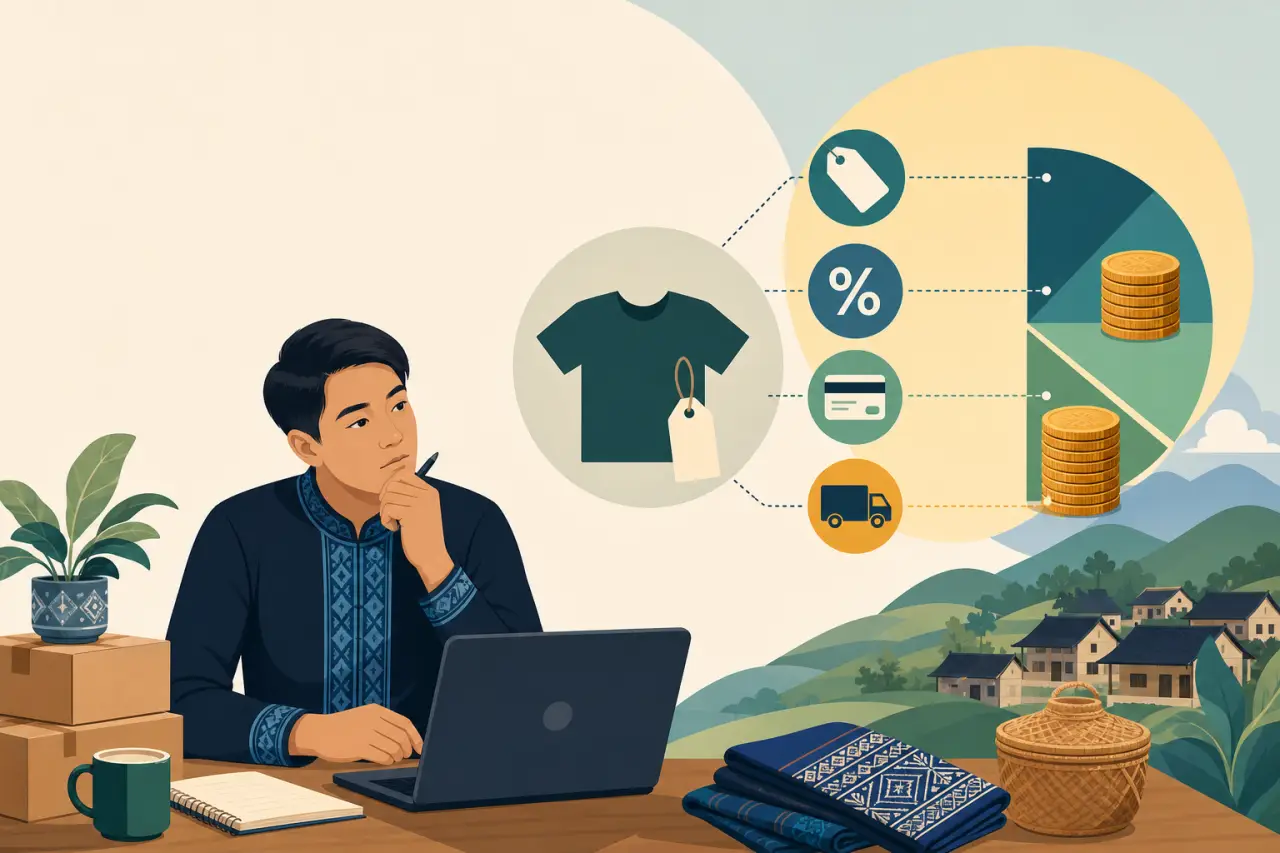
Marketplace fees rarely show up as one number, and it helps to understand how seller fees and commissions work before you commit to a platform. The typical breakdown looks like this:
- A listing fee (sometimes small, sometimes per item, sometimes per month)
- A transaction fee taken as a percentage of the sale
- A payment processing fee on top of that
- A shipping label fee, if you're using their shipping label service
Individually, each one looks small. Added together, it's common for a marketplace to take somewhere between ten and twenty percent of a sale before you've paid for the ingredients, materials, or your own time.
Say you sell a $25 item. A marketplace with a five percent transaction fee, a three percent payment processing fee, and a listing fee that averages out to a dollar or two per sale can easily take four to five dollars off that $25 before you've paid for what's inside the box. If your cost to make or source that item is already twelve dollars, you're not making the margin the sale price suggests you're making.
This isn't a reason to stay off marketplaces — it's a reason to get intentional about pricing your products for a marketplace rather than using the same price you'd charge in person or on your own site. Some sellers build the marketplace fee into a slightly higher price on that platform only, so their in-person or direct-order customers still get the better deal. Others accept a thinner margin on marketplace sales because the volume and reach make up for it. Either is fine — the mistake is not knowing which one you're actually doing.
Matching the Marketplace to What You Actually Sell
Not every marketplace fits every business, and trying to be everywhere at once usually means managing five different inboxes badly instead of one well. Start by matching the platform to what you're actually selling:
- If you make something by hand — paj ntaub, jewelry, embroidery, home goods — a handmade-goods marketplace like Etsy puts you in front of people specifically looking for that kind of product, and its buyers already expect handmade pricing and handmade timelines.
- If you're selling food — egg rolls, sauces, baked goods, a meal prep service — a delivery marketplace like DoorDash or Uber Eats gets you in front of people who are hungry right now, but expects you to already have a food business set up to handle that volume and those pickup windows.
- If you're selling secondhand items, furniture, or offering a local service like alterations, lawn care, or car detailing, a local buy-and-sell group or Facebook Marketplace listing works better than a national platform, because the whole point is someone nearby who can pick it up or show up in person.
- If you sell wholesale to other small shops, a wholesale-focused marketplace connects you to retail buyers instead of individual customers, which is a completely different sales motion.
Pick one that actually fits, get comfortable running it, and see how it performs before you add a second. A slow, working system on one platform beats a fast, sloppy one spread across four.
Writing a Listing That Gets Picked Over the Other Ten
Once you're on a marketplace, you're not just competing with other sellers in general — you're competing with the other listings sitting right next to yours on the same search results page, so a few marketplace listing best practices go a long way toward getting picked. A buyer scrolling past ten similar items decides in about a second which ones are even worth clicking on, and that decision is almost entirely made by the photo and the price, not the description.
Photos are where a buyer makes that snap decision, so get them right:
- Use real photos of the actual product, taken in decent light, not a stock image or a photo that makes the item look different from what arrives.
- If you sell food, show it plated or packaged the way it'll actually show up — buyers notice when what they received doesn't match what they saw.
- If you sell something handmade, a photo showing scale, next to a hand or a common object, answers the size question before anyone has to ask it in a message.
Write the title the way someone would actually search, not the way you'd describe it to a friend. “Hmong embroidered coin purse, handmade” gets found; “cute little pouch” doesn't. Put the specific details a buyer needs to decide in the first few lines of the description, not buried at the bottom, because a lot of buyers don't scroll past the preview text:
- Size
- Materials
- Spice level
- Allergens
- Turnaround time
And answer messages fast. On most marketplaces, response time affects how often your listing gets shown at all, not just whether that one buyer comes back.
Protecting the Relationship the Platform Would Rather You Not Have
Every marketplace makes it a little harder to turn a one-time buyer into a repeat customer, because the easiest path for that buyer is to just search the marketplace again next time, not to remember your name. That's not an accident — it keeps the buyer inside the platform, where the platform keeps earning fees.
You can work around that without breaking any rules. Include a card, a sticker, or a printed insert in every order that has your business name, your own website or listing, and a way to reach you directly, such as:
- A phone number
- An Instagram handle
- A QR code to your Hmong Network profile
A lot of marketplace sellers skip this because it feels like extra work for a single sale, but it's the cheapest advertising you'll ever do: the buyer already likes your product enough to have bought it once.
If the buyer messages you with a question, answer it in a way that's genuinely helpful, not just transactional — the same way you would if they walked up to your table at a Hmong New Year vendor market. A good interaction is what turns a marketplace stranger into someone who orders directly from you next time and skips the marketplace fee entirely, which is better for both of you.
Keep a simple list of buyers who order more than once, even if it's just a name and a note in a spreadsheet. That list is worth more than any single sale on the platform, because it's the start of a customer base that's actually yours.

Keeping Orders and Inventory From Running Two Businesses at Once
The most common way a marketplace turns into a headache isn't the fees — it's the logistics. If you're selling the same product on your own site, in person, and on a marketplace, and you're tracking inventory in your head, it's only a matter of time before you sell something twice and have to refund one of them.
Set a cutoff. Decide how many units of something you'll allow the marketplace to sell before you update the count everywhere else, and actually update it — even if that means logging into three different places for thirty seconds after every sale. If you make things to order rather than keeping stock, put your real turnaround time in the listing and stick to it; marketplace reviews are unforgiving on late orders in a way an in-person customer would usually let slide.
Set a specific time each day you check marketplace messages and orders, the same way you'd set hours for your shop. Checking constantly all day is exhausting and doesn't actually get you faster sales; checking never means someone's order sits unacknowledged for two days and they leave a bad review before you even see the message.
If a marketplace starts generating enough orders that it's taking real time away from everything else your business does, that's a sign to act, not a sign to keep pushing through unpaid overtime. Consider one of these:
- Raise your prices there
- Get some help
- Scale back
Knowing When to Pull Back, and When to Lean In
Not every marketplace is going to be worth it, and it's fine to try one and walk away.
Signs it's time to pull back
- Your real margin after fees is thin enough that you're essentially working for free.
- The platform's policies keep changing in ways that cost you money or time.
- The buyers you're getting there rarely come back and rarely buy from you anywhere else.
Signs it's time to lean in
The opposite signal is just as real. If a marketplace is consistently sending you buyers, your margin after fees still works, and you're getting repeat customers who eventually order directly from you — that's a channel worth investing more in, not less. That might mean paying for better placement if the platform offers it, expanding what you list there, spending more effort on optimizing your storefront for search, or simply making sure your listings stay fresh and current instead of set-and-forget.
Either way, keep your own site, your Hmong Network listing, or your storefront as the real home base. That's the one place nobody can change the fee structure on you, take a cut of your sale, or bury your listing under someone else's ad. A marketplace is a good way to get found by people who didn't know you existed. It's a much worse place to build the relationship that keeps them coming back — that part still has to be yours.
Questions people ask
How much do marketplace fees actually take out of my sale?
Between 10 and 20 percent of the sale price is typical, once you add up listing fees, transaction fees, payment processing, and shipping label fees. On a $25 item with a 5 percent transaction fee and 3 percent payment processing fee, you might lose $4 to $5 before you've paid for materials. The mistake isn't using marketplaces — it's pricing the same way you would in person without accounting for the fees.
Should I sell on multiple marketplaces at once?
No. Start with one marketplace that actually fits what you sell, get comfortable running it, and see how it performs before adding a second. Managing five different inboxes badly beats managing one well. A slow, working system on one platform is better than a fast, sloppy one spread across four.
How do I keep customers from just buying on the marketplace every time?
Include a card, sticker, or printed insert with your business name, website or Hmong Network profile, and a direct way to reach you — phone number, Instagram handle, or QR code. This is the cheapest advertising you'll do. Answer questions the way you would at a vendor market. A good interaction turns a marketplace stranger into someone who orders directly from you next time, skipping the fee entirely.
What should I do if a marketplace starts taking up too much time?
If it's generating enough orders to pull you away from everything else, you have three real options: raise your prices there, get some help, or scale back. Pushing through unpaid overtime isn't a solution. Decide when you'll check messages each day and stick to it — checking constantly doesn't get you faster sales.
When should I leave a marketplace?
Pull back if your real margin after fees is so thin you're working for free, if platform policies keep costing you money or time, or if the buyers rarely come back and don't buy from you elsewhere. If it's consistently sending repeat customers who eventually order directly from you and your margin still works, lean in instead by optimizing listings or expanding what you offer there.
Written by
Hmong Network Team
Directory & Digital Services
We run the Hmong Network directory and do the web design and SEO/AEO work behind the results in our case studies. These guides come out of that same hands-on work with Hmong-owned businesses — not secondhand research.
