

Listing Best Practices for Marketplace Sellers
TL;DR
A listing that sells comes down to six things done well: a searchable title, complete details, honest photos, the right category, a defensible price, and a description that answers questions before they're asked.
Start With a Title a Buyer Would Actually Type
Most sellers write their title the way they'd describe the item to a friend, which is exactly the wrong approach. A buyer isn't standing in front of your product hearing you talk about it — they're typing a handful of words into a search box, or scanning a results page for the phrase that matches what's in their head. Your title's job is to be that phrase.
Lead with what the item actually is, then the details that make it findable:
- brand or maker
- material
- size
- color
- any distinguishing feature a buyer would search for
"Hand-Embroidered Paj Ntaub Wall Hanging, 24x36 Inch" tells a buyer exactly what they're looking at and lets it surface for several different searches at once. "Beautiful One of a Kind Piece!!!" tells them nothing and matches nothing.
Drop the filler. Words like "amazing," "must-see," or "look!" don't match any search a buyer types, and excessive punctuation or all-caps reads as spam to both buyers and the marketplace's own search ranking. If you're tempted to stuff in every possible keyword instead, resist that too — a title crammed with unrelated terms is harder to read and doesn't actually help you show up for more relevant searches, just more irrelevant ones.
 Browse Hmong-owned businessesFind a business near you in any category.
Fill In Every Detail Field, Even the Optional Ones
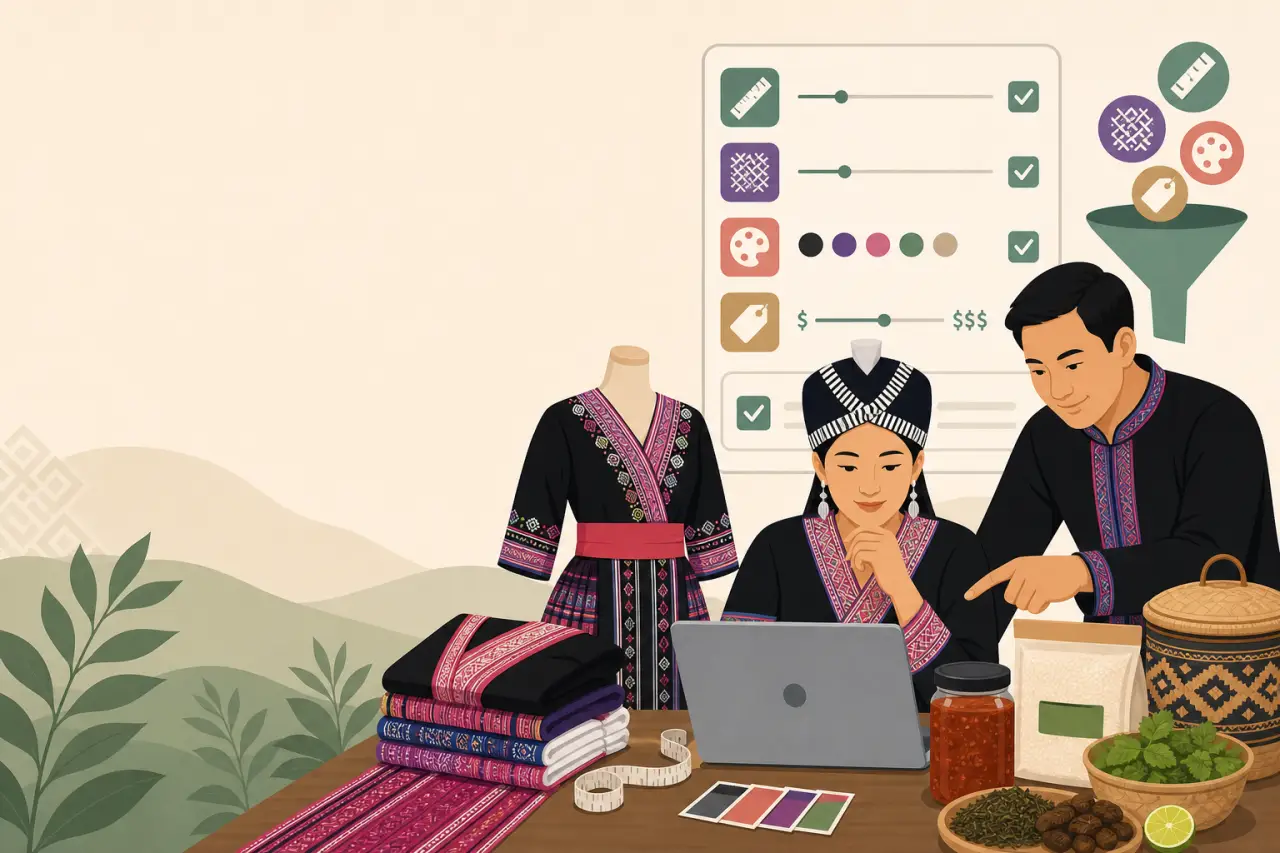
Buyers rarely browse a marketplace from the top down. They filter — by size, by material, by color, by price range — and a filter only works if you told the system what to put in it. A blank size field doesn't mean "see description for details" to a buyer who's filtering by size; it means your listing simply doesn't show up in their results at all.
This matters even more for the kind of specialty items Hmong-owned sellers often carry, where the standard fields don't always fit neatly.
- If you're selling a traditional garment, note the sizing convention buyers should expect, not just a generic small/medium/large — a piece cut to a traditional fit can run very differently from off-the-rack sizing, and a buyer who guesses wrong is a buyer who returns it.
- If you're selling food, list ingredients and allergens even when the field is marked optional — a buyer scanning for something dairy-free or peanut-free will filter you out by default if that field is empty, even if your product would have qualified.
It's worth doing this even for fields that feel obvious or repetitive to fill in every time. A seller listing several similar items — different colors of the same embroidered pattern, say, or different flavors of the same sauce — can be tempted to leave the differentiating field blank on all but the first listing, assuming buyers will figure it out from the photo or title. They usually don't, because they're filtering, not reading.
Treat every field like it's the one piece of information standing between a buyer and finding you. It usually is. Getting in the habit of filling in product details correctly on every new listing is what keeps this from turning into a one-time cleanup project.
Photos Are Doing More Work Than Any Other Part of Your Listing
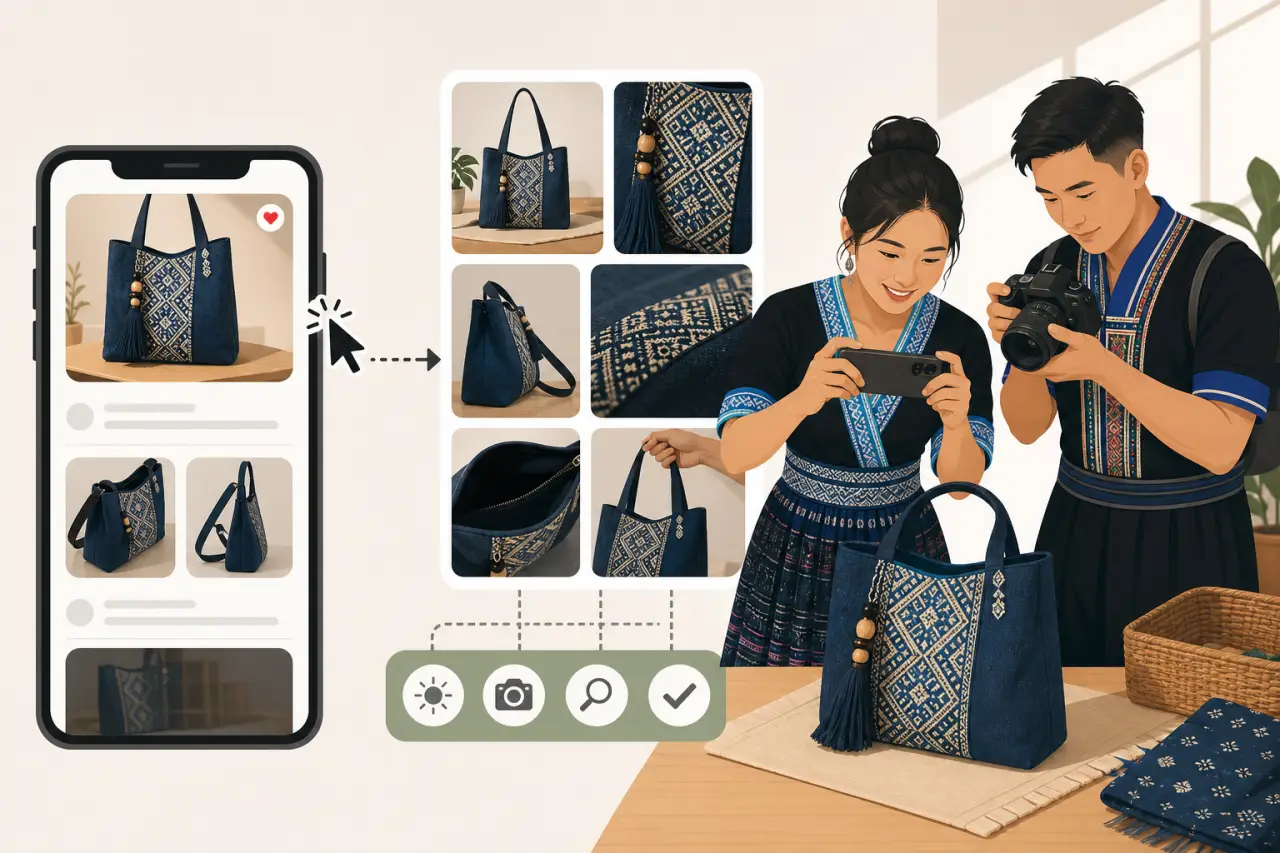
A buyer decides whether to click into your listing almost entirely off the thumbnail photo, and decides whether to actually buy almost entirely off the photos after that. No amount of writing in your description will undo a blurry, dark, or misleading first image. A few basic photo guidelines for your listings go further toward fixing that than any editing app will.
- Shoot in natural light where you can — daylight near a window does more for a photo than any ring light most small sellers own.
- Show the item from multiple angles, including close-ups of texture, stitching, packaging, or any detail a buyer would want to check before buying something they can't hold.
- If there's a flaw or a natural variation — common with handmade goods, where no two pieces are perfectly identical — photograph it honestly rather than cropping around it.
A buyer who receives exactly what they saw becomes a repeat customer; a buyer who feels misled becomes a return and a bad review.
Photos for food and made-to-order items
For food items, photograph the product the way it will actually arrive — plated or packaged, not a stock-style shot that doesn't match what ships. For handmade or made-to-order goods, a photo that shows the making process or the maker's hands at work does something a plain product shot can't: it tells a buyer this was made by a real person, not pulled off a shelf, which is exactly the thing that justifies a handmade price over a mass-produced one.
Avoid backgrounds that compete with the product — a busy tablecloth or cluttered room pulls attention away from the item itself. And never reuse the same photo across multiple different listings; besides being confusing to buyers, it makes your whole storefront look less carefully kept.
Put Your Item in the Category Buyers Are Already Browsing
Category placement is easy to treat as an afterthought, but it's one of the biggest visibility levers you control. Buyers browse and filter by category constantly, and an item sitting in the wrong one is effectively invisible to anyone who isn't searching by exact keyword.
Always choose the most specific subcategory available rather than a broad catch-all. If your item could reasonably fit two categories, put it in the one buyers are more likely to be browsing when they're in the mindset to buy it — not the one that's technically most accurate. A jarred sauce belongs under specialty foods, not "other," even if "other" feels safer. A hand-carved jewelry box belongs under home goods or jewelry, not a generic crafts bucket that also holds a hundred unrelated items.
This is also where it's worth checking your work rather than setting it once and forgetting it. Marketplace categories occasionally get restructured or split as a platform grows, and a listing placed correctly a year ago can end up sitting in a category that's since become the wrong fit. A quick pass through your own storefront every few months, looking at where each item actually landed, catches this before it costs you months of quiet underperformance.
If your product genuinely doesn't fit any existing category well, that's worth a quick message to your marketplace contact rather than a guess. A miscategorized listing doesn't just underperform quietly — it can sit there for months getting almost no views, and because it's technically live, it's easy to assume it's working when it isn't.

Price It Against What's Actually Listed, Not What You Wish It Were Worth
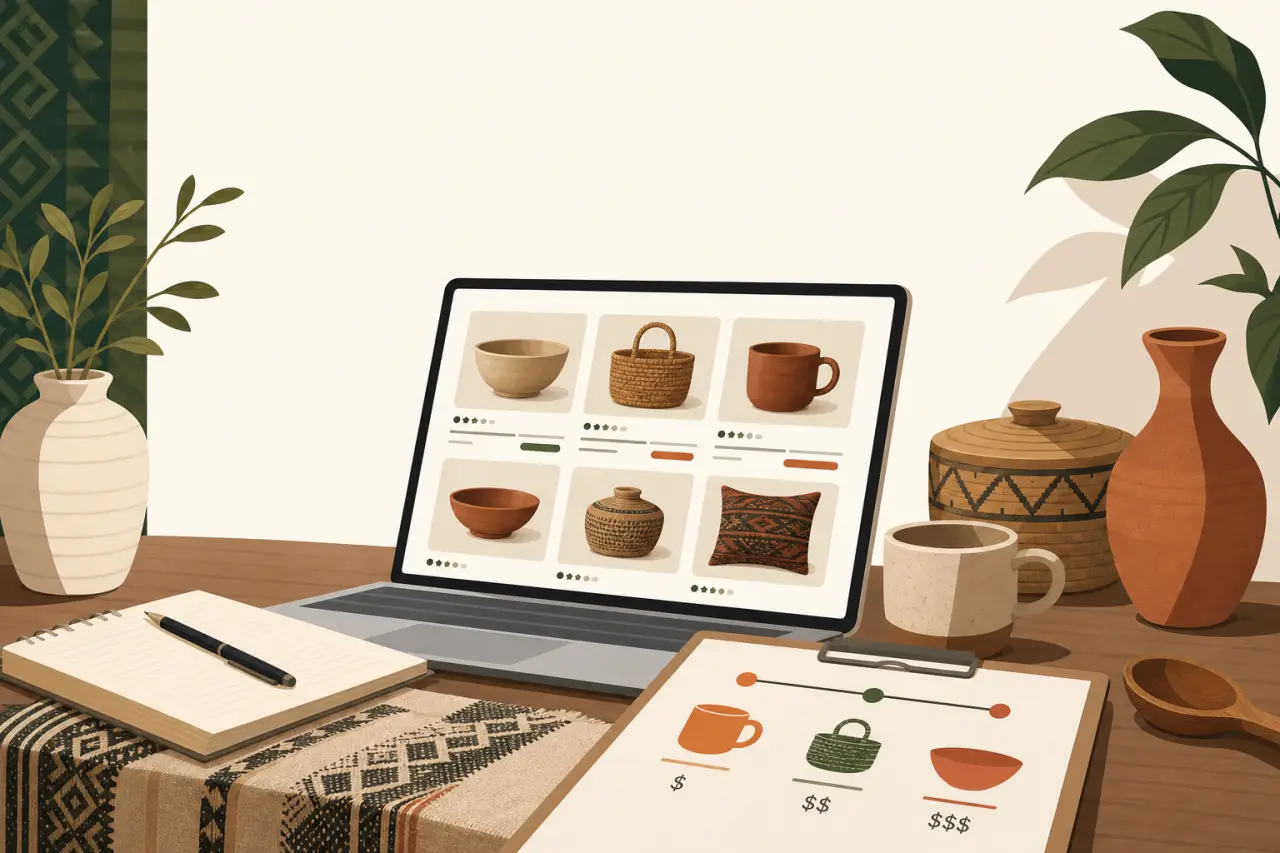
Before you set a price, spend five minutes looking at comparable items already listed on the marketplace — similar product, similar size, similar quality tier. A price that sits far outside that range, in either direction, tends to get skipped even when everything else about the listing is strong. Too high without justification reads as overpriced; too low reads as suspicious or low-quality, especially for handmade goods where buyers expect a fair price for the time involved.
That said, pricing above the going rate isn't a mistake if you give buyers a reason. Small-batch, handmade, or made-to-order items can and should command more than a mass-produced equivalent — but that premium has to be visible in your photos and description, not just implied by the number. Say what makes it different:
- made in small batches
- sourced locally
- hand-stitched rather than machine-sewn
A price without a reason just looks like a high price.
Also build your marketplace's commission into your math from the start rather than backing into it later. Decide what you actually need to net per item, then price so that after the marketplace's cut, that's what lands in your payout — rather than setting a round number and being surprised by what's left. For a deeper walkthrough, see pricing strategies that work across different product types.
Write a Description That Answers the Question Before It's Asked
A good description isn't a sales pitch — it's a buyer's questions, answered in order, before they have to message you and ask. Open with one plain sentence describing what the item is and who it's for. Follow with the specifics a buyer needs to decide:
- exact dimensions
- materials
- care instructions
- what's included and what isn't
If you're not sure where to start, what your item description must include is a good baseline checklist before you write a word.
Then cover the practical details that cause the most back-and-forth messages if they're missing:
- whether the item ships or is local pickup only
- how long a made-to-order item takes before it ships
- any allergen or ingredient information for food
If you only make a certain item in limited batches or seasonally, say so plainly — it sets the right expectation and, done honestly, creates real urgency instead of manufactured pressure.
Keep it in short paragraphs, not one dense block of text. A buyer skimming on their phone will read three short paragraphs before they'll read one long one, and a description they actually finish reading is one that actually answers their question instead of sending them to your messages to ask it directly.

Keep Listings Current So They Keep Working for You
A listing isn't a one-time task — it's something that needs upkeep, or it quietly starts working against you. Update your quantity as you sell, and take a listing down or mark it sold out the moment you're out of stock rather than leaving it live. Nothing erodes buyer trust faster than messaging about an item, waiting for a reply, and finding out it sold weeks ago.
For seasonal items — holiday foods, event-specific goods, anything tied to a particular time of year — update or relist ahead of the season, not after it's already started. Buyers searching for Hmong New Year items or back-to-school goods are looking in the weeks before, not during; a listing that goes live once demand has already peaked misses most of the window.
If you sell variations of the same item — different sizes, colors, or flavors — use your marketplace's variant or option fields instead of creating a separate listing for every version, if that option is available to you. It keeps your storefront easier to browse and consolidates the reviews and history that build trust in a single listing, rather than splitting them across five near-identical ones.

The Small Mistakes That Quietly Cost You Sales
Most underperforming listings aren't failing for one dramatic reason — they're losing sales in small, fixable ways that are easy to overlook once a listing is live and you've moved on to the next thing. A few worth checking on your own storefront:
- reusing the same photo across different products, which makes buyers unsure what they're actually looking at
- a title that's vague or generic enough to match nothing specific
- a price that was set once and never revisited even as comparable listings around it changed
Slow responses to buyer messages matter more than most sellers assume — a buyer with a question who doesn't hear back within a reasonable window usually just buys from someone else rather than waiting. And double-check your own storefront periodically for listings that have quietly gone stale:
- sold-out items still marked available
- seasonal products still listed months after the season passed
- a category that got miscategorized early on and never corrected
None of these mistakes are hard to fix once you see them. The real skill isn't writing a perfect listing the first time — it's going back and checking your storefront every so often with a buyer's eyes instead of your own.

Questions people ask
How should I write my product title on a marketplace listing?
Lead with what the item actually is, then add the details a buyer would search for: brand, material, size, color, and distinguishing features. For example, "Hand-Embroidered Paj Ntaub Wall Hanging, 24x36 Inch" tells buyers exactly what they're looking at and helps it show up in relevant searches. Skip filler words like "amazing" or "must-see" — they don't match any search and can hurt your ranking.
Why should I fill in every detail field on my listing, even the optional ones?
Buyers filter listings by size, material, color, and other details. If you leave a field blank, your item won't show up in those filtered results at all. This matters especially for specialty items like traditional garments with non-standard sizing or foods with allergen information — a blank field means you're invisible to buyers searching for exactly what you have.
What should my first photo look like?
Your thumbnail photo is usually what decides whether a buyer clicks into your listing at all. Shoot in natural light near a window if possible. Show the item clearly from multiple angles, including close-ups of texture or details. If there's a flaw or natural variation, photograph it honestly — a buyer who receives exactly what they saw becomes a repeat customer.
How do I price my item if I'm not sure what it's worth?
Spend a few minutes looking at comparable items already listed on the marketplace — similar product, similar quality. Price in that range or above it, but only if you give buyers a reason: handmade, small-batch, locally sourced, hand-stitched. Build the marketplace's commission into your math upfront so you know what actually lands in your payout.
What information should my product description include?
Start with one plain sentence describing what it is and who it's for. Then cover exact dimensions, materials, care instructions, what's included, shipping details, and any allergen or ingredient information. Keep it in short paragraphs so a buyer scrolling on their phone will actually finish reading it. Think of it as answering their questions before they have to message you.
Written by
Hmong Network Team
Directory & Digital Services
We run the Hmong Network directory and do the web design and SEO/AEO work behind the results in our case studies. These guides come out of that same hands-on work with Hmong-owned businesses — not secondhand research.
