

Rebuilding Your Business Credit After a Setback
TL;DR
Rebuilding business credit isn't one big move — it's pulling your real report, fixing what's actually wrong, separating business credit from personal, and adding a couple of accounts that report your good habits, then giving it a few months to show.
Start With the Actual Report, Not What You Remember
Most owners think they already know why their score dropped, and they're usually only half right. Before you do anything else, pull your actual reports:
- Personal reports from all three bureaus: Equifax, Experian, and TransUnion
- Business reports, if your business has been open long enough to have its own file: Dun and Bradstreet, Experian Business, and Equifax Business
Lenders don't all pull the same one, and the three don't always show the same information, so checking only one leaves you guessing about what a lender you haven't even talked to yet is actually going to see.
Read every line, not just the summary score. A late payment from two years ago might be dragging you down more than the debt you're actually worried about right now, or there could be a flat-out error sitting on there, such as:
- An account that isn't yours
- A balance that's wrong
- A payment marked late that you know you made on time
None of that fixes itself just because time passes. Once you actually know what's on the report, you can stop guessing and start prioritizing the moves that will move the number, instead of the ones that just feel productive.
Know Which Numbers Are Actually Moving the Needle
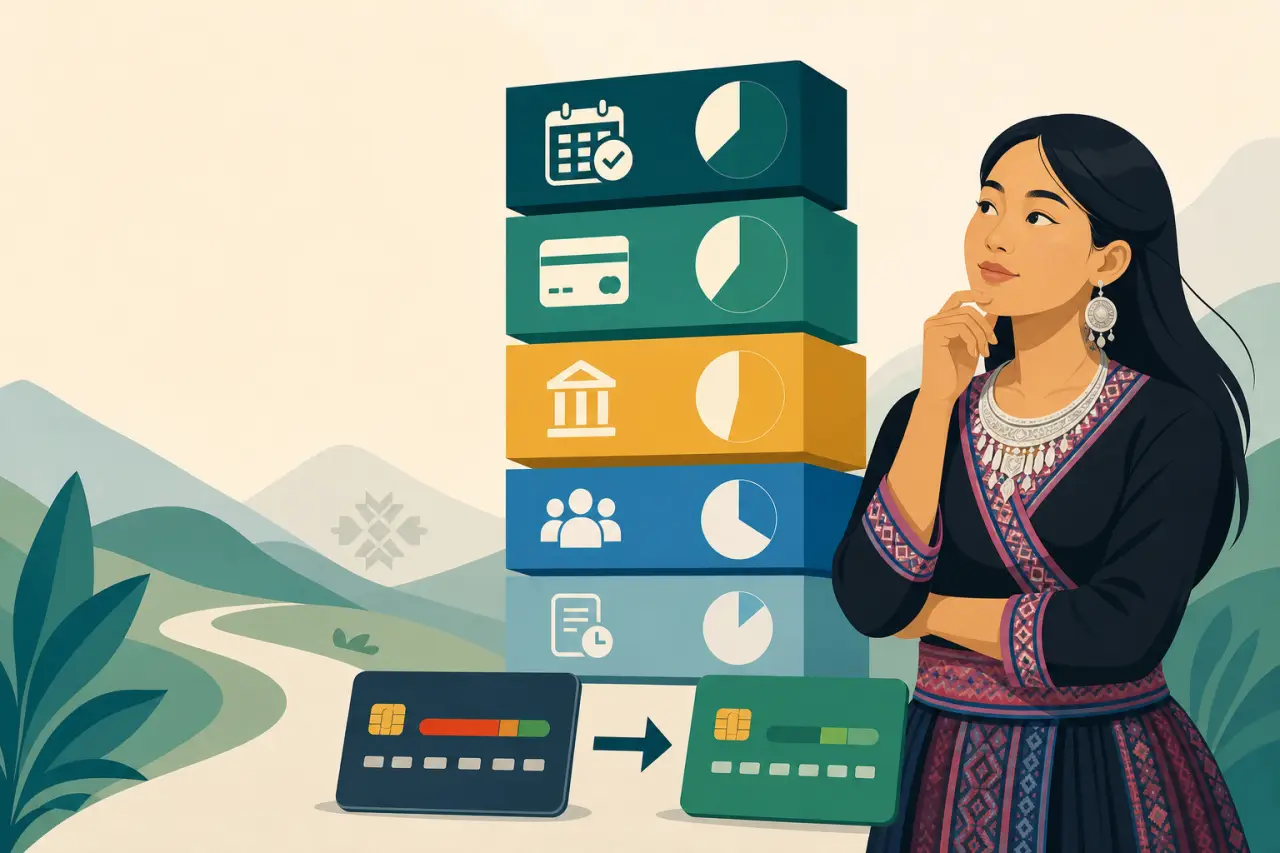
A credit score isn't one thing — it's several factors stacked together, and they don't all carry equal weight. Payment history and how much of your available credit you're using are the two biggest, by a wide margin, over things like how many different types of credit you carry or how many times you've applied recently. That matters because it tells you where to put your energy first.
If you've got a card sitting near its limit and another sitting mostly unused, paying down the near-limit one does more for your score than paying an equal amount toward the smaller balance, because utilization is measured per account as well as overall. A card that's maxed out looks worse to a scoring model than the same dollar amount spread across two cards that are each half used, even though the total debt is identical. This is also why one big missed payment can undo months of on-time ones — it isn't measured as one data point among many, it's weighted as a signal about how you handle credit generally. Knowing this changes what you do with a spare few hundred dollars: toward the highest-utilization balance, not the smallest one, and not toward opening something new.
Dispute Errors Like You Mean It
If you find something wrong on your report, don't just call and vent — dispute it in writing, and be specific. Your dispute should include:
- The exact account you're disputing
- The exact figure or date you're disputing
- Why it's wrong
- Whatever proof you have — a bank statement showing the payment cleared, a closed-account letter, anything dated
Send it in a way you can prove you sent it, and keep a copy of everything, including whatever confirmation the bureau sends back.
Bureaus are required to look into a dispute within a set window, typically a matter of weeks, not months, so if you haven't heard back in that range, follow up rather than assuming it's being handled. If the first response comes back as verified but you're confident the information is still wrong, you can escalate — most bureaus have a process for a second review, and going directly to the business that reported the error in the first place, whether that's an old supplier, a former landlord, or a lender you've since paid off, sometimes moves faster than the bureau's own process. A paper trail matters here more than it feels like it should; if this ever gets disputed again later, being able to show exactly when you flagged it and what you sent is what protects you.
Small, Boring, Consistent Moves Win
Rebuilding credit rewards patience over cleverness, and there's no shortcut around it. A few small, consistent moves add up over time:
- A secured card or a credit-builder loan, where you're essentially pre-paying to establish a payment history, is a slow but reliable way to add positive history when nobody's ready to extend you a real line of credit yet.
- Pay before the statement closing date, not just before the due date — a lot of lenders report your balance on a specific day each month, so a lower balance on that day looks better on your report than a balance that gets paid off a week later, even if you never actually carried a balance in the interest sense. Since income doesn't always land the same every month, budgeting for uneven income can help you plan exactly how much to put toward that balance before the closing date without leaving yourself short elsewhere.
- Ask the suppliers and vendors you already pay reliably whether they report payment history to a business credit bureau — plenty of net-30 wholesalers, restaurant suppliers, and equipment vendors do, and it's essentially a free way to build a track record you're already earning through your regular ordering.
None of this moves a score overnight; give it two or three full billing cycles before you judge whether something is working. And resist the pull to open several new accounts at once chasing a faster fix — each new application shows up as an inquiry, and a cluster of them in a short window reads to a lender like a business that's scrambling, which is the opposite of the story you're trying to tell.
Stop Letting Your Business and Personal Credit Tangle Together
A lot of setbacks hit harder than they need to because business and personal credit were never actually separated in the first place. If you're operating as a sole proprietor without an EIN, without a dedicated business bank account, and paying for supplies on your personal card, then from a lender's perspective there's no real business credit to rebuild — there's just your personal file wearing a business name, and every dip in the business drags your personal score down with it.
Separating the two starts with a few concrete steps:
- Get an EIN from the IRS — it costs nothing and takes a few minutes online, and it's the first real step toward a business identity that can build its own credit file separate from you personally.
- Open a business checking account.
- Route every business expense through that account, even the small recurring ones.
- Put ongoing purchases on a card issued in the business's name rather than yours.
This won't undo the setback you're rebuilding from, but it stops future ones from automatically bleeding into your personal life, and it's what actually lets a business credit history start accumulating on its own instead of forever being a shadow of your personal one.

Talk to the People You Owe Before They Talk About You
The instinct after a rough stretch is to go quiet — stop answering the calls, let the account go to whoever's willing to wait longest. That's usually the worst move available. A landlord, an equipment lender, or a key supplier you've paid reliably for years will often work out a modified schedule if you reach out before you miss a payment, not after, and a renegotiated plan that you actually honor on its new terms frequently doesn't get reported the way an outright missed payment does. Get anything you agree to in writing, even if it's just a follow-up email confirming what was said on the phone, so there's no ambiguity later about what you agreed to. It's also worth revisiting paying yourself while rebuilding — a smaller owner's draw for a few months can free up exactly the cash a renegotiated payment plan needs to stay current.
If you've leaned on family or a community lending circle to get through the tight stretch, which is common in a lot of Hmong-owned businesses and nothing to be embarrassed about, know that those arrangements usually don't report to any bureau, so being current on them doesn't move your credit file even though it's real money and real trust. That's fine as a bridge, but it means the accounts that do report are still the ones doing the actual rebuilding work, so don't let a family loan being current become a reason to deprioritize the reported accounts.
Apply for What You Actually Qualify For Right Now
Right after a setback is the worst time to apply for the loan you actually want. A large term loan or a big business line of credit shortly after a rough patch on your report often comes back as a denial, and that denial itself shows up as a hard inquiry that dings you further — you take a hit for asking and still don't get the money. Match what you apply for to where your file actually stands right now, not where you need it to be in a year.
That usually means starting smaller, with options like:
- A secured card
- A small equipment loan against the equipment itself as collateral
- A microloan through a community development financial institution rather than a traditional bank
CDFIs and community lenders tend to look past a raw score to the fuller picture — they'll actually talk to you about what happened and what's changed since — in a way a large bank's automated underwriting generally won't. It won't be the loan terms you'll qualify for in eighteen months, but taking something appropriately sized now, and paying it down cleanly, is what builds the file that gets you the better terms later instead of another denial on the record. If growth through acquisition is more your speed than a straight loan, it's worth understanding what seller financing actually means — it runs on the seller's judgment of you rather than a bank's formula, which can matter while your file is still recovering.
Build a Quarterly Habit So You're Never Starting From Zero Again
Rebuilding credit isn't a project with an end date so much as a habit you keep running. Once things are moving in the right direction, set an actual recurring check — once a quarter is a reasonable rhythm — to pull your reports again and see whether the moves you made are showing up the way you expected. Scores can lag behind reality by a billing cycle or two, so don't panic if a payment you made three weeks ago hasn't moved the number yet; check the report itself, not just the score, to confirm it's been recorded.
Keep a simple note of your statement closing dates so you're not guessing when to pay down a balance for maximum effect, and revisit your utilization every month rather than only when you're worried about it. The real payoff of this habit isn't just a higher number — it's that the next time cash gets tight, or a big order falls through, or a slow season runs long, you're not starting from zero and guessing again. You already know what your report says, what moves it, and who to call first. Pair that habit with a mindset that survives setbacks, because the goal was never a perfect record — it's staying in the game long enough for the boring, consistent moves to add up.

Questions people ask
What should I do first if my business credit score dropped?
Pull your actual credit reports from all three bureaus — Equifax, Experian, and TransUnion for personal, and Dun and Bradstreet, Experian Business, and Equifax Business for business credit. Read every line, not just the score. Look for errors like accounts that aren't yours, wrong balances, or payments marked late that you made on time. Lenders don't all pull the same report, so checking only one leaves you guessing.
How do I dispute an error on my credit report?
Dispute it in writing, not by phone. Include the exact account number, the specific figure or date you're disputing, why it's wrong, and any proof like bank statements or closed-account letters. Send it in a way you can prove you sent it and keep copies of everything. The bureau has a few weeks to investigate. If they verify it but you're still confident it's wrong, you can escalate to the business that originally reported the error.
What's the fastest way to rebuild my credit score?
There's no shortcut — rebuilding rewards patience over cleverness. Focus on payment history and credit utilization first, since those carry the most weight. Pay down your highest-utilization card, not your smallest balance. Use a secured card or credit-builder loan to add positive history. Ask suppliers you pay reliably whether they report to business credit bureaus. Give it two or three billing cycles before judging if something is working.
Should I separate my personal and business credit?
Yes. Get an EIN, open a business checking account, route all business expenses through it, and use a business credit card instead of your personal one. This won't undo past setbacks, but it stops future problems in your business from dragging down your personal score. It also lets a real business credit file build separately from your personal history instead of being permanently shadowed by it.
Written by
Hmong Network Team
Directory & Digital Services
We run the Hmong Network directory and do the web design and SEO/AEO work behind the results in our case studies. These guides come out of that same hands-on work with Hmong-owned businesses — not secondhand research.
