

The Honest Version of How to Start a Business That Lasts
TL;DR
The businesses that make it aren't the ones with the fanciest plan or the biggest opening — they're the ones that got a real product in front of real customers fast, protected their cash, and grew only the parts that were actually working.
Start Smaller Than Feels Comfortable
The biggest mistake in a first launch is trying to get everything right before you open — the perfect menu, the full inventory, the polished website, the second location already scouted. All that time spent perfecting things nobody's paid for yet is time you could have spent finding out what customers actually want. Before you get attached to any one concept, it's worth picking an idea with a real shot instead of the first one that sounds exciting. Launch with the smallest version of your idea that you can charge real money for, and let their reactions tell you what to fix next.
This feels risky because it means showing people something unfinished:
- A food truck with four menu items instead of fourteen.
- A nail salon open three days a week instead of six.
- A hair braiding business run out of your living room before you sign a lease on a storefront.
It's actually less risky than the alternative, which is spending months and money building something nobody asked for, then finding out at the worst possible time — after the lease is signed and the equipment is bought.
Small also means you can afford to be wrong. If your first four menu items flop, you've lost a few hundred dollars in ingredients and a weekend, not a full commercial kitchen buildout. That's the whole point: fail cheap and early, while a mistake is still just information instead of a crisis.
Keep Your Money Separate and Your Runway Honest
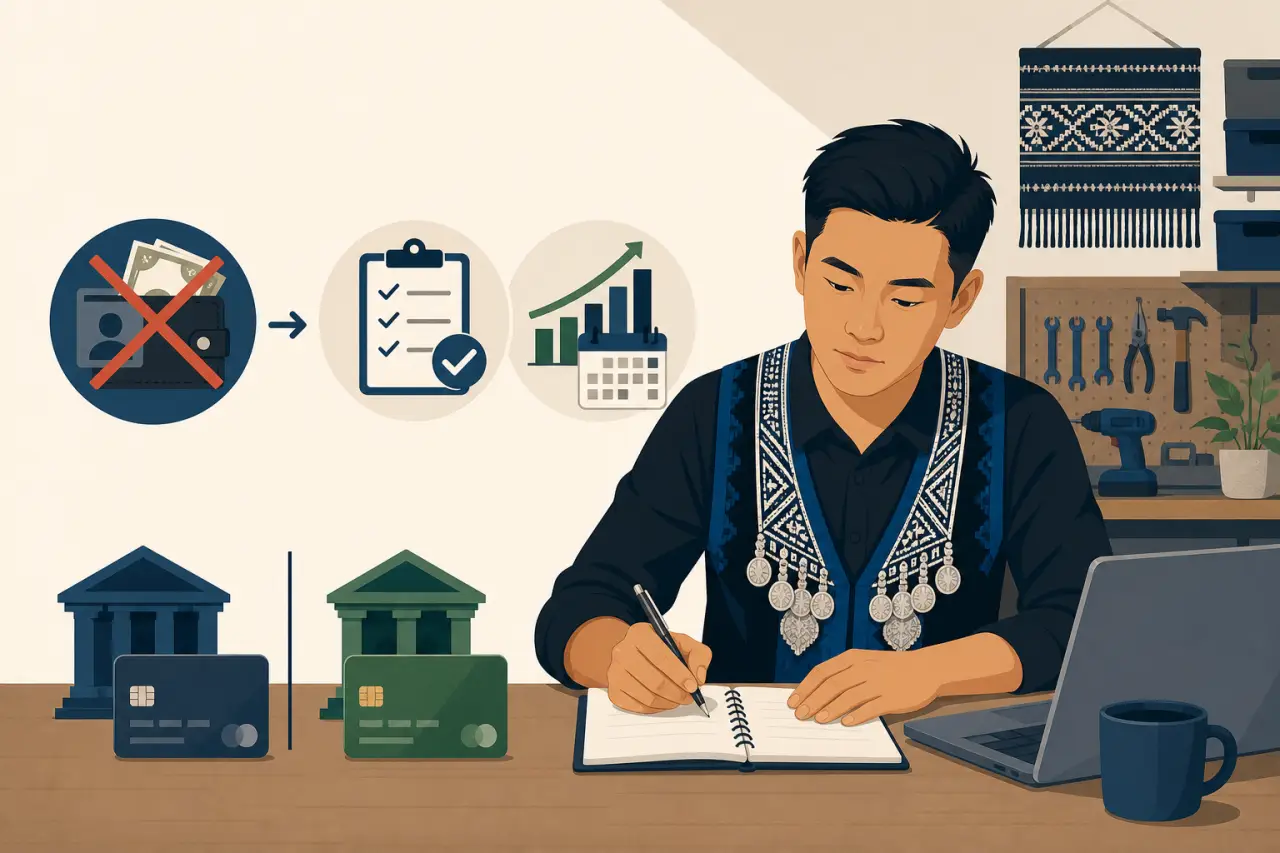
Open a business bank account and a business credit card before you take your first dollar, even if you're a one-person operation working out of your garage. Mixing personal and business money is the single fastest way to lose track of whether the business is actually profitable, and it makes tax season a nightmare of digging through months of receipts trying to remember which coffee run was a client meeting and which one wasn't.
Before you commit real money, write down two numbers:
- How much you can afford to lose completely.
- How many months you can run the business without it turning a profit.
Most new owners underestimate the second number badly — it commonly takes six months to a year of steady operating before a small business breaks even, and that's if nothing goes wrong. If your runway is three months and your break-even point is closer to nine, you're not starting a business, you're starting a countdown. Running out of cash before the business ever had a fair chance to work is one of the real reasons businesses close, not some flaw in the idea itself.
This is also where borrowing from family gets complicated, which matters a lot if you're leaning on relatives for startup capital. Write down the terms — is it a loan or a gift, is there a repayment timeline, what happens if the first year is rough — even if it feels awkward to put in writing with people you trust. An unwritten agreement between family members is where a lot of businesses and a lot of relationships both quietly fall apart.
Your First Customers Matter More Than Your Marketing Plan
Before you spend on ads or a big grand-opening push, get your first real customers however you can:
- Your personal network.
- Word of mouth.
- A soft opening with no signage at all.
Pay close attention to why they came back or why they didn't. That handful of honest, unscripted reactions is worth more than any survey or business plan projection, because it's based on real money changing hands, not someone being polite to you.
Ask specific questions, not vague ones. Instead of "did you like it," ask:
- What almost stopped them from buying.
- What they'd tell a friend about the place.
- What they expected that they didn't get.
You'll hear the same one or two things repeated across different customers faster than you'd think, and that repetition is your real roadmap — not the list of features you assumed mattered when you were planning this alone.
Once you know what's actually working for those first customers, you can put real money behind it with confidence, because you're amplifying something proven instead of guessing. Marketing spent before you know what's working is mostly an expensive guess, and it's one of the easiest ways to burn through your runway on a message nobody was responding to in the first place.
Handle the Boring Paperwork Before It Becomes an Emergency
None of the following is exciting, but all of it is much cheaper to deal with before you open than after a customer, a competitor, or a city inspector flags that you skipped it:
- Business licenses.
- Health permits.
- Seller's permits.
- An EIN.
- Basic liability insurance.
Figure out what your city and state actually require for your specific type of business, since a food business, a home-based service, and a retail storefront each trigger a different checklist.
If your business will have any employees at all, even one part-time helper, get clear on payroll and workers' compensation requirements before that first paycheck goes out, not after. Paying someone in cash under the table feels simpler in the moment, but it leaves you with no protection if they're hurt on the job and no clean paper trail if you ever want to sell the business, get a loan, or bring on a real partner later.
None of this needs to be handled alone. A local small business development center, a community organization, or an accountant who works with small businesses can walk you through the specific requirements for your city and industry, often for free or low cost. Working through the checklist that actually matters before you open is a lot cheaper than fixing a missed requirement after the fact. The businesses that get burned here usually aren't the ones that made a mistake — they're the ones that didn't know the requirement existed until it was already a problem.
If Family Works in the Business, Set Expectations Early
A lot of small businesses run on family labor, especially early on:
- A spouse handling the books.
- A cousin covering weekend shifts.
- Parents helping out during a busy season.
That can be one of the biggest advantages a small business has, since family will show up in ways a hired employee never would. It can also become the business's biggest source of conflict if roles, pay, and decision-making authority are never actually spelled out.
Decide early who has final say on what — pricing, hiring, the menu, the hours — and write it down somewhere, even informally, so it isn't relitigated every time there's a disagreement. Decide whether family members working in the business are getting paid, getting a future share of ownership, or helping out as a favor:
- Getting paid.
- Getting a future share of ownership.
- Helping out as a favor.
Those are three very different arrangements, and everyone involved should know which one they're actually in.
This is uncomfortable to bring up when everyone's excited about the launch and business feels like the last thing you want to argue about with people you love. But the conversations that feel awkward in month one are a lot less painful than the ones that happen in month eight, after resentment has had time to build over unpaid hours or decisions nobody agreed to.

Grow Only the Parts That Are Actually Working
It's tempting to add new products, extend your hours, or open a second location the moment things feel stable. Resist that until you're sure what's actually driving your results:
- One specific product.
- One type of customer.
- One source of referrals.
- One day of the week that outperforms every other day.
Put your next dollar and your next hour behind that specific thing, instead of spreading thin across everything that sounds promising.
Look at your actual numbers before you expand anything, not your gut feeling about what's popular. It's common for a business owner to assume their signature item is the moneymaker when the real profit is coming from a side item with better margins, or to assume Saturdays are their best day when Thursday lunch is quietly outperforming everything else. You can't scale what you haven't actually identified.
Growth that isn't grounded in what's proven to work is how a stable, profitable small operation turns into an overstretched one — more inventory sitting unsold, more hours worked for the same or less profit, more complexity that makes it harder to tell what's actually paying the bills. Slow, evidence-based growth isn't the exciting version of this story, but it's the version that's still open in five years.
Price for the Business You Want a Year From Now
It's tempting to price low when you're starting out, especially if you're competing against businesses that have been around for years and already have loyal customers. Being the cheapest option feels like the safest way to get your first sales. It's also one of the hardest positions to walk back from, because raising prices on customers who chose you specifically for being cheap almost always costs you some of them.
Price based on your real costs plus a margin you can actually run a business on, not based on what feels comfortable to charge people you might know personally. This is especially true if a lot of your early customers are friends, family, or people from your own community — underpricing for them sets an expectation that's awkward to change later, and it can quietly train your whole customer base to expect a discount that was never sustainable in the first place.
If you're worried a fair price will scare people off, test it directly instead of guessing. Offer a genuinely good product or service at a price that lets the business survive, and let the value speak for itself. A business that's barely breaking even because prices were set too low to attract customers isn't actually more successful than one with fewer customers paying what the work is really worth — it's just slower to notice the problem.
Give the Business Real Time Before You Judge It
Most new owners expect month three to look like month twelve, and get discouraged when it doesn't. Real customer habits — the kind where someone becomes a regular, tells their friends, and comes back without being reminded — take time to build, and a slow first quarter is closer to normal than it feels when you're the one living through it.
Set a real checkpoint for yourself, six months or a year out, with a specific number attached to it — revenue, repeat customers, whatever matters most for your business — rather than judging success week to week off a feeling. A single slow week doesn't tell you much on its own. A trend across a full season tells you a lot.
That said, giving it time isn't the same as ignoring warning signs. If any of the following is true, that's different information than an ordinary slow start, and it deserves an honest look rather than more patience:
- You're consistently missing your break-even runway.
- The same complaint keeps showing up from customer after customer.
- You're covering losses every single month with no month where you don't.
Knowing what new owners should focus on in that first stretch makes it a lot easier to tell the difference between a normal slow start and a real warning sign.

Questions people ask
How much money should I have saved before I start a business?
Write down two numbers before you commit real money: how much you can afford to lose completely, and how many months you can run the business without profit. Most small businesses take six months to a year to break even. If your runway is shorter than your real break-even point, you're starting a countdown to running out of cash before the business gets a fair chance.
Should I pay family members who work in my business?
Decide early whether family members are getting paid, getting a future share of ownership, or helping out as a favor. Write it down somewhere, even informally. Those are three very different arrangements, and everyone involved should know which one they're actually in. The uncomfortable conversations in month one are less painful than resentment building over unpaid hours later.
When should I expand my business to a second location or add new products?
Wait until you're sure what's actually driving your results. Look at your real numbers before you expand anything, not your gut feeling. One specific product, customer type, or day of the week is probably outperforming the rest. Put your next dollar behind what's proven to work, not what sounds promising. Growth grounded in evidence is more likely to still be open in five years.
How low should I price my products or services when I'm just starting out?
Price based on your real costs plus a margin that lets the business survive, not based on what feels comfortable. Being the cheapest option is hard to walk back from, especially if customers chose you specifically for low prices. Test a fair price directly instead of guessing. A business barely breaking even from low prices isn't actually more successful—it's just slower to notice the problem.
Written by
Hmong Network Team
Directory & Digital Services
We run the Hmong Network directory and do the web design and SEO/AEO work behind the results in our case studies. These guides come out of that same hands-on work with Hmong-owned businesses — not secondhand research.
