

Free Online Exposure: The No-Budget Playbook for Local Visibility
TL;DR
You don't need an ad budget to get found online — claiming every free listing, keeping your details identical everywhere, working your Google Business Profile like a channel instead of a form, and turning real customer questions into content builds visibility that compounds for free.
Claim Every Listing That's Already Free
Before you spend a dollar on ads, find out what already exists about your business online, because some of it might not even be yours to control yet. Search your own business name the way a stranger would, from a phone, not just from your own logged-in computer where results can look different. If a Google Business Profile shows up that you never set up, that's Google auto-generating one from public records, and until you claim it, anyone can suggest edits to your hours, your address, even your business name. Claiming it costs nothing but a verification postcard or phone call, and it's the single most important thing on this list — for the step-by-step version, see claiming your business listing.
After Google, work through the rest methodically:
- Bing Places
- Apple Maps
- Yelp
- Niche directories built for your actual customers, like Hmong Network if you're a Hmong-owned business
Each one is free real estate that either belongs to you or sits there half-finished, quietly telling both customers and search engines that nobody's minding it. Fill out every field on every one, not just the required ones — getting the most from a directory listing usually comes down to those small, optional fields most owners skip. A listing with a category, hours, a phone number, and a few photos reads as an active, real business. A listing with just a name reads as an abandoned one, and search engines rank the two very differently even though the difference cost you nothing but time.
Keep a running list of every directory you've claimed, even a simple note on your phone works. When you add a new one six months from now, or when something about your business changes, that list is what stops you from missing a listing you forgot existed. A forgotten listing doesn't just sit there neutral, it sits there potentially wrong, which is worse than not having claimed it at all.
One Version of Your Details, Copied Everywhere
The fastest way to undo all your free listings is to describe your own business slightly differently on each one. If your street address reads 456 Elm Street on your Hmong Network listing and 456 Elm St. Suite 2 on Google, that's not a small formatting difference to a search engine, it's two businesses that might not be the same one, and it quietly weakens how much any single platform trusts either listing.
Solve this once, not every time you add a new listing. Write out the following in a plain notes file, then copy and paste that same text into every new profile instead of retyping it from memory:
- Your exact business name
- Your address in the exact format you want it to appear
- Your phone number
Retyping is where small drift creeps in, a dropped suite number here, a spelled-out Street there, and none of it feels like a mistake in the moment.
When something actually changes, a new phone line, a moved location, a renamed business, treat updating every listing as one task, not seven separate ones you'll get around to eventually. Go down your list of every place you've claimed a profile and update all of them in the same sitting. An old address still live on even one directory is enough to send a customer to the wrong place, and enough to leave a search engine unsure which version of your business to trust.
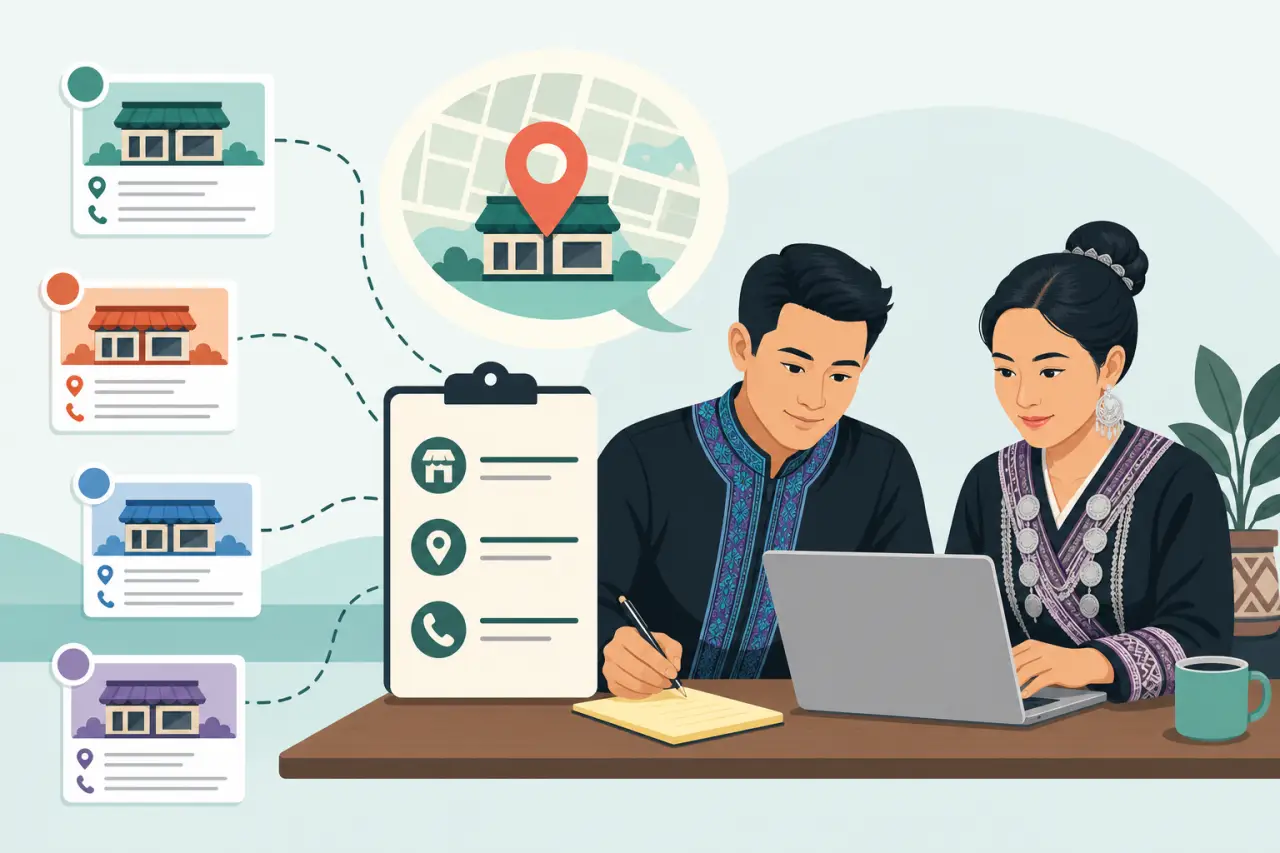
Treat Google Business Profile Like an Ongoing Channel, Not a One-Time Form
Most owners fill out their Google Business Profile once, when they first claim it, and never open it again. That's leaving most of what it does for free on the table — the fuller picture of what a Google Business Profile that converts looks like is worth reading if you haven't touched yours since the day you set it up. The Posts feature lets you publish short updates, a new item, a holiday closure, a limited batch of something, directly onto your profile where anyone searching your name sees it immediately, no website or ad spend required.
The Questions and Answers section is worth watching specifically, because anyone can post a question there and anyone can answer it, including someone with no connection to your business guessing at hours or pricing. Seed it yourself with the real questions you get most often:
- Do you take walk-ins?
- Is parking available?
- Do you deliver?
Answer them accurately before a stranger's wrong guess becomes the visible answer.
The Products or Services tab works like a free, simple catalog. You don't need a full menu or price list, just enough that someone scanning your profile on their phone can tell what you actually offer before they decide to call or visit. Add a photo to each entry if you can; a listed service with a real photo next to it gets looked at longer than a bare line of text.
Make Asking for Reviews Part of the Transaction, Not an Afterthought
Reviews are the one form of free marketing that keeps working long after you've stopped thinking about it, but only if you build asking into how you already close out a sale, not something you remember to do occasionally. Have one method and use it every time:
- A printed card with a QR code at the register
- A text you send while you're still standing there
- A link on the receipt
Consistency in asking matters more than cleverness in how you ask.
Don't put all your reviews on one platform and ignore the rest. A business with reviews spread across Google, Hmong Network, and Facebook looks established wherever a customer happens to be looking, while a business with forty reviews on one platform and zero anywhere else looks newer than it actually is to anyone who lands somewhere other than that one page.
Respond to every review that comes in, not just the good ones. A short, specific reply to a negative review, acknowledging what happened and what you did about it, does more for a future customer reading that page than the negative review itself does damage. It shows someone is actually running this business, not just collecting stars. Silence on a bad review reads worse than the review does.
Borrow Reach From People Who Already Have an Audience
Partner With Neighboring Businesses
You don't have to build an audience from nothing when other people already have one that overlaps with yours. Neighboring businesses that serve the same customers but aren't direct competitors, a bakery and a coffee shop, a tailor and a wedding photographer, can promote each other for free: a stack of your cards at their register, a mention in their next social post, a shared table at a community event. Neither side spends money, and both sides reach people they wouldn't have reached alone.
Show Up in Community Spaces
Community Facebook groups and pages work the same way, but only if you show up as a participant, not just when you have something to sell. A business that occasionally answers a question in the group, congratulates another member's launch, or shares something genuinely useful gets remembered when someone later asks does anyone know a good place for this. A business that only posts promotions gets muted, and eventually removed from the group entirely.
Hmong New Year events, community festivals, and cultural gatherings are worth showing up to even without a big booth. A sponsorship trade, contributing product in exchange for your name on a banner, or simply being present and handing out cards, puts you in front of concentrated groups of exactly the customers your directory listings are trying to reach online, and it costs time and goodwill rather than a marketing budget.
Let Loyal Customers Refer You
Don't overlook the people who already like you. A loyal customer sharing your post to their own page, or tagging you when they recommend you to a friend, reaches people your own posts never will, because it comes with their trust attached, not just yours. You can't force this, but you can make it easy by giving people something worth sharing in the first place, a genuinely good photo, a clear update, a real reason to mention you.

Turn the Questions You Already Answer Into Free Content
You answer the same handful of questions constantly:
- Whether you deliver
- Whether something's authentic
- How long an order takes
- What a service actually includes
Those questions, written down honestly in your own words, are content that costs nothing to produce and answers exactly what someone is searching for, because it's the exact question a real customer already asked out loud.
If you have a Hmong Network listing, its business articles feature exists for exactly this: a short piece built around one real question, not a polished essay. You don't need marketing copy, you need the same clear, specific answer you'd give someone standing in front of you. That specificity is also what AI tools and answer engines increasingly look for when someone asks a similar question online, they favor a direct, concrete answer over a vague paragraph of brand language.
You don't need many of these to matter. Three or four honest answers to your most common real questions, published where people can find them, will outperform a generic page of marketing copy that reads like it could describe any business in your category. Specific and true beats polished and empty, especially when it's free either way.
Check What's Actually Working Before You Assume Nothing Is
Every free listing you claim comes with free data attached, if you go looking for it. Your Google Business Profile shows how people found you, search or maps, and what they did next, called, asked for directions, visited your website. Your Hmong Network dashboard tracks the same kind of activity for your listing there. None of this costs anything beyond the few minutes it takes to check it.
Use it to decide where your next bit of free effort goes instead of guessing. If most of your profile views turn into phone calls but almost nobody clicks for directions, your hours or photos might be doing more work than your map pin. If one photo gets far more attention than the rest, that's a signal about what customers actually want to see more of, not a coincidence.
This is also how you catch a listing quietly going stale before it costs you a customer. A sudden drop in views or contacts on a profile that used to get steady activity is worth investigating, whether it's outdated hours, a category that got changed by accident, or a listing that simply hasn't been touched in months and has started reading as inactive. Checking takes fifteen minutes. Not checking is how free visibility slowly turns into no visibility at all. Put together, these habits are really just the free half of getting discovered online — the part that costs time instead of money.
Questions people ask
What should I do if there's already a Google Business Profile for my business that I didn't create?
Claim it immediately. Until you do, anyone can suggest edits to your hours, address, or business name. Claiming it costs nothing—just a verification postcard or phone call. It's the single most important thing you can do for free visibility online.
How do I keep my business information from looking wrong across different directories?
Write out your exact business name, address format, and phone number in a notes file once, then copy and paste that same text into every directory instead of retyping it. Small differences like "Street" versus "St." confuse search engines into thinking you're two different businesses.
What should I do when someone posts a wrong answer about my business on Google?
Seed the Questions and Answers section yourself with real questions customers ask most, then answer them accurately before a stranger's guess becomes the visible answer. Common ones: Do you take walk-ins? Is parking available? Do you deliver?
How do I get more reviews without spending money on ads?
Build asking into how you already close a sale: a printed card with a QR code at the register, a text you send right after the transaction, or a link on the receipt. Consistency matters more than cleverness. Spread reviews across Google, Hmong Network, and Facebook so you look established everywhere.
Written by
Hmong Network Team
Directory & Digital Services
We run the Hmong Network directory and do the web design and SEO/AEO work behind the results in our case studies. These guides come out of that same hands-on work with Hmong-owned businesses — not secondhand research.
