
Mi Maiv's Success: Hmong Postpartum Herbs Go Digital
TL;DR
Mi Maiv, a Hmong-owned postpartum herb brand founded by pharmacist Dr. Mai Yia Yang, got a new website built around a herb-education hub, streamlined e-commerce, and a business-trained AI chatbot, reaching an 81/100 desktop PageSpeed score.
A Postpartum Tradition Built for the Kitchen, Not Yet for the Web
Mi Maiv is a Hmong-owned wellness business founded by Dr. Mai Yia Yang, a pharmacist with deep ties to Hmong tradition, dedicated to preserving centuries of postpartum herbal knowledge for modern families. In many Hmong households, postpartum recovery formulas have historically been passed down within families rather than written anywhere, and traditionally required simmering fresh roots, bark, and herbs for long stretches of time during the weeks after childbirth — a practice that demands both specialized knowledge and real time investment from new mothers and the relatives caring for them.
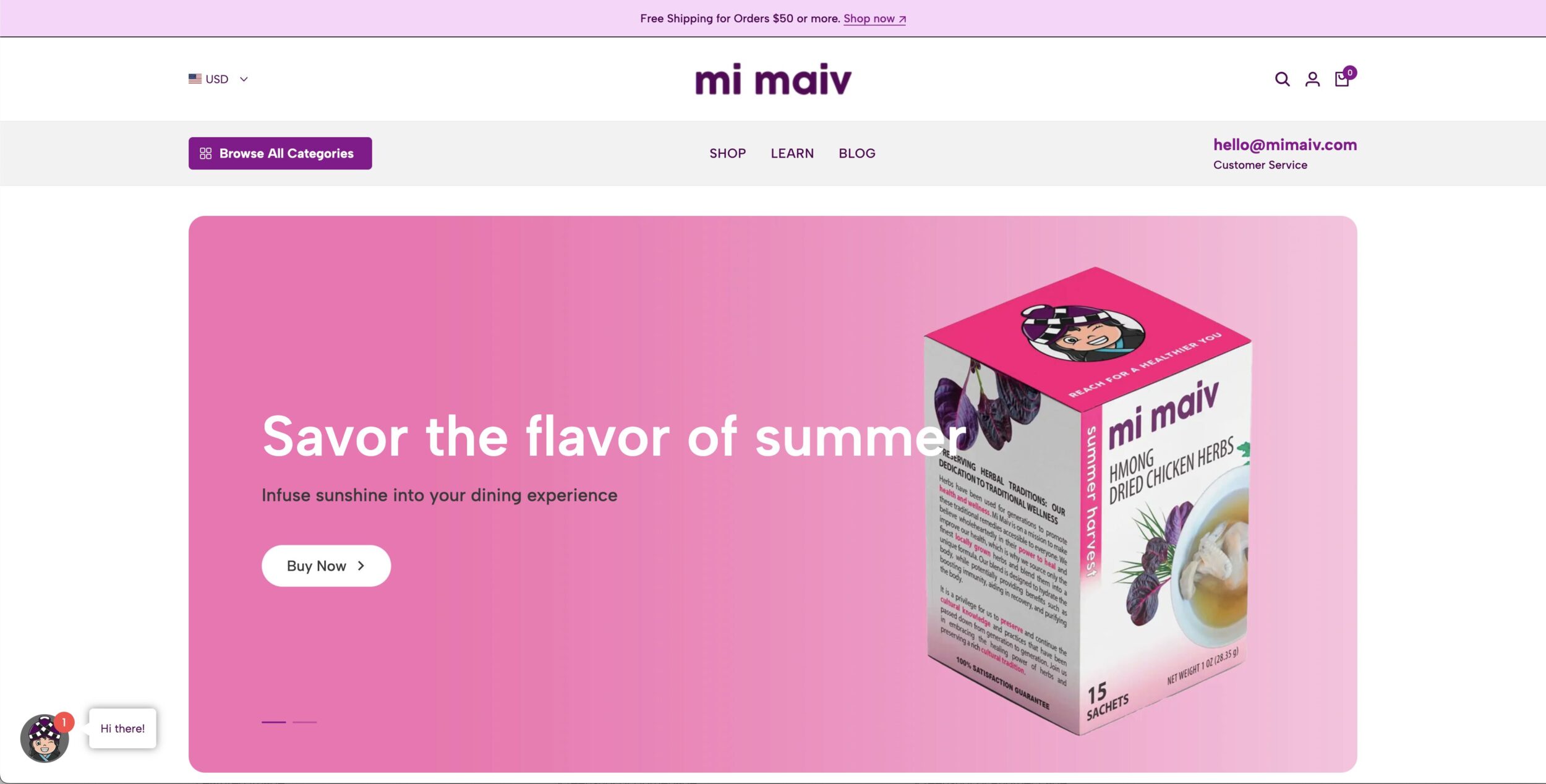
Mi Maiv's flagship product, Dried Hmong Chicken Herbs, takes that same body of knowledge and reformulates it for how people actually live now. The herbs come in four flavors, each addressing specific postpartum recovery needs, and instead of requiring a family member to source and prepare fresh ingredients, they arrive as shelf-stable dried tea bags a new mother or her caregiver can use whenever they're needed, without a refrigerator, a trip to a specialty market, or a relative who still remembers the exact blend.
That shift — from a fresh, labor-intensive preparation to a packaged, repeatable product — is what made Mi Maiv a genuinely new kind of business inside a very old tradition. But before this project, that positioning had nowhere to live online. The business had no professional digital presence that reflected the depth of the practice it was built on, which meant the product had to compete in a crowded wellness market almost entirely on word of mouth.
The Trust Gap: Why a Good Product Wasn't Enough on Its Own
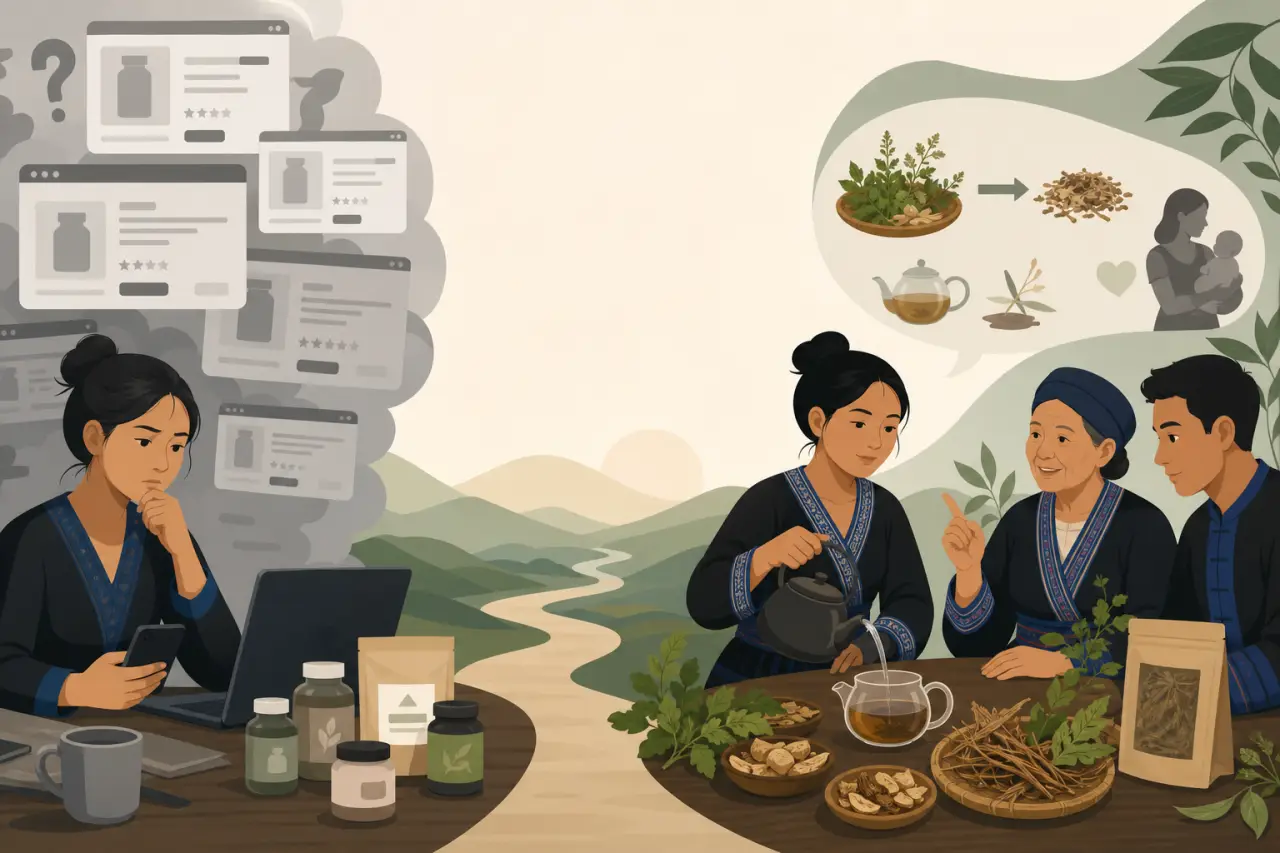
Herbal supplements are a crowded, skeptical category online. Shoppers researching postpartum recovery products are used to seeing generic listings with little explanation of sourcing, tradition, or safety, and without a real SEO foundation, Mi Maiv wasn't even in the running — customers searching for postpartum herbs or traditional Hmong remedies had no reliable way to find the business at all, regardless of how strong the product itself was.
The deeper problem was education, not just visibility. Even within the Hmong community, many customers had grown up around fresh-prepared postpartum herbs and needed to understand how a dried, packaged version compared:
- How to steep it
- How it differed from what a grandmother might have made
- Why the change in format didn't mean a change in the underlying formula
Outside the community, the education gap was even wider: shoppers had no cultural reference point for what these herbs were for or why they mattered.
Mi Maiv had no educational platform to close either gap. That combination — low findability plus an unmet need to explain the product before anyone would buy it — meant the website itself had to do more work than a typical e-commerce redesign. It couldn't just look better; it had to actively teach.
Rebuilding the Homepage Around the Product That Actually Sells
The homepage redesign started from a simple premise: put the flagship product where a first-time visitor can't miss it, and make it easy to buy more than one flavor at once. A carousel banner leads with Dried Hmong Chicken Herbs directly, rather than burying it under generic brand messaging, and a two-column layout was used to showcase all four flavors side by side so a visitor could immediately see the range rather than having to click through to discover it.
Alongside the individual flavors, bundle packages were introduced on the homepage specifically to increase average order value. This is a common lever in supplement and wellness e-commerce — a customer who arrives intending to buy one flavor to try is a natural candidate for a bundle once they understand each flavor addresses a different postpartum need, and postpartum recovery itself unfolds in stages, which makes a multi-flavor bundle a genuinely useful purchase rather than just an upsell.
The layout choices were deliberately restrained rather than flashy. For a wellness brand built on trust and tradition, a homepage that felt overly commercial risked undercutting the credibility Dr. Yang's background was meant to establish. The goal was a homepage that read as confident and modern without losing the sense that real expertise, not just marketing, was behind the product.
The Learn Page: Turning Herb Knowledge Into an SEO Asset
The centerpiece of the rebuild was the Learn page — a dedicated educational hub with individual pages for each herb ingredient and its traditional uses. Rather than folding ingredient information into a single About or FAQ page, each herb got its own page, which meant each one could be built around its own set of search terms:
- The herb's name
- What it's traditionally used for
- How it fits into postpartum recovery specifically
This structure served two audiences at once. For search engines, it created multiple distinct, specific entry points around herb names and postpartum-recovery terms instead of one broad page competing for a single keyword — a stronger approach in a niche category where exact-match, specific searches carry more intent than broad ones. For visitors, it meant someone who searched for a particular herb by name could land directly on a page that answered their question, rather than having to dig through a general product description to find it.
The Learn page also did the trust-building work that the earlier education gap called for. A shopper who didn't grow up with these herbs could read, in plain terms, what an ingredient does and why it's included, before ever being asked to buy anything — which matters enormously in a wellness category where hesitation about an unfamiliar ingredient is often the single biggest thing standing between a visitor and a purchase.
Behind the Scenes: Tracking, Forms, and a Chatbot That Knows the Business
Alongside the visible redesign, a set of technical foundations went in that hadn't existed before:
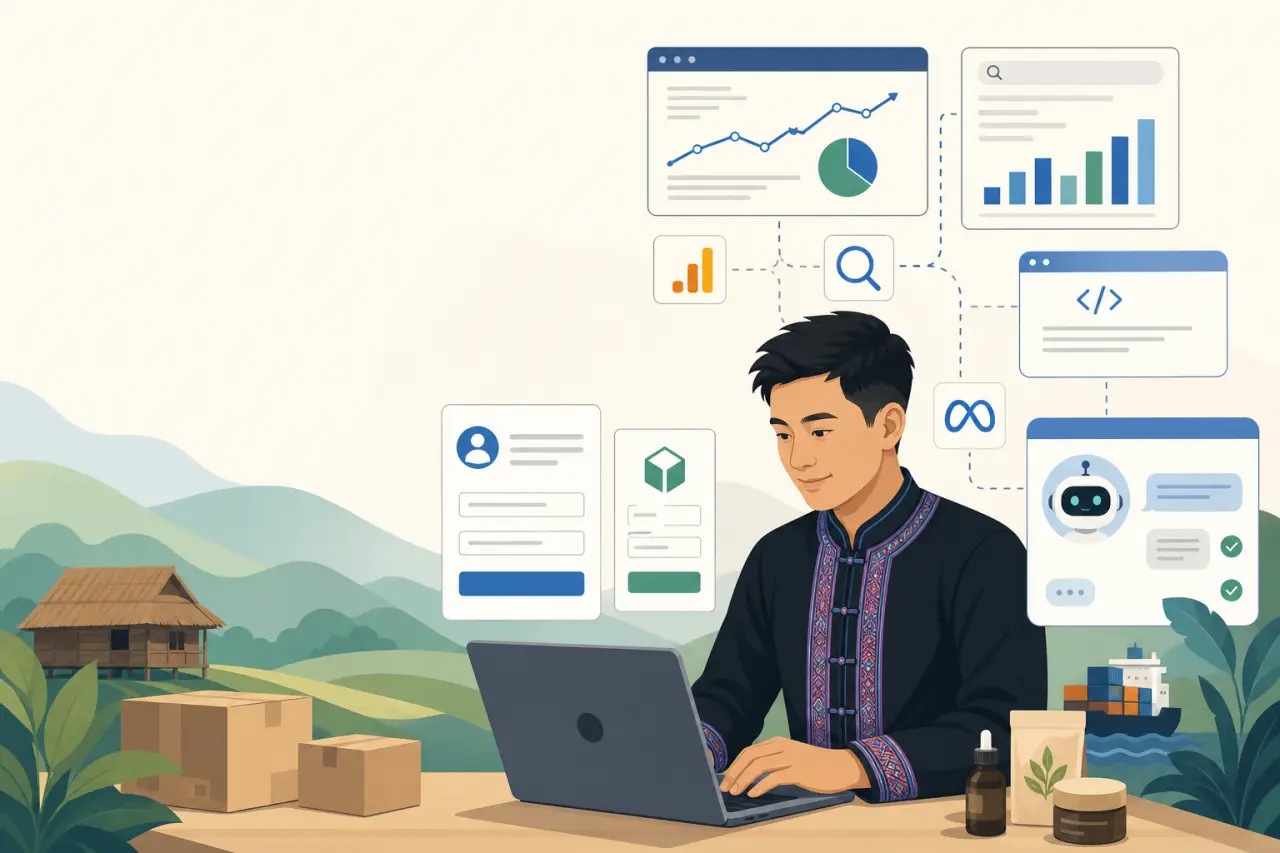
- Google Analytics and Search Console integration to give the business real visibility into what was working
- Meta Pixel tracking to support paid social efforts
- Custom contact forms to make it easier for customers and wholesale inquiries to reach the team directly
The most distinctive piece of this technical work was an AI chatbot trained specifically on Mi Maiv's own products, on Dr. Yang's background, and on shipping and logistics details — not a generic customer-service bot answering from a script, but one grounded in the actual specifics of this business. That distinction matters for a product category with a lot of repeat, predictable questions:
- Which flavor addresses which recovery need
- How long a shipment takes
- Whether the dried herbs are prepared the same way as fresh ones
- Who is behind the brand
That's where AI tools actually save you time for a small team — handling the repeatable questions so people can focus on the ones that need judgment.
Training the chatbot on Dr. Yang's own background was a deliberate choice, not an afterthought. Part of what earns trust in a traditional wellness product is knowing there's a real, qualified person behind it — a pharmacist with genuine ties to the tradition, not an anonymous supplement label — and giving the chatbot that context meant it could answer credibility questions as naturally as it answered logistics ones.
Social Proof and a Shop Page Built to Keep Growing
Customer testimonials were linked directly to the products they reviewed, rather than pooled into a single generic testimonials section. For a supplement brand, this kind of specificity matters — a testimonial about a particular flavor addressing a particular recovery need is far more persuasive sitting next to that exact product than floating in a general list disconnected from what was actually purchased.
On the Shop page, infinite scroll was implemented to keep the full product range browsable as the catalog grows, without sacrificing the SEO value that a paginated, link-based structure provides. This is a real tension in e-commerce build-outs: infinite scroll is smoother for a browsing shopper, but naive implementations can hide products from search engine crawlers that never trigger the scroll event. Building it in a way that preserved SEO value meant the convenience for customers didn't come at the cost of the very search visibility the rest of the project was working to build.
Performance: What an 81 on Desktop Means, and Where Mobile Still Lags
Desktop performance reached an 81 out of 100 PageSpeed score, backed by strong underlying numbers:
- First Contentful Paint around 0.7 seconds
- Largest Contentful Paint around 1.6 seconds
- Total Blocking Time of just 10 milliseconds
- Cumulative Layout Shift of 0.01
Translated out of PageSpeed jargon, that means a desktop visitor sees something on screen in well under a second, the main content — in this case, the herb imagery and product information a shopper actually came to look at — finishes loading in under two seconds, the page responds to clicks and taps almost instantly rather than freezing while scripts load, and nothing shifts or jumps around as the page finishes rendering. For a shopper researching postpartum herbs, often while caring for a newborn and working in short, interrupted bursts of attention, a page that loads fast and doesn't jump around isn't a nice-to-have. It's the difference between finishing the purchase and giving up.
Speed also compounds with the trust-building work described above. A slow page undercuts credibility no matter how strong the content is — a visitor who came to the Learn page to evaluate whether to trust an unfamiliar herb isn't going to stick around through a sluggish load to find out.
Where mobile still lags behind desktop
Mobile performance scored 63 out of 100, flagged clearly as the biggest remaining opportunity for improvement. That gap between an 81 on desktop and a 63 on mobile is a common pattern in e-commerce builds, since mobile devices have less processing power and slower, less consistent network connections than the desktops used to test and build a site — but it matters more than usual here, because postpartum shoppers researching recovery products are disproportionately likely to be doing that research on a phone, often one-handed, in whatever moment they can grab.
Leaving that number where it is would mean the group most likely to actually need this product is getting the roughest version of the experience. Closing that gap — through smaller image payloads, deferred scripts, and a leaner mobile-specific rendering path — is the clear next step in Mi Maiv's ongoing web strategy.
Results and What This Case Study Shows Other Traditional Businesses
The Learn page became a significant traffic driver, attracting visitors researching traditional herbs and postpartum recovery, many of whom converted after building trust through the ingredient education rather than arriving already sold on the product. The AI chatbot took on a substantial share of routine customer inquiries, freeing Dr. Yang's team to focus on complex questions and business development instead of answering the same shipping and flavor questions repeatedly. Specific traffic and conversion numbers are described as confidential per client agreement.
Mi Maiv's digital transformation is a useful example for any traditional, culturally rooted business weighing how much of its heritage to lean into online — a pattern that shows up in another Hmong-owned wellness brand's relaunch and in a bilingual Hmong wellness brand's ecommerce success too. Cultural authenticity enhanced rather than limited its digital marketing effectiveness here — the Learn page's depth, grounded in real tradition, is what built trust that generic wellness-brand copy never could have. For a business built on decades of family knowledge, the lesson isn't to modernize by minimizing that heritage. It's about turning cultural knowledge into content rather than a sales pitch, and building a site structured well enough — technically fast, organized around real search intent, and backed by tools like a knowledgeable chatbot — that the heritage itself can do the selling.
Questions people ask
Why did an educational Learn page matter so much for a postpartum herb brand?
Postpartum herbs are unfamiliar to many shoppers, even within the Hmong community, once they move from a fresh, family-prepared format to a packaged product. A dedicated page for each herb lets a business explain what it is and why it's used before asking for a sale, which builds the trust a generic product listing can't, and it gives search engines specific, relevant pages to rank instead of one page competing for everything at once.
What's the real difference between dried and fresh postpartum herbs?
Traditionally prepared fresh postpartum herbs require sourcing roots, bark, and other ingredients and simmering them for extended periods, which takes real time and specialized know-how. Dried tea bag versions use the same underlying formula but are shelf-stable and ready to steep on demand, trading some of the ritual of fresh preparation for consistency and convenience that fits a modern family's schedule.
Why train a chatbot on a founder's background instead of just product details?
Trust in a traditional wellness product often comes down to who's behind it. A chatbot that can speak to the founder's credentials and connection to the tradition, alongside routine questions about shipping and flavors, answers the credibility question a shopper is quietly asking as naturally as it answers a logistics one, rather than leaving that question for the shopper to research elsewhere.
Why does mobile page speed matter more for a postpartum product than for many other e-commerce categories?
New parents researching recovery products are especially likely to be browsing on a phone in short, interrupted windows of time. A slow or unstable mobile experience is more likely to lose that specific shopper than it would for a typical desktop-first buyer, which is why closing the gap between desktop and mobile performance is treated as a priority rather than a minor optimization.
Written by
Hmong Network Team
Directory & Digital Services
We run the Hmong Network directory and do the web design and SEO/AEO work behind the results in our case studies. These guides come out of that same hands-on work with Hmong-owned businesses — not secondhand research.
