
Pang Style: Hmong Business Digital Transformation Success
TL;DR
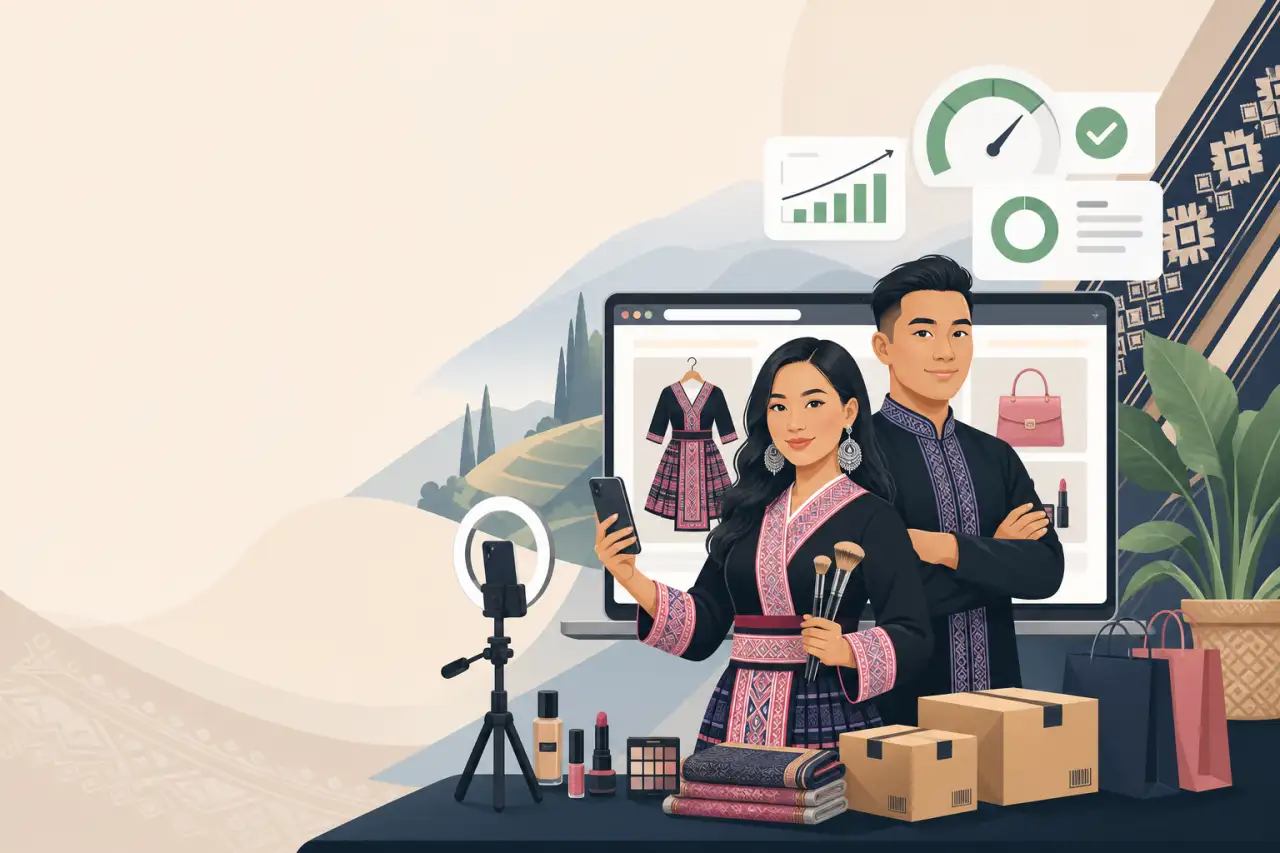
Pang Style grew from Facebook Live boutique-clothing sales into a full makeup and accessories brand with a physical store. Hmong Network's website and SEO rebuild turned that relationship-driven Facebook Live identity into a searchable, 24/7 storefront, earning a perfect 100/100 SEO score and a 94/100 desktop PageSpeed score.
From Facebook Live Sales to a Physical Storefront
Pang Style didn't start as a business plan, it started as founder Pang Her going live on Facebook to sell boutique clothing to people who already trusted her. That's not a small detail. Facebook Live selling has become one of the most common ways Hmong entrepreneurs build a customer base, because it mirrors how commerce has always worked in Hmong communities: through relationships, not cold traffic. A customer watching a live sale isn't just seeing a product, they're seeing a person they know vouch for it in real time, answer questions on the spot, and hold items up so people can judge fit and color for themselves. That kind of trust doesn't happen by accident, and it's part of why getting more from your Facebook page mattered as much as the products themselves in those early days.
That model worked well enough that Pang Style grew past clothing into makeup, then into a wider range of accessories, and eventually into a physical store. Each of those steps added complexity that a Facebook feed was never built to handle. A live video disappears into the timeline within a day or two. There's no product catalog to browse later, no way to search for that eyeshadow palette from last week, and no storefront a new customer can find late at night when they're not scrolling Facebook at all. The business had outgrown the platform that built it, but nothing about growing meant Pang Her wanted to lose what made those live sales work in the first place, the sense that a real person was behind every product. Making that jump was less about abandoning Facebook and more about turning social media into a real strategy that a permanent storefront could support alongside it.
The Real Challenge: Keeping the Personal Feel While Adding a Real Storefront
The brief here wasn't just to build a website. It was to build one platform that could do two things at once: operate as genuine e-commerce infrastructure and still feel like the same relationship-driven brand customers already trusted from Facebook Live. That's a harder problem than it sounds, and it's close to what it actually takes to sell online as a small, relationship-built brand rather than a big-box retailer with an unlimited ad budget. A lot of small businesses that make this jump end up with a site that looks like every other templated storefront, technically functional, but stripped of whatever made the brand recognizable in the first place.
On top of that, Pang Style's catalog wasn't one simple product line. Makeup, women's clothing, and accessories each come with their own presentation needs and their own shopper expectations:
- A shade of foundation needs swatches and skin-tone context.
- A clothing item needs sizing information and styling detail.
- An accessory needs to be shown in a way that makes its scale and use obvious.
Cramming all three into one generic product-page template would have flattened the differences that actually help people buy with confidence.
And then there was the search problem: Pang Style was starting from zero organic visibility, in categories, beauty and fashion, that are about as competitive as digital marketing gets. Ranking in those spaces usually means outspending or outlasting national brands with far bigger budgets. The site had to be built to compete on relevance and technical quality instead, since it had no existing authority to lean on.
Design Choices That Do More Than Look Good
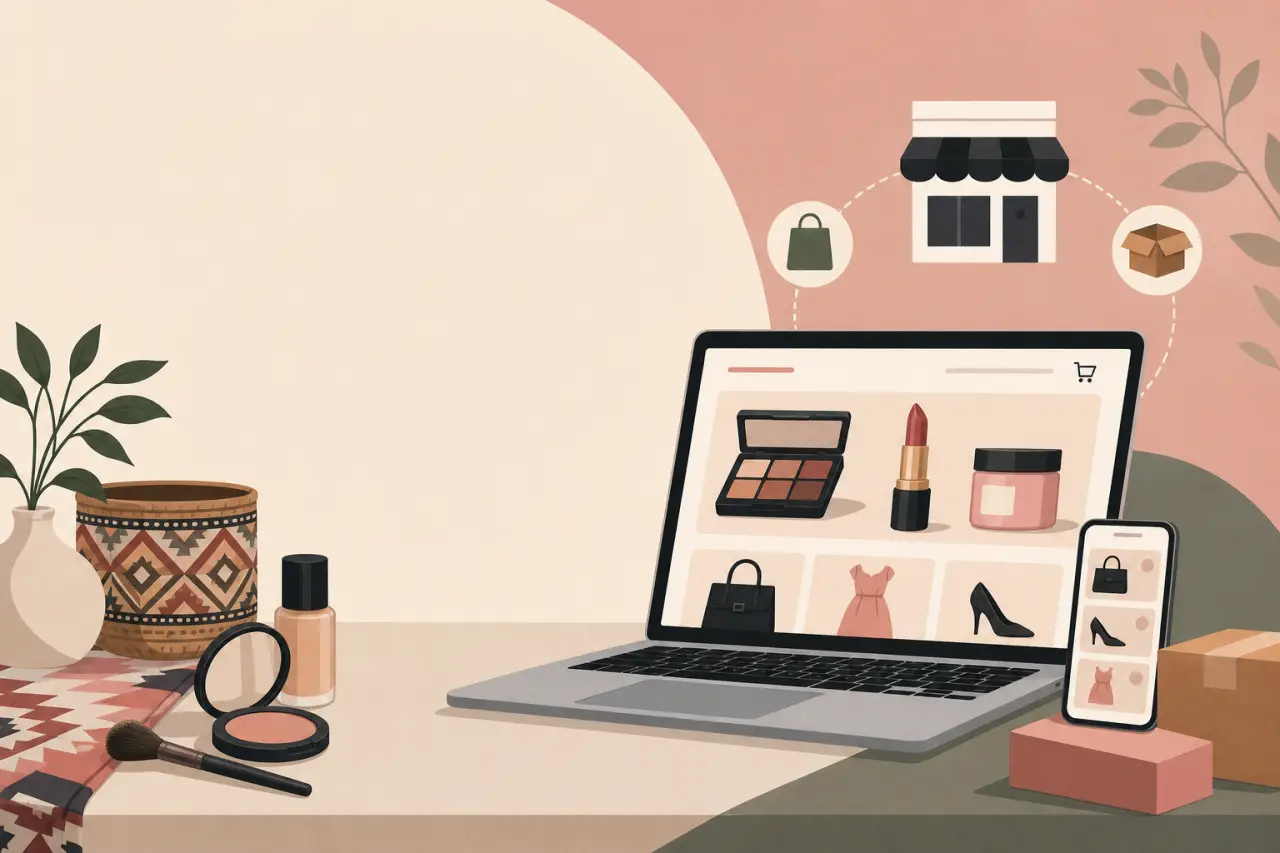
The pink-and-white color palette wasn't a default template choice, it was picked specifically to reinforce brand recognition and to connect emotionally with the target demographic Pang Style already had. When a brand has spent years building recognition through a live-selling persona, matching that visual identity on the website closes the gap between the account someone already follows and the store they're now buying from. A visitor who's seen Pang Her's Facebook Lives should be able to land on the site and immediately feel like they're in the right place.
The homepage itself was structured to replicate what actually sells in a live video, just in a browsable, permanent form:
- A full-width hero with model photography opens the page the way a live sale opens with Pang Her herself on camera.
- A product-bundles section with clear savings messaging mirrors the bundle deals that already perform well in live sales, where combining a few items at a discount tends to move more product than selling pieces individually.
- The main product grid for straightforward browsing.
- A foundation-focused education section built around a before-and-after slider, a direct digital stand-in for the moment in a live video where a shade gets applied on camera and the audience watches the transformation happen in real time.
- A social-proof section built on real customer photos and testimonials, which does the same trust-building work that comments and reactions do during a live sale, just in a format that stays visible permanently instead of disappearing after a day or two.
Product Pages Built to Replace What a Live Demo Does in Person
Beauty and clothing are both categories where people hesitate to buy online because they can't touch the product or see it on someone who looks like them. Live selling solves that instinctively, someone applies the product, models the outfit, answers whether it runs small right there in the comments. A static product page has to solve the same problem without a live person attached to it.
That's why each product page pairs large imagery with clear pricing, swatch selectors for shade and color options, and, notably, real customer application photos rather than only studio shots. Seeing how a shade actually looks on a real customer's skin does more to build buying confidence than a perfectly lit product photo alone. The interactive before-and-after sliders carried over from the homepage's education section give shoppers the same watch-it-happen moment a live video provides, just available on demand instead of at a scheduled time. Curated upsell suggestions round out each page, doing the job a live seller does naturally when they mention that something pairs well with what's already in the cart.
The Supporting Pages That Make a Storefront Feel Legitimate
A product catalog alone doesn't make a site feel trustworthy, especially for a brand whose entire prior track record lived inside Facebook, not on the open web. The build included:
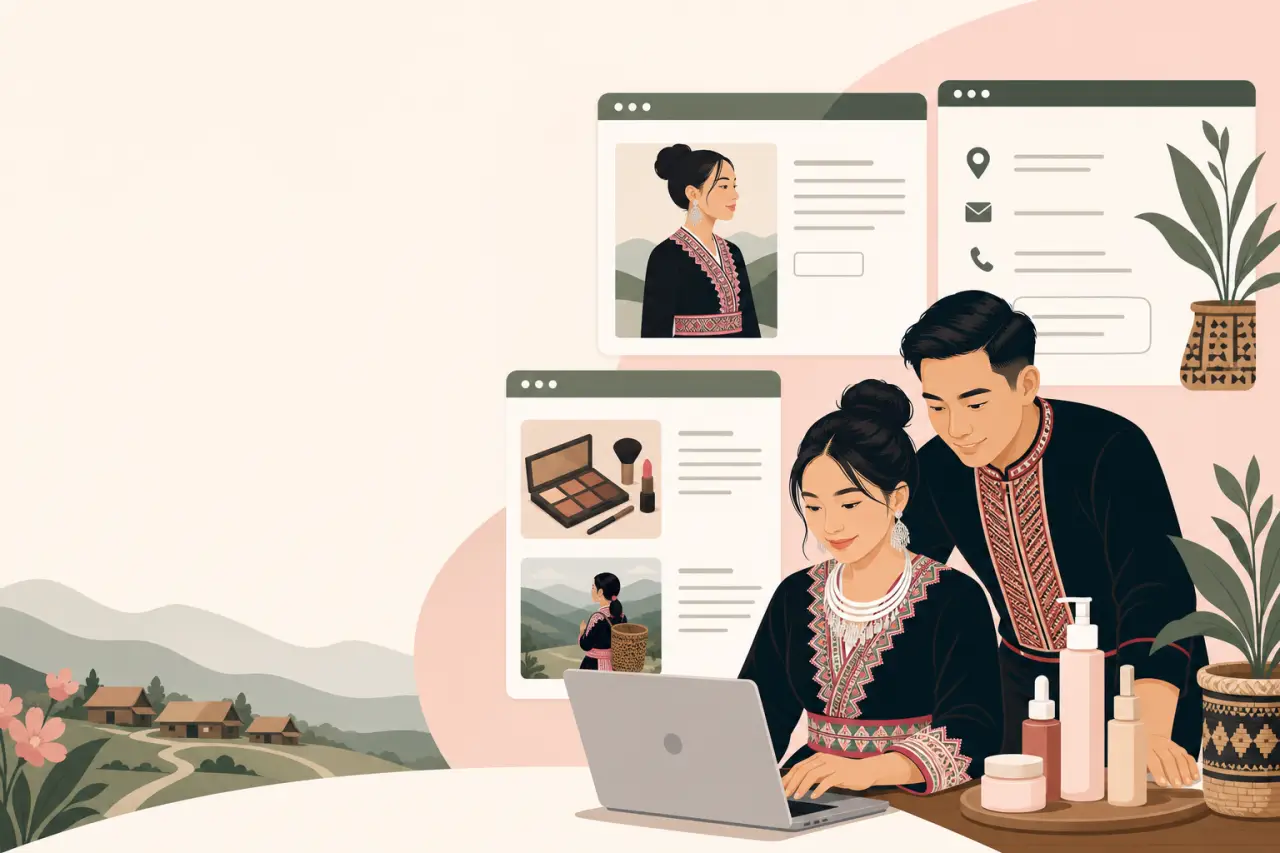
- An About Us page and a Contact Us page, the two pages most new visitors check before buying from an unfamiliar site, especially in beauty, where people want to know there's a real business and a real person behind the products they're about to put on their skin.
- A Blog Archive covering two distinct threads: beauty tutorials that give the site ongoing, searchable content beyond the product catalog itself, and the founder's own story as a Hmong entrepreneur, told in her own words. That second thread does double duty, it's the kind of original, personal content search engines increasingly reward, and it's also exactly the material that would have otherwise only ever existed inside a disappearing Facebook Live stream.
- Privacy Policy and Terms of Service pages, which sound like boilerplate but matter for both legal coverage and for the basic credibility signals that both customers and search engines look for on a real e-commerce site.
Turning Zero Search Visibility Into a Competitive Foundation
With no existing organic presence to build from, the SEO strategy had to be structural, not just cosmetic:
- A logical URL hierarchy was put in place so that categories, products, and blog content all sit in a clear, crawlable structure rather than a flat list of disconnected pages.
- Every product image went through compression, which matters twice over in a photo-heavy beauty and fashion catalog, it keeps pages loading fast, and page speed is itself a ranking factor search engines weigh directly.
- Full mobile optimization was treated as a requirement rather than an afterthought, since most shoppers in this category browse and buy from their phones, often while watching a live video on the same device.
- Schema markup was added across products, reviews, and business details, giving search engines structured, machine-readable facts about what Pang Style sells and who it is, rather than making them guess from unstructured page text.
- Cultural keyword integration around Hmong entrepreneurship was woven through the content deliberately, not as a gimmick, but because it's genuinely how a meaningful share of Pang Style's actual audience searches and identifies with the brand.
What the Numbers Actually Show
The site achieved a perfect 100/100 SEO score, on both mobile and desktop, which reflects the structural work described above: the URL hierarchy, the schema markup, and the on-page optimization all functioning the way they're supposed to. Desktop PageSpeed came in at 94/100 overall. Mobile PageSpeed scored 71/100 overall, a meaningfully lower number worth naming plainly rather than glossing over, since a photo-and-video-heavy beauty and fashion catalog is inherently harder to load fast on mobile connections than a simpler site would be, even with image compression already applied.
Accessibility scored 92/100 on both mobile and desktop, and Best Practices scored 93/100 on both as well. Taken together, these scores describe a site that's technically sound across the board, with mobile load speed as the one area that shows the real cost of a rich, image-heavy catalog rather than a flaw in the build itself.
Why This Case Study Is About More Than a Score
The practical business impact went beyond the scorecard. Pang Style gained:
- Professional credibility that supports customer confidence in a way a Facebook page alone never fully could.
- A 24/7 sales channel that keeps operating outside scheduled live-selling events, so a customer thinking about a purchase late at night doesn't have to wait for the next stream.
- A centralized product catalog that supports both the online store and in-store operations from one source, instead of two disconnected systems.
- Access to customer behavior insights that can now inform future marketing decisions, data a live-only sales model simply never generated.
No specific dollar amounts or sales percentage increases were disclosed as part of this case study.
What this project actually demonstrates is that cultural authenticity and digital growth aren't in tension with each other. The pink-and-white palette, the founder's own story in the blog, the cultural keyword strategy, none of it worked against the SEO or performance goals. If anything, it's what gave the site something to rank and convert on that a generic template never could have. It's the same pattern behind another Hmong ecommerce SEO success built around an entirely different product line. The result is a site that bridges the gap between the relationship-based trust Pang Style built through Facebook Live and the always-on, searchable storefront a growing brand with a physical location actually needs.

Questions people ask
Why did Pang Style need a website if Facebook Live sales were already working?
Facebook Live built the brand's initial trust and customer base, but it couldn't function as a real storefront. Videos disappear from the timeline within a day or two, there's no searchable product catalog, and there's no way for a new customer to browse or buy outside of scheduled live events. As Pang Style grew into makeup, accessories, and a physical store, it needed infrastructure that could operate 24/7 without losing the relationship-driven feel that made the Facebook Live sales work in the first place.
How do you keep an e-commerce site from feeling generic when the brand grew out of social selling?
It starts with carrying the brand's actual visual identity into the site rather than defaulting to a template, which is why Pang Style's pink-and-white palette was a deliberate choice, not a default. It also means designing pages that recreate what worked in the original format: before-and-after sliders and real customer photos stand in for what a live demo shows in person, and a bundles section mirrors the deals that already performed well during live sales.
Why did mobile PageSpeed score lower than desktop for Pang Style's site?
Pang Style's site scored 94/100 on desktop PageSpeed but 71/100 on mobile, which reflects how demanding a photo-and-video-heavy beauty and fashion catalog is on mobile connections, even after image compression and mobile optimization work. Large product imagery, swatch selectors, and before-and-after sliders all add real value for shoppers deciding on a shade or fit, but they also add more for a phone to load than a simpler, text-heavy site would.
What does a perfect 100/100 SEO score actually mean for a small business?
It means the site's technical foundation, its URL structure, schema markup, and on-page optimization, are all working the way search engines expect, with nothing structurally holding the site back from being crawled and understood correctly. It doesn't guarantee traffic or sales by itself. For a brand like Pang Style that started with zero organic visibility in a competitive market, it means the site is no longer working against itself while it builds authority and rankings over time.
Written by
Hmong Network Team
Directory & Digital Services
We run the Hmong Network directory and do the web design and SEO/AEO work behind the results in our case studies. These guides come out of that same hands-on work with Hmong-owned businesses — not secondhand research.
