

Social Media for Small Businesses: Pick One Platform and Actually Show Up
TL;DR
You don't need to be everywhere. Pick the one platform where your customers actually spend time, show up consistently, and use it to build real relationships instead of just broadcasting.
Stop Trying to Be Everywhere at Once
A small business posting sporadically across five platforms almost always gets less out of it than one posting consistently on a single platform where their actual customers already spend time. This is the single biggest mistake owners make when they start: they hear that Instagram is important, then TikTok, then Facebook, then they should have a YouTube channel too, and within a month they have four half-abandoned accounts with a handful of posts each and nobody managing any of them well.
Think instead about who you're actually trying to reach and where those specific people already are. A younger, visual customer base looking for a new hairstylist or a place to eat might be scrolling Instagram or TikTok. A more local, community-focused audience looking for a tailor, an insurance agent, or a caterer for a family event might be far more active in Facebook groups and neighborhood pages than on anything else. There is no universally correct answer here, which is exactly why guessing wastes time. Pick one platform, commit to a realistic posting schedule you can actually sustain, and let the others go for now. Posting once or twice a week for a year beats posting daily for two weeks and then going quiet, which is what happens on almost every account spread too thin.
If you're genuinely unsure where to start, it's fine to pick the platform you personally find easiest to use consistently rather than the one that seems most impressive right now — an account you actually keep up with beats a more fashionable one you abandon after three weeks.
How to Actually Match the Platform to Your Customer
If you're not sure which platform to pick, the fastest way to find out is to ask your existing customers directly, in person or in a quick text, where they follow other small businesses like yours. You'll usually hear the same one or two names repeated. That's your answer.
As a general pattern:
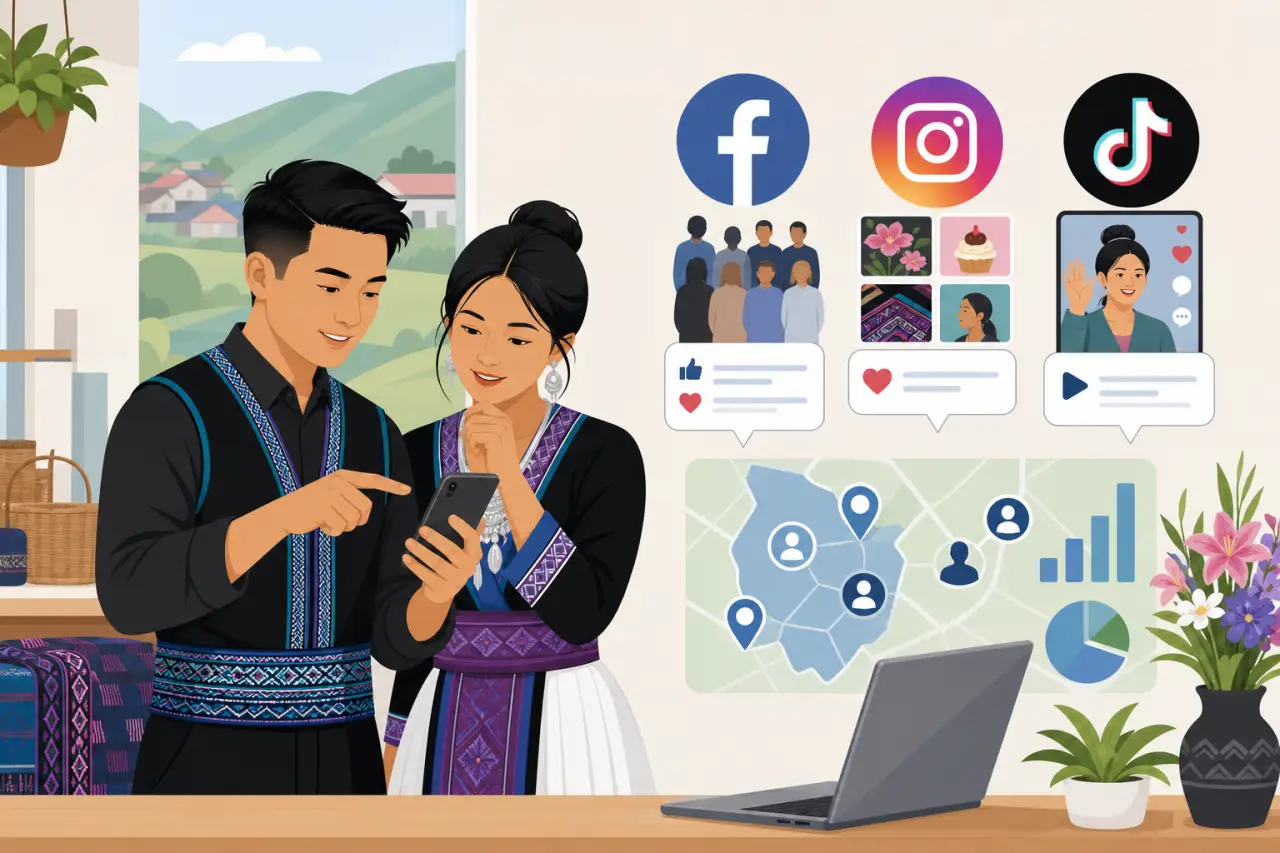
- Facebook tends to skew toward a broader, often slightly older audience and does especially well for businesses that live inside community groups — buy-sell-trade pages, local event pages, church and community organization groups — which makes it strong for restaurants, insurance agencies, real estate, home services, and anything word-of-mouth already drives.
- Instagram rewards businesses with something genuinely visual to show — a florist, a jewelry maker, a bakery, a paj ntaub textile artist, a boutique — since the whole platform is built around photos and short video.
- TikTok is less about who follows you and more about whether a single video gets discovered by people who've never heard of you, which makes it a good fit if you're comfortable filming quick, unpolished process videos: cooking, sewing, a haircut transformation.
None of this is a hard rule. The point isn't to memorize a platform's demographics — it's to stop guessing and go look at where your own customers already are before you commit your limited time.
Build a Posting Rhythm You Can Keep Up For a Year, Not a Month
The businesses that stick with social media long enough to see results almost always have one thing in common: they made the workload small enough to survive a busy week. That usually means batching. Instead of trying to think of something new every single day, set aside thirty minutes once a week — Sunday evening works for a lot of owners — and shoot five or six quick photos or short clips on your phone while you're already doing normal work: prepping food, ringing up a customer, laying out new inventory. Write the captions all at once too, even if you schedule them to go out on different days.
Keep a running note on your phone of post ideas as they occur to you throughout the week, so you're never staring at a blank screen trying to think of something worth posting. A simple, repeatable mix works better than trying to be original every time:
- One post showing a product or service
- One behind-the-scenes look at how it's made or who makes it
- One post featuring an actual customer or a review
Rotating through that same pattern removes the pressure to be constantly creative and is exactly why some accounts manage to post for years while others burn out after a few weeks.
If posting still feels like too much on top of running the business day to day, it's fine to start smaller than you think you should — even one solid post a week is worth more than an ambitious plan for daily posts that quietly stops after ten days, which is how most abandoned accounts actually happen. If you'd rather work from a bigger-picture view than week to week, use a slow stretch to try planning a realistic marketing calendar for the months ahead instead of figuring it out as you go.
Talk to People, Don't Just Post at Them
The businesses that get real value out of social media treat it as a conversation, not a bulletin board. Reply to comments. Answer questions in the DMs, even the ones that feel repetitive, like someone asking your hours or whether you take walk-ins — that person is often one message away from becoming a customer, and a slow or missing reply is often the whole reason they went somewhere else instead. Thank people by name when they tag you or mention your business, and if a regular customer shows up in your comments often, notice it. It's worth knowing about the @followers tag mistake too — mass-tagging everyone at once to grab attention usually backfires, while a genuine, personal reply almost always works better.
This takes real time, more than scheduling posts does, but it's also the part that turns a follower into an actual paying customer. People remember businesses that responded to them personally far more than ones that just posted a nice photo and moved on. A caption that asks a genuine question — which flavor should we bring back, what should we make next — invites comments instead of just views, and every comment is a small chance to have an actual back-and-forth with someone who might walk through your door next week.
Let Your Culture and Story Be the Differentiator
Generic stock photos and corporate-sounding captions blend into an endless scroll of everyone else doing the exact same thing. What actually stops someone's thumb is specific: the real person behind the counter, the actual process behind your product, a genuine story about why you started the business in the first place.
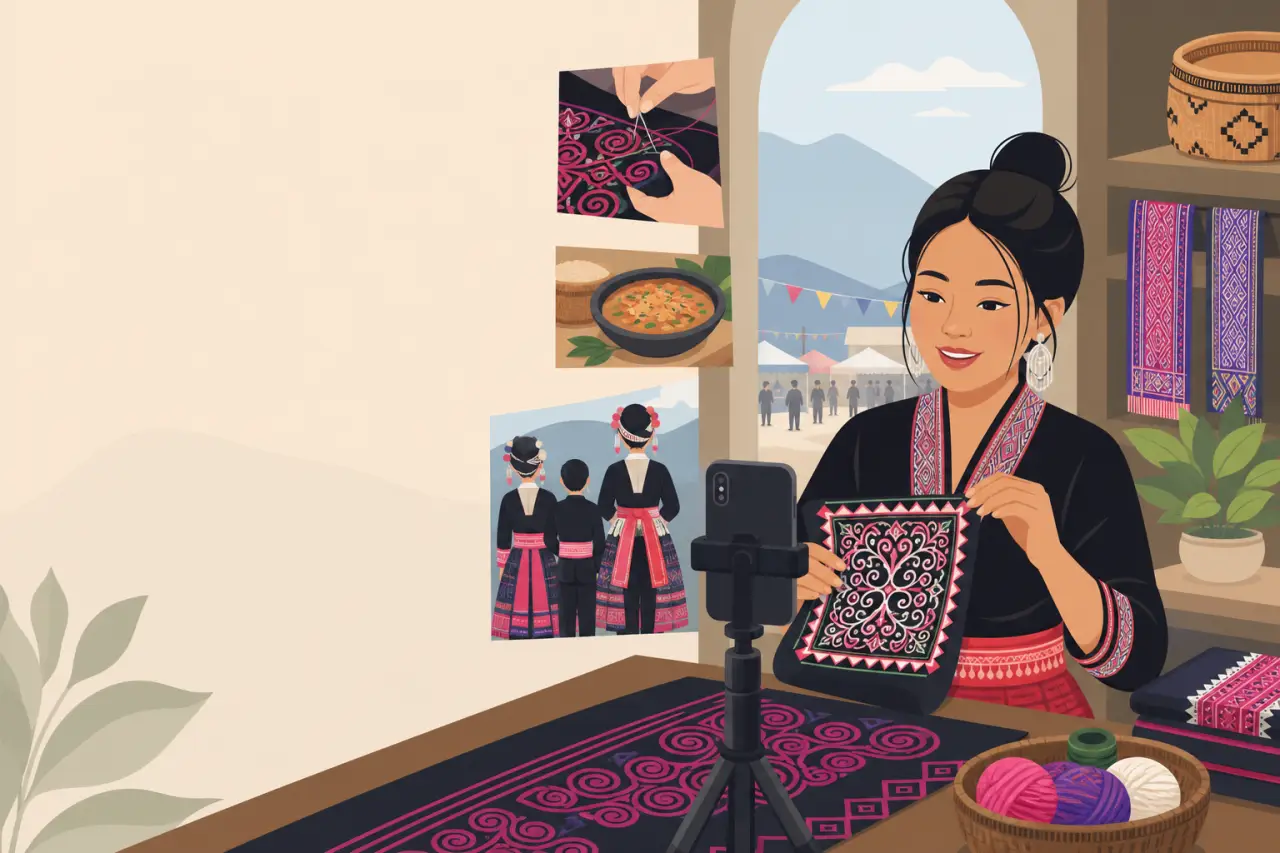
For a Hmong-owned business, that specificity often comes from turning culture into content — the culture and craft behind what you make. A short video of hand-stitching paj ntaub, a post about why a recipe has been in the family for three generations, a photo from a Hmong New Year event your business set up a booth at — none of that is filler content. It's the one thing a large competitor down the street literally cannot copy, because it isn't a marketing tactic, it's real. Writing some captions bilingually, in both Hmong and English, can also widen who actually understands and trusts what you're offering, especially with older customers who may not read English as their first language but are exactly the audience most likely to become loyal, repeat customers if they feel spoken to directly.
Give Every Post a Clear Next Step
A post can get a lot of likes and still not bring in a single customer if nobody watching it knows what to do next. Every post doesn't need a hard sell, but it should make the next step obvious somewhere — in the caption, a comment reply, or your profile itself. Small, specific instructions outperform a beautiful photo with no direction every time, for example:
- "Message us to order."
- "Link in bio to book a spot."
- "Call the number in our profile."
Make sure your profile itself isn't the dead end. The link in your bio should point somewhere useful — a booking page, a menu, your listing on hmong.network where someone can see your hours, address, and reviews in one place — not just sit blank or link to a homepage with no clear way to actually contact you. If you're running any kind of promotion or limited offer, put an actual deadline on it in the post; open-ended offers create no urgency and get forgotten by the time someone scrolls back. Even a small, specific ask like "comment below and we'll send you the details" gives people something concrete to do instead of just scrolling past a post they liked but forgot about five seconds later.
What to Do When a Post Flops, or Suddenly Takes Off
Most individual posts will get modest, unremarkable engagement, and that's normal — it doesn't mean the platform choice was wrong or that you should quit. Look for patterns over a month rather than judging any single post in isolation: posts with your own photos of real people usually do better than posts with stock images, and posts that went up around when your customers are actually online tend to outperform ones posted at random hours. Adjust the pattern, not your whole strategy, based on what you notice.
Occasionally a post will take off far beyond anything you expected — a video gets shared widely, or a local group picks up your post and it reaches thousands of people who've never heard of your business before. Be ready for that moment rather than caught off guard by it:
- Have a follow-up post ready to go while the attention is still there
- Make sure your hours and contact information are accurate and visible
- Be prepared for a real spike in messages and calls that you'll need to actually answer quickly
A sudden wave of new interest that gets ignored for two days does you almost no good.
The Three Numbers Worth Actually Tracking
Follower count is the number most owners fixate on, and it's also the least useful one, because a page with a few hundred engaged local followers who actually buy from you is worth more than one with ten thousand followers who never do. Three other numbers tell you far more about whether social media is actually working for your business — and about getting more from social media without spending more time or money on it.
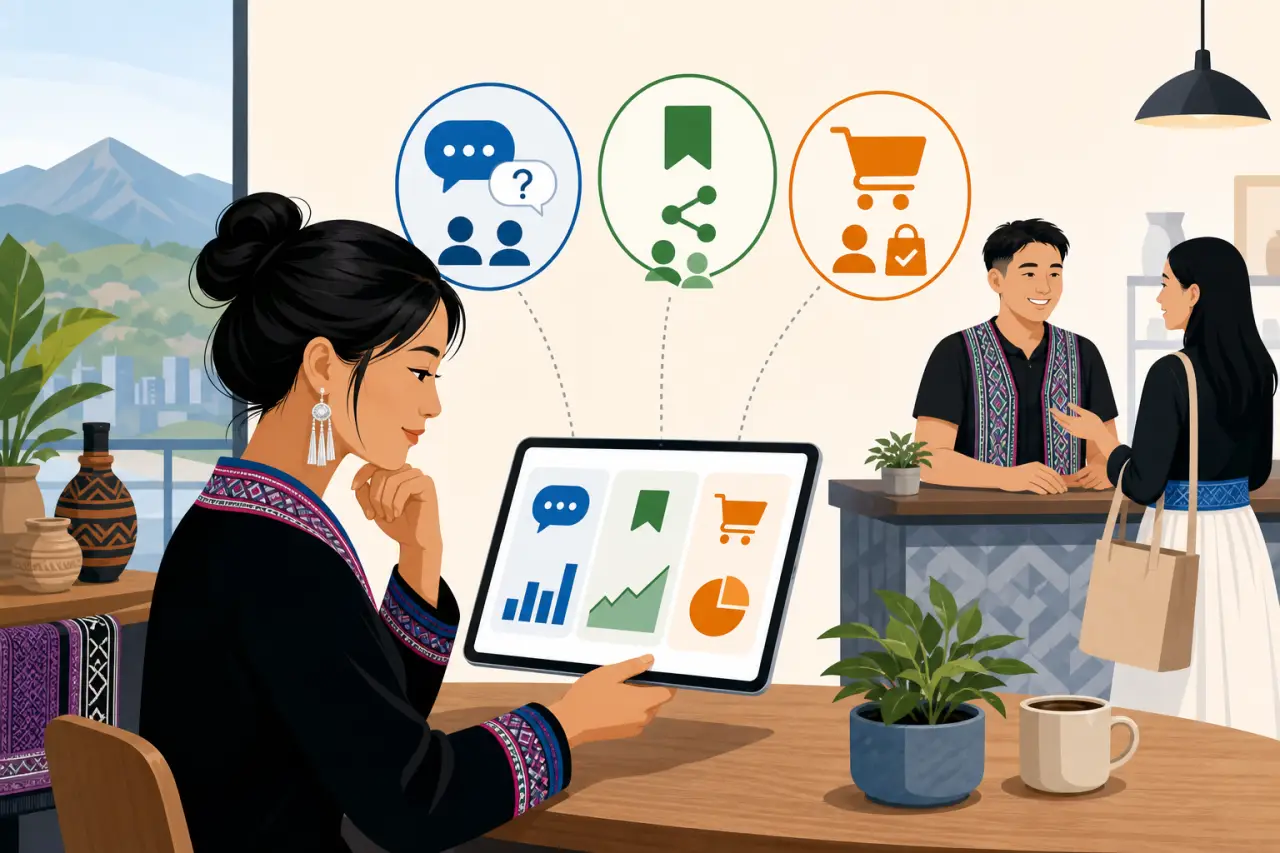
- Track how often a post turns into a direct message or a comment asking a real question, since that's a person actively considering becoming a customer, not just scrolling past.
- Watch saves and shares rather than just likes — someone saving your post to look at later or sharing it with a friend is a much stronger signal of real interest than a quick like.
- Most valuable of all is a simple habit: when a new customer comes in, ask them how they heard about you, and actually note it down somewhere.
Over a few months, a pattern will show up in your own numbers, not a stranger's case study, telling you plainly whether the platform and effort you've put in are actually turning into business — which is the only thing any of this was ever supposed to do.
Questions people ask
Where should I post my small business on social media if I don't know where to start?
Ask your existing customers directly where they follow other small businesses like yours. You'll usually hear the same one or two platform names repeated. If you're still unsure, pick the platform you personally find easiest to use consistently — an account you actually keep up with beats a more fashionable one you abandon after three weeks.
How often should I post on social media without burning out?
Post on a realistic schedule you can sustain for a year. Once or twice a week beats daily posts for two weeks followed by silence. Try batching: set aside thirty minutes once a week to shoot five or six quick photos or videos, write captions, and schedule them. If even that feels like too much, start with one solid post a week instead.
What should I actually track to know if social media is working for my business?
Ignore follower count — it's the least useful number. Instead, track how often posts turn into direct messages or real questions, watch for saves and shares instead of just likes, and most importantly, ask new customers how they heard about you and write it down. After a few months, a pattern will show whether your effort is actually turning into business.
What's the biggest mistake small business owners make when they start with social media?
Trying to be everywhere at once. Posting sporadically across five platforms gets less results than posting consistently on a single platform where your actual customers are. Most owners end up with four half-abandoned accounts with handful of posts each. Pick one platform, commit to a realistic schedule, and let the others go for now.
Written by
Hmong Network Team
Directory & Digital Services
We run the Hmong Network directory and do the web design and SEO/AEO work behind the results in our case studies. These guides come out of that same hands-on work with Hmong-owned businesses — not secondhand research.
