

Get More From Social Media Without Spending More
TL;DR
You don't need a bigger ad budget to get more out of social media — you need a tighter system: batched content, fast replies, and repeating what already works instead of chasing something new every day.
One Good Photo Session Beats Five Scrambled Posts
Most small businesses treat every post like its own emergency, which means hunting for something to photograph every single day and eventually burning out on the whole idea. It works better the other way around: block off one hour a month, shoot fifteen to twenty photos and a few short video clips of your products, your storefront, your team actually working, and spread those out over the next four weeks. Post two or three times a week from that single batch instead of scrambling for something new each morning. Customers don't remember that they've seen the same counter or the same dish before — they remember that you're active, still open, and worth stopping by.
Behind-the-scenes footage almost always beats a polished, staged photo, and it costs nothing extra to capture. A pot of pho coming together before the lunch rush, a bolt of fabric getting cut for a custom order, a car up on the lift mid-repair — these look like something a real person filmed, not something a business paid someone to produce, and that's exactly why people stop scrolling for it. Save the clean, well-lit shots for your website or menu. Save the phone footage, shot in five seconds between customers, for the feed.
While you're already in that one-hour window, write out eight or ten short captions at the same time, even if you don't know yet which photo they'll go with. Having a stack of ready-to-go captions is what actually keeps the posting schedule alive through a busy week — the bottleneck for most owners was never the photo, it was staring at a blank caption box with no idea what to write.
Answer Every Comment Like It's a Customer Standing at the Counter
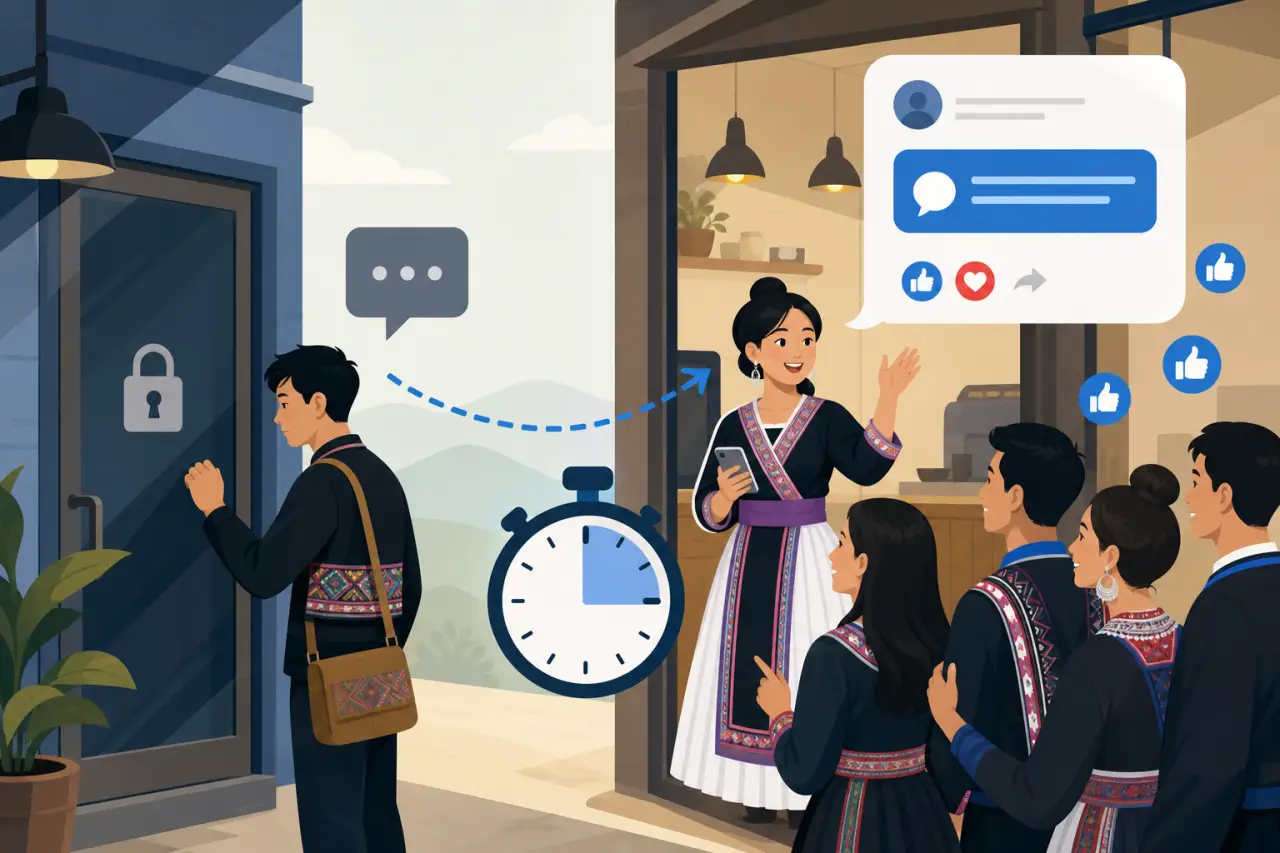
An unanswered comment or message is a customer standing at a locked door. It doesn't need to be a perfectly worded reply — "Yes, open until 8 tonight, come on by" answered in ten minutes does more for your business than a beautifully written response two days later, by which point that person has already gone somewhere else. Set aside two ten-minute windows a day, one in the morning and one in the afternoon, just to clear messages and comments. That's the entire cost of this strategy, and for a lot of small businesses it's the single biggest lever they have on whether someone actually shows up.
When someone asks about price, parking, or hours in the comments, answer right there in public instead of only sliding into a private message. The next ten people scrolling past get their question answered for free, and you stop typing the same answer over and over. If the same three or four questions keep coming up, save those answers somewhere on your phone so you can paste and personalize instead of retyping from scratch every time:
- Do you take walk-ins?
- Is there parking in back?
- Do you deliver?
For a lot of Hmong-owned businesses, part of this is language. A quick reply in Hmong to an older customer's comment, alongside an English reply to someone else on the same post, tells both of them the business is actually paying attention to who's asking — not just running an automated account. That small effort widens who feels comfortable reaching out in the first place.
Pick the One Platform Your Customers Are Actually On
Trying to keep up Instagram, TikTok, and Facebook all at once, on top of running the business, is exactly how content quality drops on all three at once. Pick the one platform where your actual customers already spend time, and let the rest go for now. For a lot of local, multi-generational, Hmong-owned businesses, that's usually Facebook, simply because personal pages, business pages, and community groups all overlap there in a way they don't on more visually-driven platforms. That covers businesses like:
- Restaurants
- Insurance agencies
- Tailors
- Caterers
- Auto shops
If your customer base skews younger, like a boba shop or a barbershop, Instagram or TikTok might genuinely make more sense — the point isn't which platform is trendier, it's where your specific customers already are. Whatever you land on, picking one platform and showing up consistently matters more than chasing every app at once.
If you're not sure, test for a month and pay attention to where actual calls, messages, and store visits come from — not follower count, which tells you almost nothing about whether the platform is bringing in business — it's the same reason why the @followers tag backfires as a shortcut to a bigger number. A page with three hundred engaged local followers who actually buy from you is worth more than one with five thousand followers scattered across a country who never will.
Let a Local Facebook Group Do What Your Own Page Can't
A business's own Facebook page often gets shown to a small slice of its followers, but community groups — local buy-and-sell pages, city groups, Hmong community groups — are frequently where actual local discovery happens, because people join those groups specifically to ask for recommendations. Posting directly into a relevant group, with a clear photo and a plain description of what you offer, often reaches more real prospective customers in one post than a week of posts on your own page.
This only works if you respect how the group actually operates. Many groups only allow business posts on a specific day of the week, or in a pinned weekly thread, and some don't allow promotion at all. Read the rules before posting, and don't be the account that shows up only to advertise and never contributes otherwise — that's the fastest way to get removed and to damage your name in a space where a lot of your future customers are watching. Being a genuinely helpful, recognizable member of the group first, answering questions and commenting like a person, makes the occasional promotional post land far better than a cold drive-by ad ever would.
Encourage happy customers to post their own photo in these same groups, or to tag your business when someone asks for a recommendation. A recommendation from another member of the group reads as trustworthy in a way that a business's own post never quite does, and it costs you nothing but a polite ask.
Turn Your Regulars Into Your Ad Budget
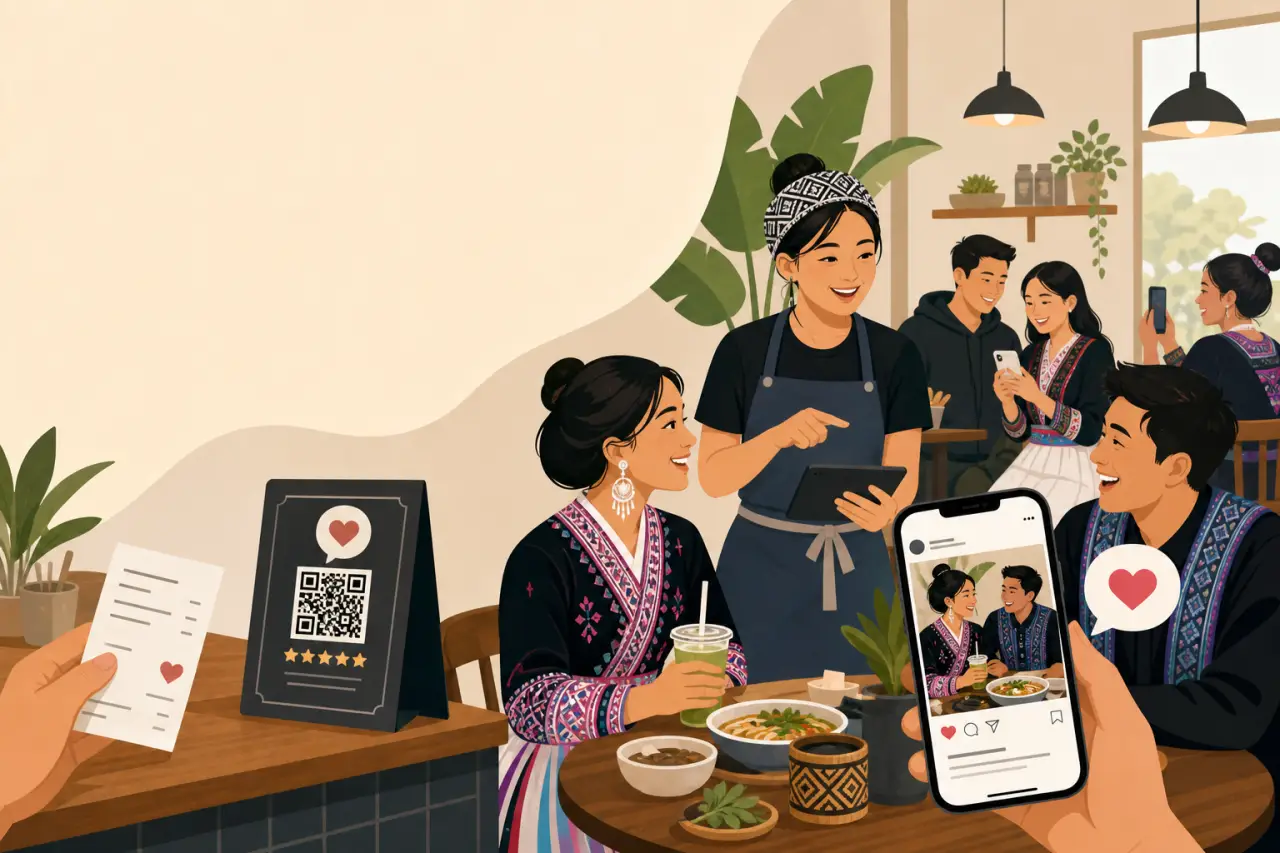
Word of mouth is still the cheapest and most reliable marketing any small business has, and social media's real job is to make that word of mouth easier to spread — the same discipline behind keeping the customers you already have — not to manufacture buzz out of nothing with a stranger audience. Ask directly. Any of these works better than most owners expect, mostly because most owners never actually ask:
- A small line on the receipt
- A table tent
- A quick verbal "if you enjoyed it, tag us or leave us a review"
When a customer does tag you or post their own photo, reshare it, with credit, rather than letting it disappear into their feed alone. A repost of a real customer's photo reads as proof that other people actually go here and like it — which is worth more to someone deciding whether to try you than any photo you took yourself, no matter how good the lighting is.
A simple, manually-tracked referral gesture works fine here too, and doesn't need any software or point system to run. "Tag three friends who'd love this and get a small perk on your next visit" is easy to track by hand and gives regulars an actual reason to share beyond just liking the post. In a community where extended family and clan networks are large and closely connected, a single referral often reaches far more people than it would in a less connected community — which is exactly why this kind of low-cost, relationship-driven push tends to punch above its weight for Hmong-owned businesses specifically.
Repeat Your Winners Instead of Always Chasing Something New
The pressure to post something brand new every single time is what burns most owners out, and it's largely unnecessary. Once a month, spend ten minutes looking at your platform's own insights and find the two or three posts that actually got the most engagement, saves, or shares. Those are telling you exactly what your audience wants more of — lean into that instead of forcing yourself to invent something completely different each week.
If a short video of hand-folding egg rolls got far more engagement than a static graphic about a discount, that's a real signal, not a coincidence. Post a similar video again in a month or two with a fresh caption. Most followers won't remember, or mind, that it's a variation on something you posted before, and the platform's own algorithm treats it as new content regardless. Reusing a genuinely good post from six months ago, with an updated caption, is not lazy — it's simply not re-solving a problem you already solved once.
Keep a short running note, even just a few lines in your phone, of what topic each post covered and roughly how it performed. Reviewing that note — especially when you're planning your marketing calendar during the slow season — before mapping out the next few weeks of content means you're never starting from a blank page, which is often the real reason posting schedules quietly fall apart.
Spend Your First Ad Dollar on What Already Worked
Once there's actually a little money to put behind social media, resist the urge to spend it testing a brand-new, unproven graphic or discount flyer. Boost the organic post that already proved itself — the one with real comments, shares, and saves from actual people. It's already been validated for free by a real audience; putting even a small amount, five to twenty dollars, behind it extends that same proven content to people who don't already follow you, instead of gambling that a new, untested design will perform.
Keep the targeting tight. A five-to-ten-mile radius around your actual location will do far more for a business that depends on foot traffic or local service calls than a broad city-wide or state-wide audience, most of whom will never realistically walk through the door. Every dollar spent reaching someone who can't actually become a customer is a dollar wasted, no matter how good the post is.
Before hitting the default boost button, take the extra thirty seconds to actually pick a goal, rather than accepting whatever the platform defaults to, which is often optimized for reach and impressions rather than the specific action that actually grows your business:
- More messages
- More calls
- More website visits
Track Two Numbers, Not Twenty
Staring at a dashboard full of impressions, reach, engagement rate, and story taps is a fast way to feel like social media isn't working, even when it actually is. For most local businesses, only two numbers really matter:
- How many people mention seeing you on social media when they call, message, or walk in — ask, and actually keep a simple tally by the register or in a notes app.
- How quickly you're replying to messages and comments, since that number directly predicts whether interest turns into an actual visit.
A notepad tally next to the register, kept for even a single month, tells you more about whether this effort is paying off than any analytics dashboard, because it ties the marketing directly back to real dollars walking through the door. That connection is also what keeps owners motivated to stick with the strategy past the first few slow weeks, instead of quietly giving up before it's had a real chance to work.
Cost-effective social media was never about doing more. It's about doing the handful of things that actually move people — good photos taken in one sitting, fast replies, showing up where your customers already gather, and letting your own regulars carry the rest through the relationships they already have.

Questions people ask
How often should I post on social media if I own a small business?
Post two or three times a week from a single batch of photos and videos shot in one monthly session. You don't need to find something new to photograph every day. Customers remember that you're active and open, not whether they've seen the same counter before. Block off one hour a month, shoot fifteen to twenty photos and a few video clips, then spread them out over four weeks.
What should I do when customers comment or message me on social media?
Answer within ten minutes whenever possible. Speed matters more than perfect wording — "Yes, open until 8 tonight, come on by" answered quickly does more for your business than a beautiful response two days later. Set aside two ten-minute windows daily, morning and afternoon, just to clear messages and comments. That's often the biggest lever on whether someone actually shows up.
Should I post on Instagram, TikTok, and Facebook all at the same time?
Pick one platform where your actual customers already spend time. For many Hmong-owned businesses like restaurants, auto shops, and tailors, that's usually Facebook. If your customers skew younger, Instagram or TikTok might make sense instead. The point is showing up consistently where your specific customers are, not chasing every app at once.
What's the best way to get customers to share my business on social media?
Ask directly. Use a line on the receipt, a table tent, or a quick verbal request like "tag us or leave us a review." When customers do tag you, reshare their photo with credit — real customer posts prove other people go there and like it more than any professional photo you took. A referral gesture like "tag three friends and get a perk on your next visit" works especially well in closely connected communities.
How much money should I spend on social media ads to start?
Don't test new, unproven designs. Instead, boost an organic post that already proved itself with real comments and shares. Start with five to twenty dollars behind a post people already engaged with. Keep the radius tight — five to ten miles around your location — since broad city-wide targeting wastes money reaching people who'll never visit.
How do I know if social media is actually working for my business?
Track only two numbers: how many people mention seeing you on social media when they call or walk in, and how quickly you reply to messages. A simple tally by the register for even one month tells you more than any analytics dashboard, because it connects the marketing directly to real customers and dollars. That connection also keeps you motivated to stick with the strategy past the first slow weeks.
Written by
Hmong Network Team
Directory & Digital Services
We run the Hmong Network directory and do the web design and SEO/AEO work behind the results in our case studies. These guides come out of that same hands-on work with Hmong-owned businesses — not secondhand research.
