
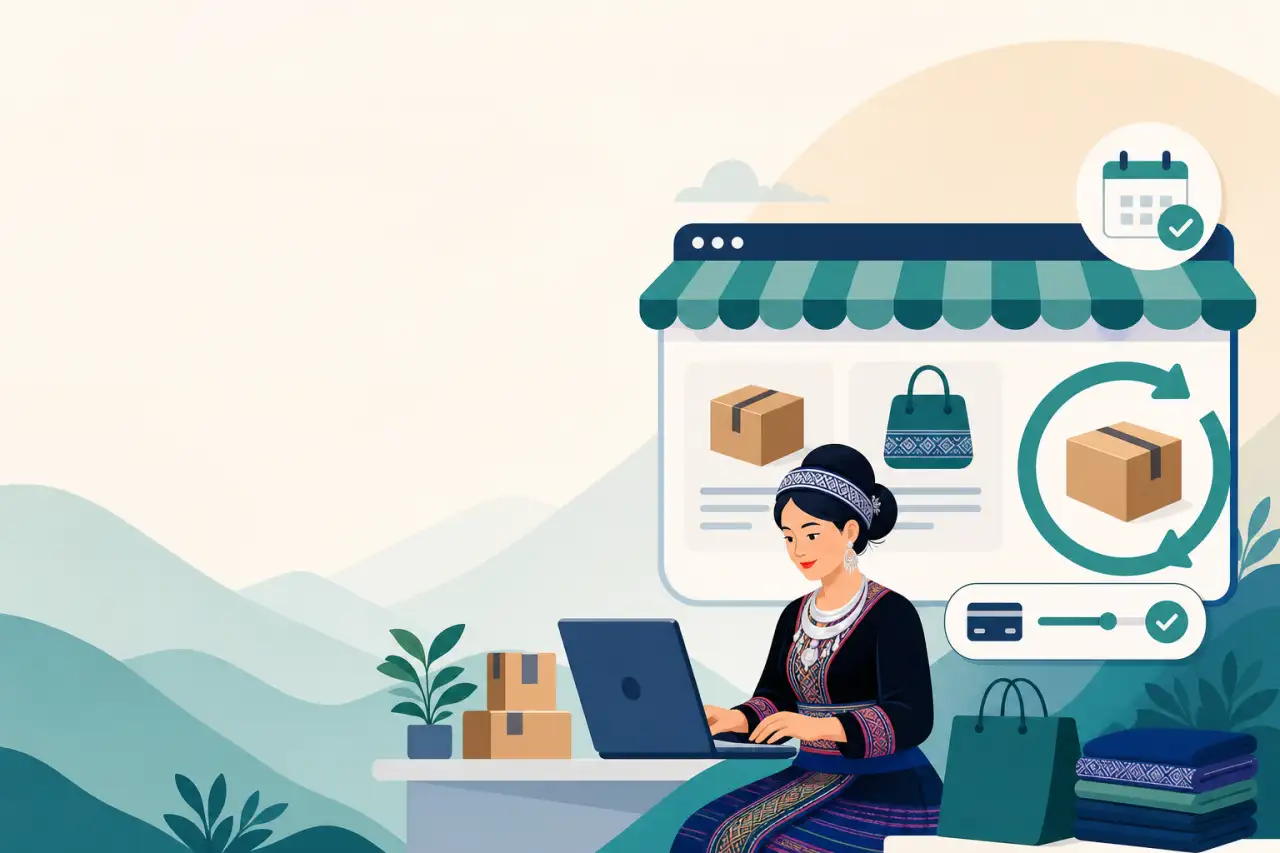
Recurring Orders and Subscriptions: What's Coming
TL;DR
Subscription selling isn't built into Hmong Network yet, but it's coming, and claimed sellers will be notified in their dashboard when it ships. Here's what the feature is meant to do and how to get your storefront ready for it now.
What Recurring Selling Actually Changes
A one-time sale ends the moment the buyer checks out. A subscription doesn't — it turns a single purchase into a standing relationship where a buyer agrees to be billed on a schedule you set, in exchange for something you deliver on that same schedule. The product doesn't have to be identical every time. It just has to be something the buyer wants often enough that committing to it up front is easier than reordering it manually.
Think about the parts of a Hmong-owned business that already run this way informally:
- A restaurant that packs frozen egg rolls or sausage for regulars who call in every few weeks.
- A seamstress who takes standing paj ntaub or embroidery commissions from the same handful of clients each season.
- An esthetician whose skincare clients reorder the same serum every six weeks without fail.
- A bookkeeper or tax preparer with clients on a recurring monthly retainer.
- A language, dance, or music instructor selling lesson packages instead of one class at a time.
All of these are subscriptions in practice — they just aren't automated yet.
That's the gap the feature is meant to close: take a relationship that already repeats and remove the friction of both sides having to remember to make it happen again.
Where the Feature Stands Right Now
To be direct about it: subscription and recurring-order selling isn't live on Hmong Network today. Every purchase that runs through the marketplace right now is a single, one-time transaction — there's no toggle in your dashboard yet for setting up a billing schedule, and no way for a buyer to opt into automatic reorders.
It's on the roadmap, not a vague someday. When it's ready, sellers who've claimed their listing will see it appear as a new option in their dashboard, the same way other seller tools have rolled out here before. You won't need to hunt for an announcement or dig through settings — it'll show up where you already manage your storefront.
The one prerequisite worth acting on now, if you haven't already: claim your listing. Subscription tools, like every other seller feature on this site, only reach claimed and verified businesses. If your listing is still unclaimed, that's the actual blocker between you and this feature landing in your dashboard the day it ships — not anything about your business type or size.
 Explore the Solutions SuiteStep-by-step guidance plus vetted partner businesses.
Deciding Which Part of Your Business Is Actually Subscription-Ready
Not everything you sell belongs on a recurring schedule, and deciding if a subscription option fits your business is worth doing honestly before you build anything around the idea. The best candidates share a few traits:
- Buyers already reorder them on a predictable rhythm.
- You can fulfill them consistently without extraordinary effort each time.
- The product or service doesn't depend on something that changes wildly week to week.
A weekly produce or herb share works because the rhythm is already natural — people cook every week regardless. A monthly sausage or egg roll box works for the same reason, as long as you can actually produce that volume on schedule without it becoming a burden during a month you're already busy with catering or a festival booking. A coaching or lesson package works because the value compounds with repetition — one guitar lesson does less than eight.
What doesn't translate well:
- Anything highly seasonal with no off-season equivalent.
- Anything where quality depends on sourcing that isn't reliable month to month.
- Anything you only make in small batches for a specific event.
Forcing those into a subscription model just sets up a cancellation the first time you can't deliver. If a chunk of what you sell doesn't fit, that's fine — pick the piece that does and start there.
There's also a personal capacity question worth asking honestly, separate from whether the product itself fits: can you actually keep this commitment on your worst week, not your best one? A subscription doesn't pause itself for a family funeral, a slow month at your day job, or the week you're short-staffed. Picking the offering you can sustain even when things are hard beats picking the one that sounds most impressive on your listing page.
Sketching Your Tiers and Cadence Before the Feature Exists
You don't need the tool built to do this part of the work. Deciding your cadence and tiers now means you're not improvising it later while also learning a new dashboard feature.
Start with cadence: weekly, biweekly, or monthly are the three that map cleanly onto how people actually plan their spending and their kitchens.
- Weekly suits perishable food and fresh-cut goods.
- Monthly suits things with a longer shelf life, or services like bookkeeping and consulting that naturally bill by the month.
- Biweekly is a reasonable middle ground for something like a standing produce or snack box that's too much weekly but goes stale sitting a full month.
Then decide on tiers, and resist the urge to build five of them. Two or three is almost always enough:
- A base plan that covers your standard offering.
- A step-up plan with more volume or an add-on.
- If it fits, an annual option priced at a discount against paying monthly, which rewards your most committed buyers without you having to manage twelve separate charges for them.
If you're not sure where to start, one plan is a completely reasonable place to launch from. You can always add a second tier once you see who's actually subscribing and what they ask for.
Pricing a Recurring Offer Without Undercutting Yourself
Before you set a subscription price, get pricing strategies that work settled for your one-time listings first — your subscription price should anchor off that baseline, not get invented separately. The instinct with subscriptions is to discount hard to get people to commit. Resist discounting past the point where the math still works for you. A subscriber does cost you less to keep than a new one-time buyer costs you to find — you're not re-earning their attention every single time — but that savings is modest, not massive, especially early on when you don't have many subscribers to spread your effort across.
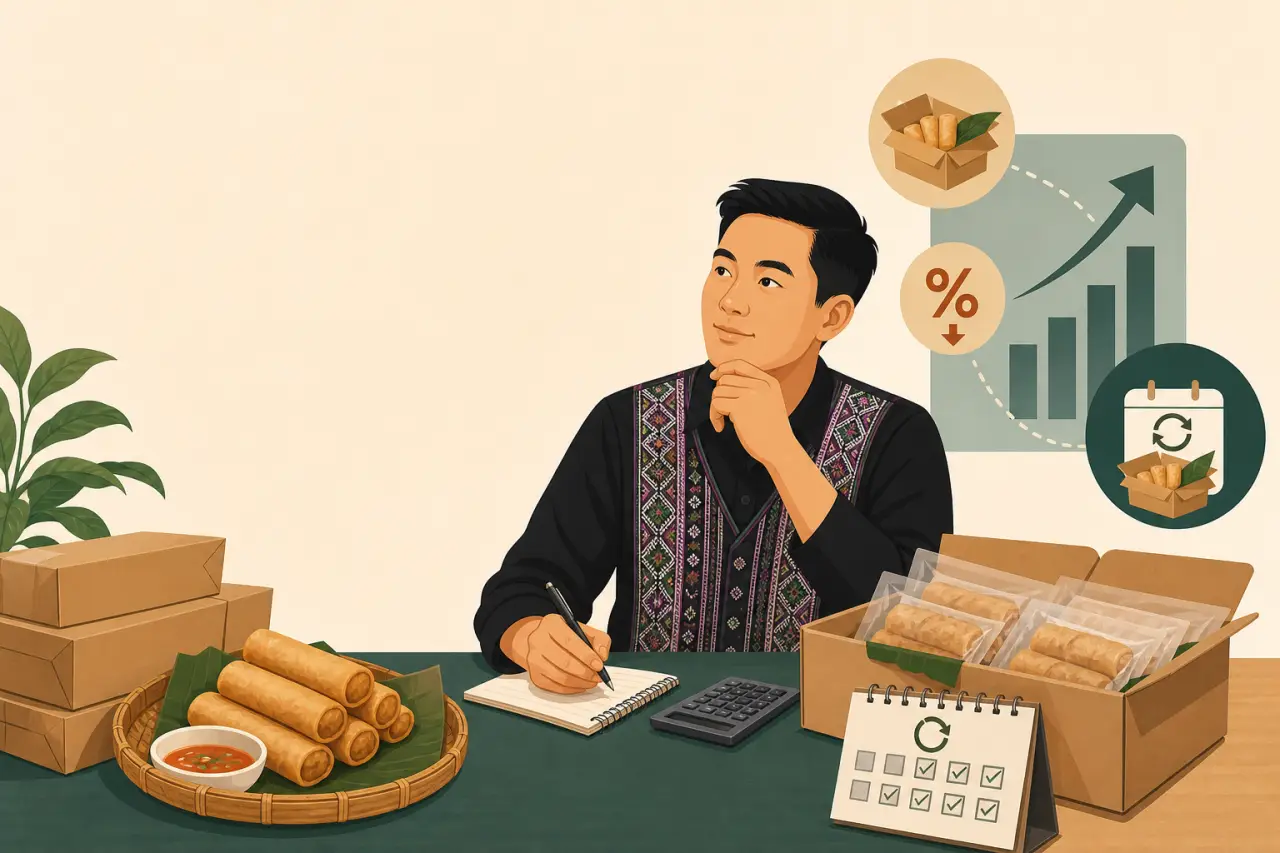
A workable approach: price the subscription slightly below your one-time price, not dramatically below it. If your egg roll bundle sells for twenty-eight dollars as a one-off, a subscription price of twenty-five rewards the commitment without eating your margin down to nothing once you factor in packaging, delivery time, and the occasional month where a buyer cancels after one cycle. The discount is the incentive to subscribe, not the entire pitch — the real pitch is not having to remember to reorder.
Also build in your actual cost of doing this consistently, not just your cost per item. A recurring order means recurring prep time, recurring packaging, and recurring fulfillment on a date you don't get to move because it's inconvenient that week. Price for the version of your business where this becomes a standing Tuesday obligation, not the version where you happen to have time. It also helps to revisit how seller fees and commissions work before you finalize a number, since those same charges apply to every recurring payment exactly as they do to a one-time sale.
Plan for churn instead of being surprised by it. Some subscribers will cancel after one or two cycles no matter how good the product is — that's normal for any recurring offer, not a sign you did something wrong. If your pricing only works when every subscriber sticks around for a year, it's priced too thin. Build it so a handful of short-term subscribers still leaves you better off than if they'd never signed up at all.
Running Subscriptions by Hand in the Meantime
You don't have to wait for the built-in tool to start operating like a subscription business — you just have to do the recurring part manually for now, and that's a completely normal way to test the idea before automating it.
The mechanics are simple and don't need special software:
- Say so plainly in your listing description — mention that you offer a standing weekly or monthly order and that interested buyers should message you directly to set it up.
- Keep a basic list — a spreadsheet, a notebook, whatever you already use for orders — of who's subscribed, what they get, and when their next order and payment are due.
- Set yourself a recurring reminder a few days ahead of each cycle to reach out, confirm the order, and collect payment through whatever method you already use for one-time sales.
This manual version is more work per subscriber than the automated version will be, which is exactly why it's worth doing at a small scale first. It tells you whether people actually want this from you before you build tiers and pricing around a demand that might not be there yet, and it gives you a real list of interested buyers to bring straight into the automated version the moment it launches — instead of starting from zero.
Keep the group small enough on purpose while you're doing this by hand — five to ten standing customers is plenty to learn from, and trying to manually track fifty recurring orders on a spreadsheet is how the whole thing collapses under its own admin work. A shared note or a simple group chat with your regulars for reminders and schedule changes works fine at that scale, and it doubles as a direct line for hearing what they'd actually want from a subscription before you lock in tiers and pricing. And if managing even that small a group manually feels like more than you want to take on alone, getting hands-on help growing your storefront is worth looking into rather than letting the manual system become the reason you never launch the real thing.
Keeping Your Books Straight Once Money Starts Recurring
Recurring revenue changes your bookkeeping even before the feature is automated, and it's worth getting the habit right while your subscriber count is still small enough to fix by hand. The core issue: if someone pays you for three months or a year up front, that money isn't fully "earned" the day it lands — you still owe them product or service across the months ahead. Treat it separately in your own records from a normal one-time sale, even if you record income on a cash basis for tax purposes.
The simplest version of this is a running list of who's paid, through what date, and what they're still owed — kept apart from your regular order log. That list is what saves you from double-booking your own capacity, and it's what you'll need on the day:
- A subscriber's card fails.
- They ask for a refund partway through a prepaid term.
- You need to know at a glance how much future work you've already been paid for.
Decide your refund and cancellation math before you need it under pressure. If someone paid for six months and wants out after two, know in advance which of these you'll do:
- Refund the unused months.
- Prorate it.
- Hold to a no-refund policy stated up front.
Whichever one you choose, put it in writing wherever you describe the subscription, not just in a conversation you'll have to remember later.
Setting Terms Buyers Will Trust Before You Ask Them to Commit
A subscription asks more of a buyer than a one-time purchase does — they're agreeing to be charged again without placing a new order each time — so it earns more scrutiny. Decide your terms before you pitch it, not after your first buyer asks a question you haven't thought through.
At minimum, be ready to answer three things clearly:
- How someone cancels.
- Whether there's a minimum commitment before they can.
- What happens if you can't fulfill a given cycle — a busy catering week, a supply gap, a holiday.
Committing to a cancel-anytime policy costs you less in trust damage than a hidden minimum-term clause a buyer discovers after they've already signed up. If you do want a minimum term to make the logistics worthwhile on your end, say so up front in plain language rather than in fine print.
The same goes for delivery or fulfillment expectations. If a subscription box ships every second Friday, say that exactly, and hold to it — a subscriber's trust in a recurring order is built almost entirely on it showing up when you said it would. One missed cycle handled with a heads-up message does far less damage than one missed cycle a subscriber only notices because nothing arrived.

Questions people ask
What's the difference between a one-time sale and a subscription?
A one-time sale ends when the buyer checks out. A subscription turns a single purchase into a standing relationship where the buyer agrees to be billed on a schedule you set, in exchange for something you deliver on that same schedule. The product doesn't have to be identical each time — it just has to be something the buyer wants often enough that committing up front is easier than reordering manually.
How do I know if my business is ready for subscriptions?
The best subscription candidates have buyers who already reorder on a predictable rhythm, can be fulfilled consistently without extraordinary effort each time, and don't depend on sourcing that changes wildly week to week. Also ask honestly: can you keep this commitment on your worst week, not your best one? A subscription doesn't pause itself for a family emergency or a slow month.
Can I start taking subscriptions before the Hmong Network feature launches?
Yes. Mention in your listing that you offer standing weekly or monthly orders and ask interested buyers to message you. Keep a simple list of who's subscribed, what they get, and when payment is due. Set a reminder a few days before each cycle to confirm and collect payment. Start small—five to ten standing customers is enough to learn whether people actually want this from you.
How should I price a subscription compared to a one-time sale?
Price the subscription slightly below your one-time price, not dramatically below it. If your egg roll bundle sells for twenty-eight dollars one-time, try twenty-five for a subscription. The discount is the incentive to subscribe, but don't eat your margin—factor in recurring prep time, packaging, and fulfillment work. Build your pricing so a few short-term subscribers still leaves you better off than if they'd never signed up.
Written by
Hmong Network Team
Directory & Digital Services
We run the Hmong Network directory and do the web design and SEO/AEO work behind the results in our case studies. These guides come out of that same hands-on work with Hmong-owned businesses — not secondhand research.
