

Your Story Is a Marketing Budget You Already Have
TL;DR
The businesses that stand out aren't spending the most — they're being the most specifically, obviously themselves. Here's how to turn your own story into a brand people remember and repeat.
Say why you actually started
Every business can describe what it sells — "we sell good food," "we do good work" — but that's a category, not a story. What actually cuts through is why you, specifically, opened this business:
- a recipe passed down from your grandmother
- a trade your father taught you before he could speak much English
- a service you kept needing and could never find anywhere that felt like home
That reason is the one thing no competitor can copy no matter what they spend on ads, because it belongs to you and only you — finding your business's real origin story usually starts with just answering that one question honestly.
Say it plainly. Not "family-owned since inception, committed to quality and excellence" — just say what actually happened. "My mom sold this soup out of our garage for fifteen years before we opened a real kitchen." "I learned to fix cars from my uncle, because that's how he kept our first car running when we had nothing else." The plain version is more convincing than the polished one, because it sounds like a person talking, not a brochure.
Write that one sentence down somewhere so it's ready when you need it. Put it in your Google Business Profile description, the first line of your Instagram bio, a small sign near the register. You'll use it more than you'd think — it's the answer every time someone asks how you got into this.
Put the story where people actually decide
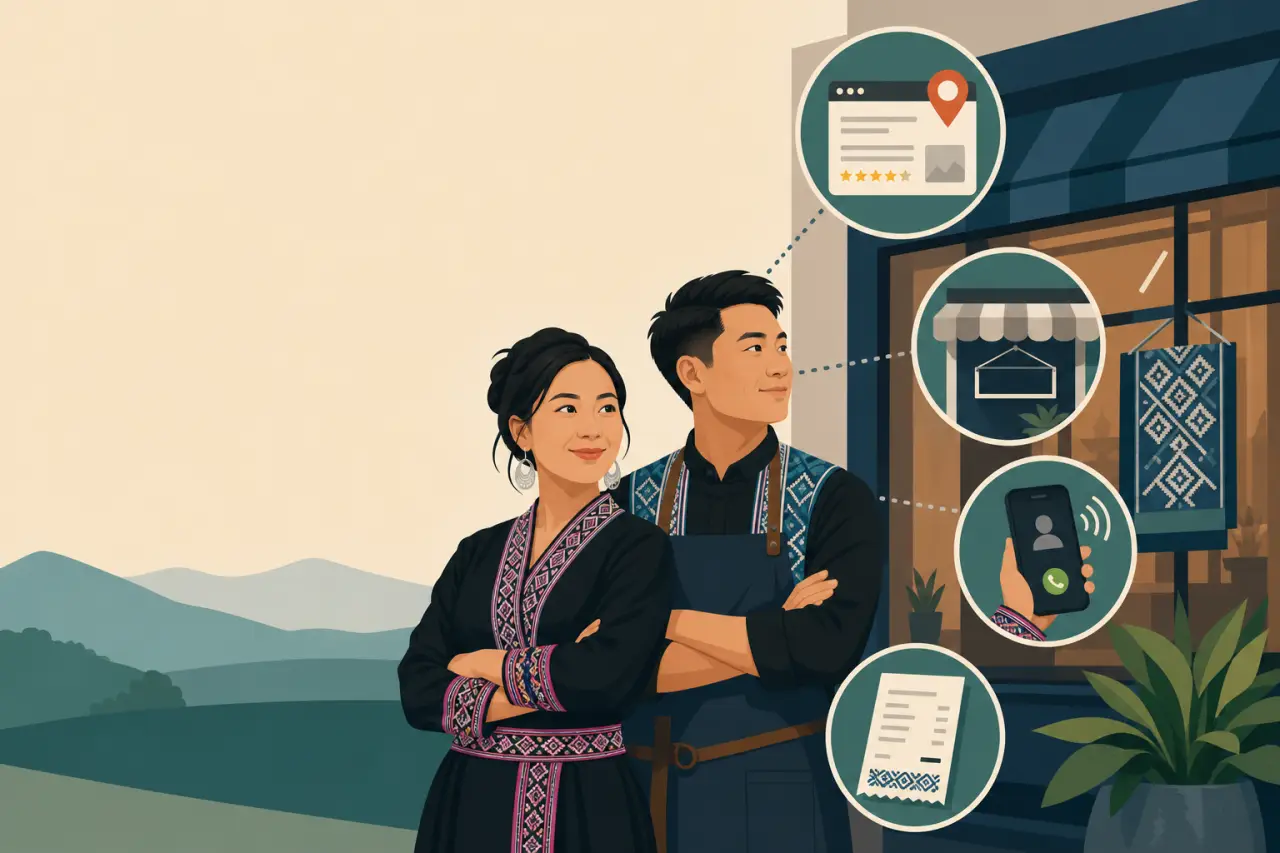
A good story that only lives in your head does nothing for your business. It has to show up at the exact moments someone is deciding whether to trust you — which for most small businesses isn't your website. It's:
- your Google Business Profile description
- the sign in your window
- the first thing you say when you answer the phone
- what's printed at the bottom of a receipt or invoice
Go through each of those touchpoints one at a time and ask whether it says anything about who you are, or just what you sell. A voicemail greeting that says "you've reached [business name], leave a message" is a missed placement. "You've reached [business name] — we've been doing this by hand in this shop since 2009, we'll call you right back" costs nothing extra and does real branding work every single time someone calls and gets voicemail.
This matters even more if you're easy to confuse with ten other businesses in the same category — a nail salon, an insurance agency, a food truck. If a customer can't tell your listing apart from the next one without reading through reviews, your story is the fastest way to make the choice obvious before anyone starts comparing prices.
Be consistent, not constant
You don't need to post every day to build a brand people trust. You need the same story, tone, and look to show up wherever someone finds you:
- your sign
- your packaging
- your social bio
- how you answer the phone
- how you text a customer back
Inconsistency, like a formal-looking website next to a chaotic, all-caps Facebook page, reads as two different businesses, and it quietly costs you trust before a customer ever walks in the door.
Consistency isn't the same as sameness. You can post a funny video one week and a serious announcement the next — what has to stay constant is the voice behind it and the reason people started paying attention to you in the first place. A restaurant known for being loud, warm, and a little chaotic in person should sound loud, warm, and a little chaotic online too; a stiff, formal social voice layered on top of that in-person experience feels like a bait and switch the first time someone actually visits.
When you're deciding whether to post a photo, caption, or flyer, ask one question: does this sound like the reason I started this business? If it doesn't, it doesn't matter how professional it looks — cut it and use something that actually does. That single filter will save you more branding trouble than any content calendar.
Let customers say it back to you
The strongest version of your story isn't the one you tell — it's the one a customer repeats to a friend without you in the room. That only happens if you've actually said your story out loud somewhere they picked it up: in conversation while they wait, in a caption they read before they ever came in, on a small card taped near the register.
You can nudge this along without it feeling like a sales pitch. When you ask a happy customer for a review, don't just ask for stars — ask what made them come back, or what they'd tell a friend who'd never been. Their answer, in their own words, is often a better description of your business than anything you'd write yourself, and it's worth quoting back on your own page, with their permission, because a stranger trusts another customer's voice more than yours.
This is also where being specific pays off twice. A review that says "great service" helps nobody. A review that says "they remembered my daughter's name from the first visit" is doing real branding work for you, for free, because it's proof of the exact thing you're trying to claim about yourself.
Your photos are doing more branding work than your logo
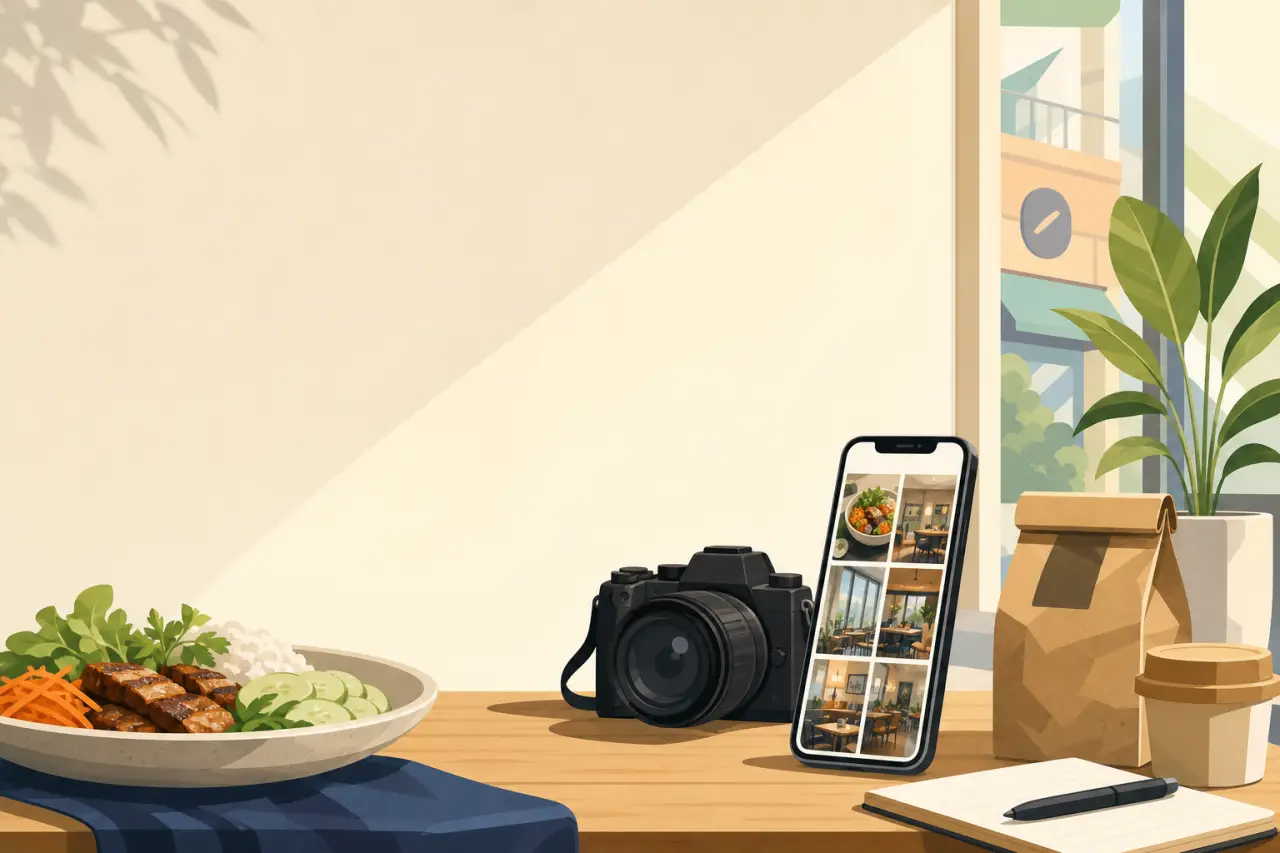
Most small business owners spend real time worrying about their logo and almost none thinking about their photos, which is backwards — a customer scrolling past your listing sees your photos in about a second, long before they'd ever notice a logo mark. A blurry, dim photo of your storefront or your food undoes a well-written story in the same instant it takes to read one clean sentence of your bio.
You don't need a professional shoot to fix this. You need light — actual daylight near a window or doorway beats any indoor lighting you own — and you need to photograph the real thing, not a styled version of it:
- the dish exactly as it's served
- the actual workspace
- the actual person doing the actual work
A photo of you mid-task, hands busy, tells more of your story than a posed portrait ever will.
Update these regularly, even if only a few at a time. A listing with the same three photos from opening week five years ago quietly signals that nothing is happening there anymore, which is the opposite of the impression a growing business wants to give.
When the honest version isn't flashy, use it anyway
Not every business has a dramatic founding story, and that's fine — most don't. You don't need "beat impossible odds and started this dream from nothing," you need true. "I was laid off and needed to make rent, so I started doing what I already knew how to do" is a completely ordinary story, and it's still more compelling than a made-up mission statement about "passion for excellence," because ordinary and true beats impressive and vague every single time.
Resist the urge to borrow language from businesses that aren't like yours. A lot of small business marketing advice is written for companies chasing outside investors, not a family running a restaurant, salon, or repair shop — you don't need a "brand mission," you need one honest paragraph about how this place came to exist and what you actually care about when nobody's watching, like whether the meat is fresh that morning or whether a repair gets done right instead of just done fast.
If your business is Hmong-owned and that's part of the story, say so plainly rather than hinting at it. It's not a limiting label — for a growing number of customers, especially in cities with an established Hmong community, that's exactly what they're searching for by name, and burying it under generic language just makes you harder to find for the people most likely to become regulars. Look at what other owners have done well here — turning culture into content and marketing built specifically for Hmong-owned businesses are both worth a look once you've got your own story down.
Charisma is a habit, not a personality type
"Charisma" sounds like something you either have or don't, but in a small business context it's mostly a habit:
- remembering names
- asking a follow-up question instead of just taking the order
- saying thank you like you mean it instead of on autopilot
None of that requires being naturally outgoing — it requires paying attention, which anyone can practice, and it comes down to running your business your own way instead of copying a script built for somebody else's brand.
This is also the part of your brand a competitor genuinely cannot copy by spending more money. A bigger competitor can out-advertise you, undercut your price, or open a flashier location, but they can't replicate the specific way you greet a regular by name or remember that someone's kid just started college. That's not a marketing tactic, it's just how you treat people — but it becomes a real brand advantage the moment customers start telling other people about it.
If you have employees, this is worth actually training on rather than assuming it happens naturally. A short, specific standard carries the "why we started this" story into every interaction, even the ones you're not personally there for:
- Greet everyone within the first ten seconds
- Ask one real question
- Thank them by name if you know it
Know where emotion stops helping
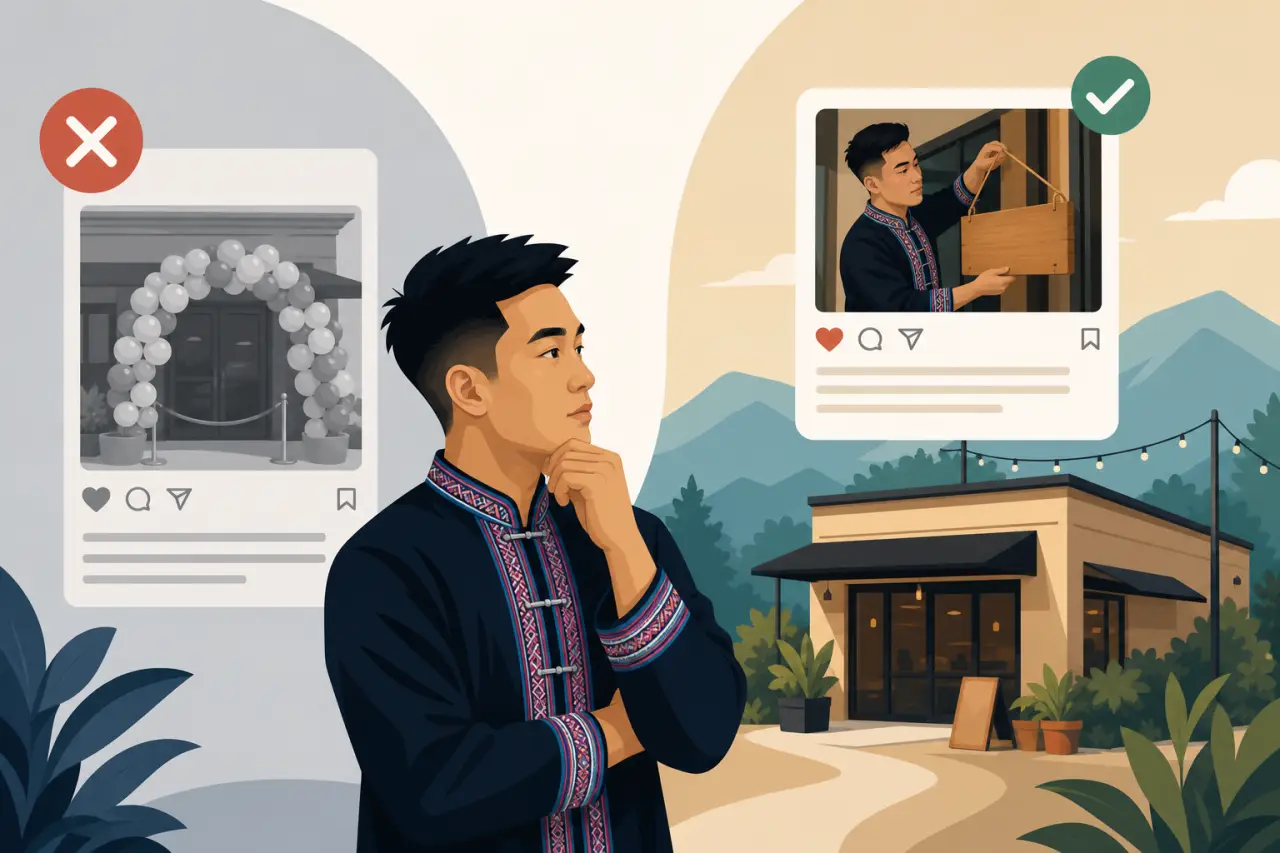
Emotion in your branding works because it's true, and it stops working the moment it reads as manufactured. A grand-opening post that says "blessed and grateful for this incredible journey" over a stock photo doesn't move anyone, because it could be pasted onto any business in any town. Specific, small, and true beats big, vague, and emotional every time.
There's also a line between sharing your story and oversharing your struggles to get sympathy purchases. Customers can tell the difference between "here's why this place matters to me" and a post that's really asking them to buy something out of guilt, and the second one erodes trust fast even if it works once. Tell the real story and let people decide to support you because they like what you're offering, not because they feel obligated to.
The test that works here is the same one from earlier: does this sound like something I'd actually say to a customer standing in front of me? If a caption or sign would feel strange to say out loud to someone's face, it's probably too polished, too sad, or too salesy to belong in your brand. The version that survives that test is the one worth keeping.
Questions people ask
Why should I include my personal story in my business marketing?
Your origin story is the one thing competitors can't copy, no matter what they spend on ads. It's what cuts through when everyone else in your category sounds the same. A specific reason you started — a recipe from your grandmother, a trade you learned, a service you needed — is more convincing than any polished mission statement about quality and excellence.
Where should I put my business story so customers actually see it?
Put it wherever someone decides whether to trust you: your Google Business Profile description, your window sign, your phone voicemail greeting, your receipt. A voicemail that says you've been doing this by hand since 2009 costs nothing extra but does real branding work every time someone calls.
How often do I need to post on social media to build my brand?
You don't need to post every day. You need the same story, tone, and look to show up wherever someone finds you — your sign, packaging, social bio, how you answer the phone. Consistency matters more than constant posting.
What makes a photo actually help my business marketing?
Customers see your photos in about a second, before they notice your logo. Use real daylight and photograph the real thing as it actually is — the dish as served, your actual workspace, you mid-task with hands busy. Update them regularly, even just a few at a time.
Written by
Hmong Network Team
Directory & Digital Services
We run the Hmong Network directory and do the web design and SEO/AEO work behind the results in our case studies. These guides come out of that same hands-on work with Hmong-owned businesses — not secondhand research.
