

Taking Your Hmong-Owned Business Online, One Step at a Time
TL;DR
You don't need a perfect website to start selling online — you need a simple one that clearly tells customers who you are, what you sell, and how to reach you today.
Start Simple, Not Perfect
The biggest reason small business owners keep putting off a website is the assumption that it has to be big before it's worth publishing — a full online store, a blog, professional photography, multiple pages, all finished before anything goes live. This shows up constantly among Hmong-owned businesses too: a family restaurant that's been open for three years and still doesn't have a page, a salon or a lawn care business that relies entirely on word of mouth and a Facebook page nobody has touched in a year. The site never launches because "not ready yet" always has one more item on the list. Getting clear on what a website actually needs to do before you build anything else makes that first version far less overwhelming.
In practice, a single well-built page that clearly answers three questions does more for a new or growing business than a half-finished ten-page site sitting in a folder somewhere:
- What do you sell
- Where are you
- How do people reach you
A simple page you actually publish this month beats an ambitious one that's still a draft next year. Customers searching for you right now don't care whether your site has a blog section; they care whether they can find your hours and your phone number in under ten seconds.
You can add an online store, a booking calendar, or a blog later, once the basics are working and you have a better sense of what customers actually ask for. Momentum matters more than completeness at this stage — a live page you can improve beats a perfect plan that never ships.
The Handful of Things That Actually Matter Before You Launch
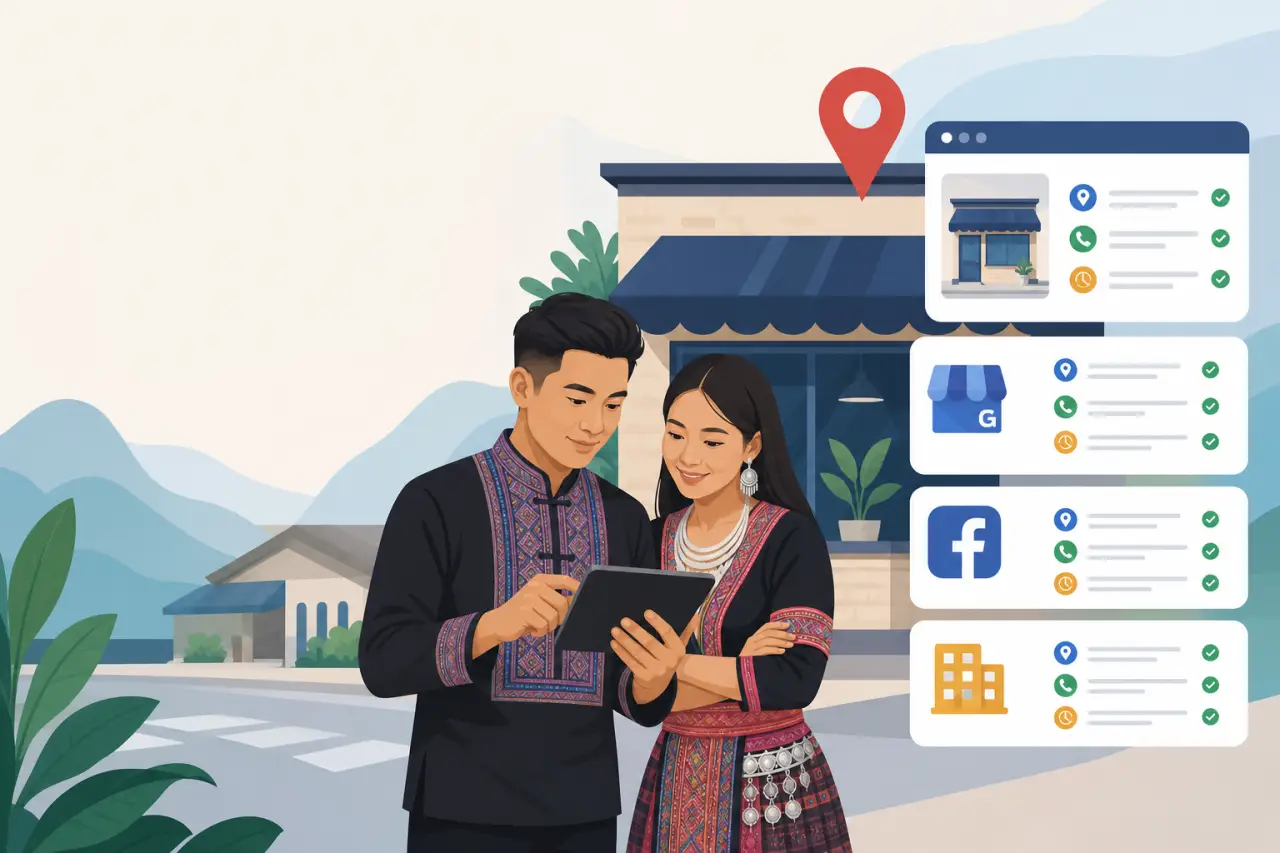
Before anything else, make sure your business name, address, phone number, and hours are correct and match everywhere they appear:
- Your website
- Your Google Business Profile
- Any directory listing you're already on, including this one
If you haven't done that here yet, claiming your business listing is a quick way to make sure it's accurate everywhere at once. A phone number that's a digit off, or hours that say you close at 8 when you actually close at 6, costs you customers before they ever walk through the door. This is one of the most common problems on small business sites that have been live for years: the business changed something — moved locations, shortened weekend hours, switched phone providers — and the website never caught up.
Make it effortless to take the next step
After that, prioritize whatever makes it easiest for someone to take the next step. On mobile, that means a phone number they can tap to call without retyping it, and a map they can tap to get directions. On any device, it means real photos of your actual product, food, or space rather than generic stock images — a photo of your real pho bowl or your real nail station tells a customer more in one glance than a paragraph of description.
Describe what you offer in plain language
A short, plain-language list of what you offer will consistently outperform clever copy. People searching for a business want to know quickly whether you're what they're looking for — "Hmong sausage, egg rolls, and sticky rice, made fresh daily" tells someone more, faster, than "Authentic flavors, made with love."
Test everything on a phone first
Also check how your site looks and works on a phone before touching anything else. Most people searching for a nearby business are doing it standing in a parking lot or scrolling on the couch, not sitting at a desktop computer. If text is too small to read without zooming, or a button is hard to tap accurately, fix that before you worry about anything else on the page.
Picking a Platform You Won't Regret in Six Months
The platform you build on matters less than most people think, but it's still worth a few minutes of real thought instead of grabbing whatever a friend or cousin recommends. If you're a service business — a salon, an insurance agent, a lawn care company, a mortgage broker — a straightforward website builder like Squarespace, Wix, or even a simple one-page site through your Google Business Profile is usually enough. You don't need e-commerce features you'll never use.
If you're actually selling physical products online — clothing, skincare, handmade goods, food that ships — a platform built for that, like Shopify, will save you real headaches later around inventory, shipping calculations, and payment processing that a general-purpose site builder handles poorly or not at all. Weighing that trade-off is really about picking the right platform for your store based on how much of your business is genuinely e-commerce versus mostly informational.
If someone in your family or community builds it for you on WordPress or another more flexible platform, ask two questions up front: who has the login when they're not available anymore, and how hard is it for you — not them — to update your hours or swap a photo six months from now. A beautiful site you can't touch without calling someone becomes a stale site fast. The goal isn't the fanciest possible platform; it's one you can actually keep current yourself, because you will be the one updating it most weeks.
Writing About Your Business in Words Your Customers Actually Search
Skip the clever tagline and write the way someone would actually search for you. If you run a restaurant, list the dishes people are looking for by name rather than only a general phrase like "Southeast Asian cuisine":
- Egg rolls
- Papaya salad
- Laab
- Sticky rice
If you're a repair shop, list what you actually fix. Specific words match specific searches; vague words don't match anything. Getting these fundamentals right is part of the website and search basics you need to actually show up when nearby customers search.
Include your city or neighborhood in the text itself, not just in your address field — "Hmong-owned restaurant in St. Paul" or "family-run insurance agency serving the Twin Cities" does real work, because that's closer to how people actually type when they're looking for something nearby.
If your business is Hmong-owned, say so plainly, in words, somewhere on the page — not just through a badge or a directory listing elsewhere. Some customers are specifically looking to support Hmong-owned businesses and search for exactly that phrase; others simply appreciate knowing who they're buying from. Either way, it's information worth stating rather than assuming people will infer it from a name or a photo.
You don't need to explain Hmong culture or translate every term for an outside audience — write for the customers you actually want to reach. If that's mostly your own community, write the way you'd talk to them. If you're also trying to reach people outside the community, a short plain-English note next to a Hmong term (for example, "khaub noom — traditional clothing") helps without diluting who you are.
Photos, Menus, and Price Lists: What to Show Before You Have a Photographer
You don't need a professional photographer to start. A phone camera, natural daylight, and a clean background will get you further than most people expect.
- Take the photo near a window
- Avoid the yellow tint of overhead indoor lighting when you can
- Use the actual dish, actual product, or actual storefront — not a photo pulled from the internet that looks close enough
Customers can tell the difference, and a real photo builds more trust than a polished stock image ever will.
If you run a restaurant or food business, put your menu and prices on the site, even if it's just a photo of your printed menu or a simple list. Not knowing what something costs is one of the most common reasons someone calls instead of just showing up — and one of the most common reasons someone gives up and picks a competitor instead. The same goes for a salon's service list or a repair shop's typical pricing range: rough numbers reduce friction more than they scare customers away.
Update photos as you go rather than waiting to do a big photoshoot someday. A handful of real, current photos — your storefront, a few signature items, the inside of your shop — is worth more than a folder of perfect ones you never get around to taking.

Making It Easy for Someone to Actually Reach You
The whole point of the website is to get someone to call, visit, or message you — so make that step as short as possible:
- On mobile, your phone number should be a tap-to-call link, not just text someone has to copy
- Your address should link to a map app, not just sit there as words
- If you take appointments or reservations, say clearly how — by phone, by text, through a booking link — rather than making someone guess
List your hours accurately, including how they change around holidays and community events. If you close early for Hmong New Year celebrations, a family funeral, or a community event, say so on the site or update it that week — a customer who drives out to a business that's unexpectedly closed rarely gives it a second try. The same goes for seasonal hours if you're a farm stand or an outdoor vendor.
Don't make a contact form your only way to reach you. Forms feel safe to build but they're easy to ignore, easy for messages to get lost in, and slower than a phone call for most local businesses. Put your phone number, and if you use it for business, your social media links, front and center — wherever your customers already are is where you should be easiest to reach.
What Can Wait: Booking Systems, Online Stores, and Blogs
Once the basics are live, it's tempting to keep building:
- An online store
- A blog
- A booking calendar
- An email newsletter signup
- Maybe a version of the site in Hmong as well as English
Some of these are genuinely worth doing eventually. None of them need to happen before you launch.
A full online store makes sense once you actually have products people are asking to buy without visiting in person — not before. A booking system is worth setting up once phone-only scheduling is genuinely a bottleneck, not because it looks more professional. A blog is worth starting only if you're willing to keep writing on it; an abandoned blog with one post from two years ago hurts more than having no blog at all.
Let real customer behavior tell you what to build next. If people keep asking the same question by phone, add the answer to your site. If people keep asking whether they can order online, that's your signal to look into an online store. Building ahead of that signal usually means building something nobody ends up using.
Keeping the Site Alive After You Launch It
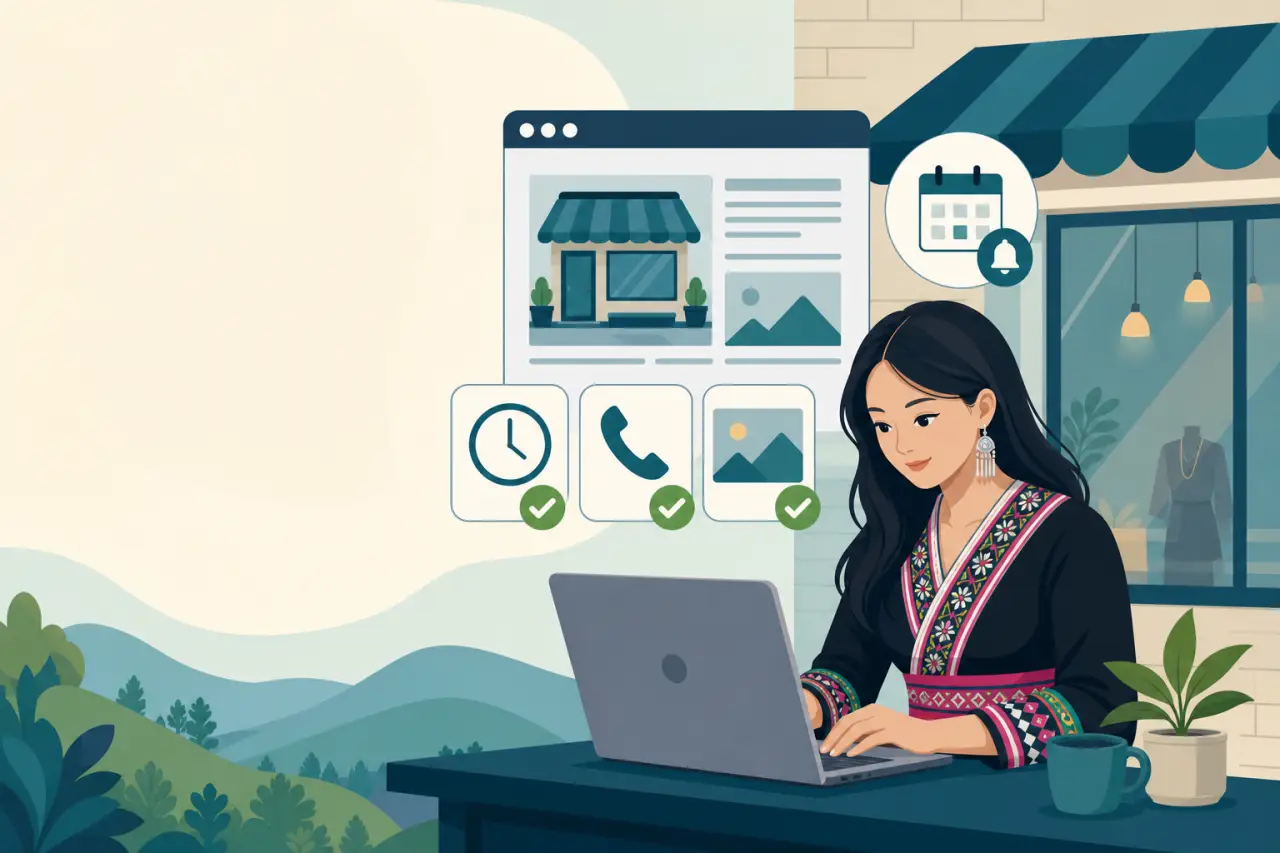
A website isn't a one-time project — it's closer to a storefront window that needs occasional upkeep. Set a reminder to check it every few months:
- Are the hours still right
- Is the phone number still current
- Are the photos still what your business actually looks like today
A site that's technically live but quietly out of date does almost as much damage as no site at all, because it actively tells people wrong information instead of just staying silent.
When something changes in the business — you move, you add a service, you retire a product, you change your hours for a season — put that change on the website the same week, not "eventually." It takes a few minutes and it's the difference between a site that helps customers and one that quietly misleads them.
You don't need to overhaul the whole site regularly. Small, honest updates — a new photo, a corrected phone number, an updated holiday schedule — done consistently over time will always beat a beautiful launch that's never touched again.
Questions people ask
What should I put on my website before I launch it?
Start with what your business sells, where you're located, and how people can reach you. Make sure your business name, address, phone number, and hours are correct and match everywhere they appear online. Include real photos of your actual products or space, describe what you offer in plain language, and test everything on a phone first. You can add an online store or blog later.
Should I hire a professional photographer for my website?
No. Use your phone camera with natural daylight near a window and avoid overhead indoor lighting. Show real photos of your actual dishes, products, or storefront instead of stock images pulled from the internet. Customers can tell the difference, and real photos build more trust than polished generic ones ever will. Update photos as you go rather than waiting for a perfect photoshoot.
What website platform should I use for my small business?
If you're a service business like a salon or lawn care company, a simple website builder like Squarespace or Wix is usually enough. If you're selling physical products online, use a platform built for e-commerce like Shopify. The most important thing is picking something you can update yourself later—hours, photos, information—without calling someone every time.
Do I need to have a blog, booking system, and online store before launching?
No. Launch with the basics first, then let customer behavior tell you what to build next. If people keep asking the same question, add the answer to your site. If they ask whether they can order online, look into a store. A booking system makes sense once scheduling is genuinely a bottleneck. Building things ahead of real demand usually means building something nobody uses.
Written by
Hmong Network Team
Directory & Digital Services
We run the Hmong Network directory and do the web design and SEO/AEO work behind the results in our case studies. These guides come out of that same hands-on work with Hmong-owned businesses — not secondhand research.
