
What to Expect at a Hmong Arts & Crafts Fair
TL;DR
A Hmong arts and crafts fair puts paj ntaub, silverwork, and embroidery directly in the hands of the people who made them. Here's what actually happens at one, how to shop it well, and why these gatherings matter to artisans and the wider community.
What Fills the Tables, Piece by Piece
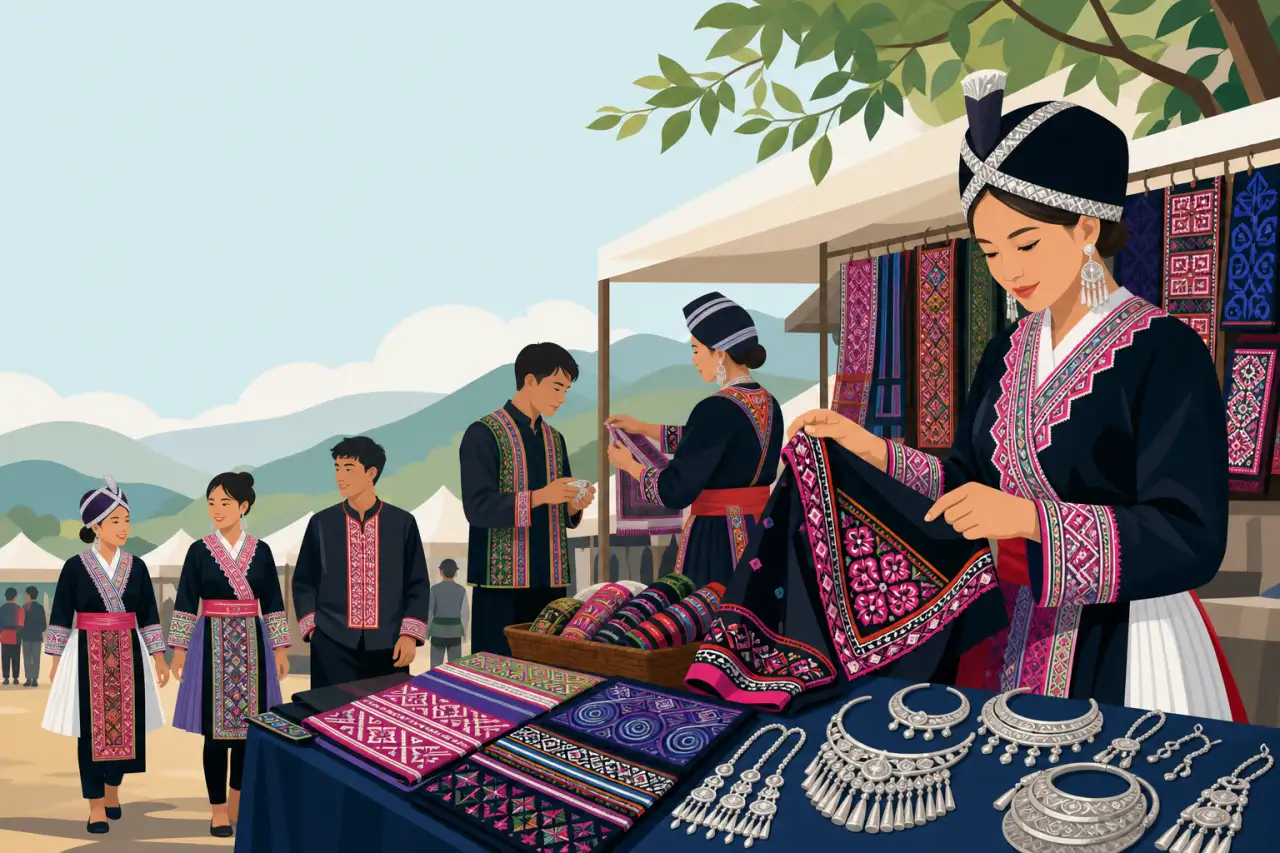
Walk down a row of tables at a Hmong arts and crafts fair and you'll see traditional Hmong textiles like paj ntaub in more forms than most first-time visitors expect.
- Reverse-appliqué work, where layers of fabric are cut and folded to reveal a pattern underneath, most often in the tight spirals and geometric shapes associated with White Hmong and Green Hmong clan styles.
- Cross-stitch paj ntaub, dense with small, exact stitches that take real patience to place evenly.
- Paj ntaub dab neeg, story cloth, which tells a specific narrative in fabric — a village, a river crossing, a wedding, sometimes the journey out of Laos.
A single story cloth can take an experienced stitcher weeks to finish.
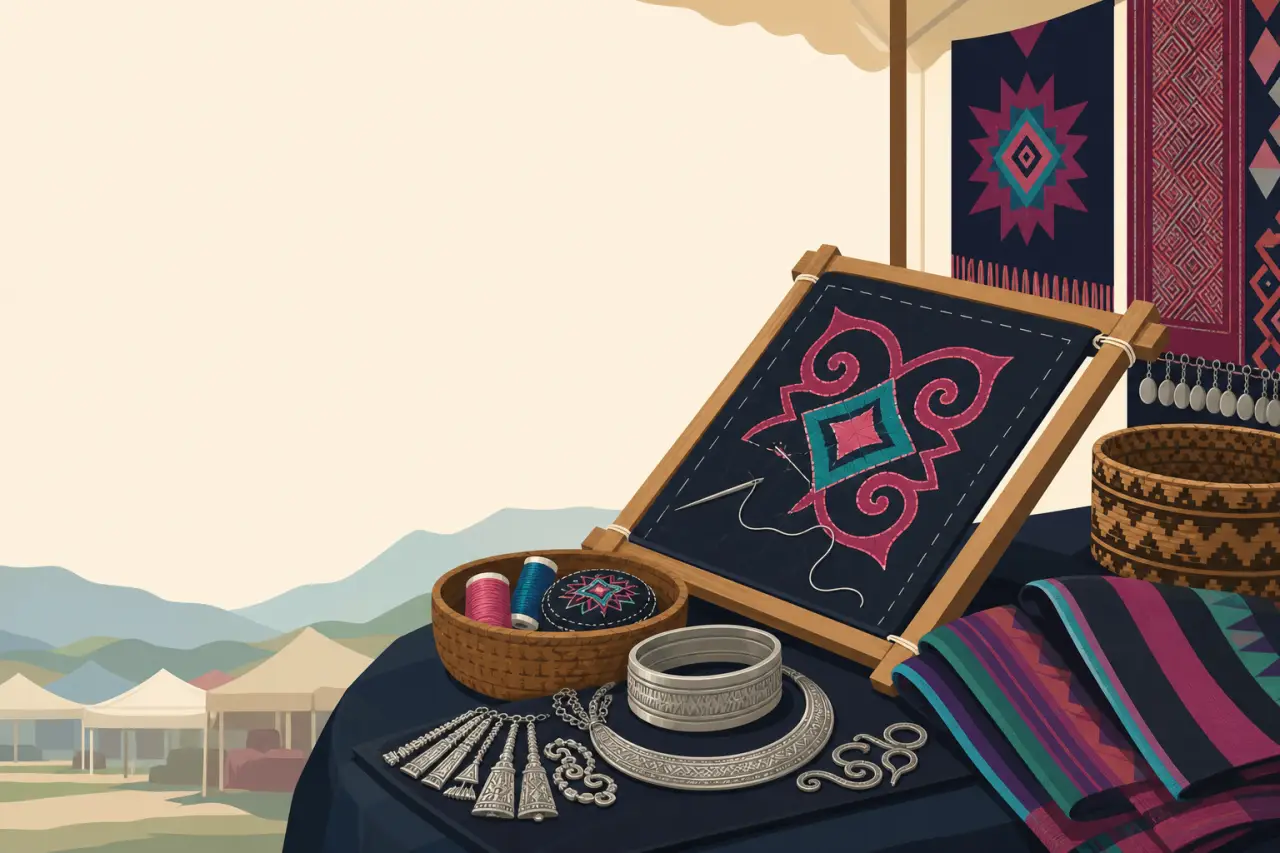
Next to the textiles you'll usually find silver: neck rings, hinged bracelets, coin-strung necklaces, and the heavier ceremonial pieces worn at Hmong New Year. Silverwork has its own separate skill set from stitching, and it's common to see it made by a different family or vendor entirely than the one selling paj ntaub two tables over. Embroidered clothing rounds things out — vests, sashes, baby carriers, and the elaborate outfits worn for New Year celebrations, often sized for children as much as adults, since dressing kids in traditional clothing is part of how the holiday gets passed down.
Food tables are almost always part of the mix, even at fairs billed purely as arts and crafts. Egg rolls, sticky rice, papaya salad, and grilled skewers tend to sell out early, and the smell of them cooking is often what pulls people in from the parking lot before they've seen a single textile.
Demonstrations Change What the Fair Is For
The biggest difference between a Hmong arts and crafts fair and a generic craft market is that a meaningful number of vendors are actively working while they sell. A woman might have a half-finished piece of reverse appliqué pinned to a small frame on her table, and she'll keep stitching between customers, not as a performance but because that's simply how the afternoon gets used. If you stop and watch for a few minutes, you're seeing the actual technique — how the needle catches the folded edge, how a pattern gets measured by eye rather than a printed template.
This matters more than it might seem. Paj ntaub and Hmong silverwork are almost entirely hand-taught skills, passed down within families rather than through classes or trade schools, which means most people outside the Hmong community have never seen the process, only the finished product in a gift shop or museum case. A fair is one of the only places that gap closes. It also changes the pace of the whole event — there's less pressure to buy fast and move on, and more room to ask a question, get an honest answer, and actually understand what you're looking at before deciding whether to buy it.
Why These Gatherings Carry Weight Beyond the Weekend
For artisans, a craft fair is often the most direct sales channel available. Most paj ntaub and silverwork makers don't have a storefront, and many don't sell online at any real volume — the work is intricate enough that photos rarely do it justice, and shipping something that took weeks to make feels riskier than handing it to a buyer in person. A table at a fair, a folding chair, and a weekend is sometimes the entire sales infrastructure a maker has, and it can represent a meaningful share of what they earn from the craft in a given year.
For the broader community, a fair does something a retail transaction can't: it puts a name and a face behind the object. Buying a piece of paj ntaub from the person who stitched it, instead of from a resale shop or an unattributed online listing, means the money goes where it's supposed to and the buyer usually leaves knowing something real about how it was made.
And for Hmong families specifically, fairs function as something closer to a cultural checkpoint than a shopping trip — one more piece of what makes the Hmong community feel like family. They're a reason for a teenager who's never picked up a needle to stand next to their grandmother's table for an hour, watch her work, and ask questions they might not otherwise think to ask. That kind of exposure doesn't happen automatically — it happens because the fair puts the craft in front of them at an age when curiosity is still easy to spark.
How to Shop a Fair Without Making It Awkward
- Bring cash, even if a vendor's sign lists a payment app. Many artisans at these fairs are older, sell only a few times a year, and haven't set up card readers or digital payments — cash keeps the transaction simple for everyone and avoids an awkward moment when a phone has no signal in a crowded gym or community hall.
- Ask about the piece before you ask about the price. Most vendors are glad to explain what style of paj ntaub they're working in, how long a piece took, or what the pattern means, and that context is usually the difference between buying something because it looked nice and buying something you actually understand the value of. It also tends to make the eventual price make more sense — a story cloth that took three weeks of evening stitching isn't priced like a printed souvenir, and once you've heard that, it doesn't feel like it should be.
- Be cautious about aggressive haggling. Some light back-and-forth is normal at any craft fair, but pushing hard on the price of hand-stitched work, especially from an older vendor selling directly, can come across as dismissing the labor behind it. If a price feels out of reach, it's fine to say so and ask if there's a smaller piece in a similar style — most vendors would rather sell you something you'll actually use and value than talk themselves down on something you'll regret buying.
- If you want to take photos of a display or a vendor at work, ask first. It's a small courtesy that's almost always granted, and it avoids the fair starting to feel like a spectacle rather than a marketplace.
What It Actually Takes to Set Up a Table
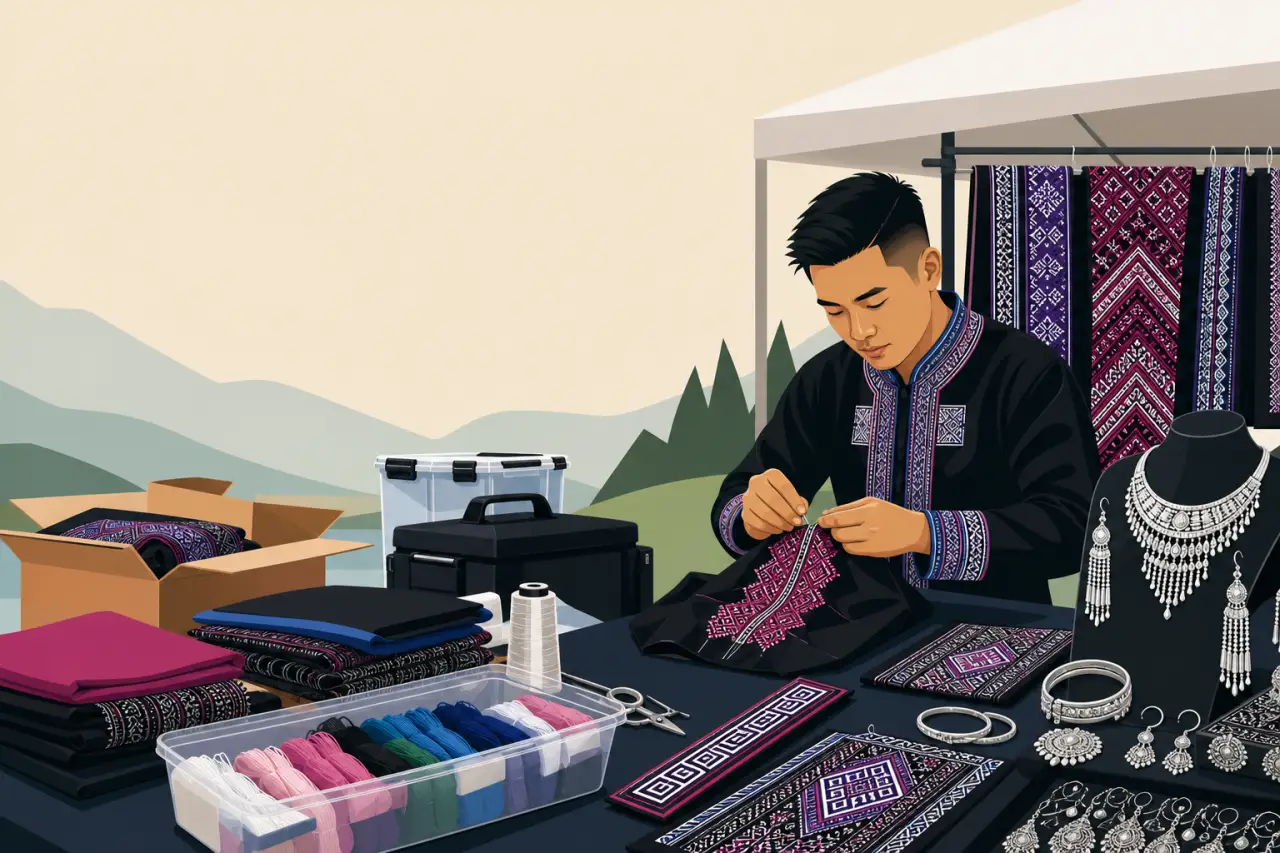
From the vendor side, a craft fair table represents a lot more prep than a single weekend suggests. Fabric, embroidery floss, and silver stock often have to be sourced in advance, sometimes ordered from specific suppliers that carry the right weight of cotton or the right gauge of silver — not something you can grab at a general craft store. Larger or more detailed pieces, especially story cloths, are frequently started months ahead of a known fair date, worked on in whatever hours are left after a day job, childcare, and everything else that comes before a hobby-turned-business.
There's also the logistics that have nothing to do with the craft itself:
- Reserving a table, sometimes paying a vendor fee to the organizing group
- Transporting finished pieces without damaging them
- Building enough inventory across price points, so there's something for a browsing teenager with twenty dollars and something for a buyer looking for a significant ceremonial piece
Family involvement is common here too — a table is often staffed by more than one generation, with an elder handling the sales and pricing conversations while a younger relative manages payment apps, social media photos, or simply translation when needed.
For small business owners in this space, a fair table is also a rare chance to get direct feedback. A shopper's reaction to a color choice, a pattern, or a price point in real time is information that doesn't come through as clearly when a sale happens online or through a third party.
Where and When These Fairs Tend to Show Up
A lot of Hmong arts and crafts fairs cluster around Hmong New Year celebrations, which typically run from late November through January depending on the community and region, since that's when families are already gathering, dressing in traditional clothing, and looking to buy or refresh pieces for the season. Outside of New Year, smaller fairs turn up at community centers, temples, churches, and university cultural events throughout the year, often organized by a local Hmong association or a cultural nonprofit rather than a commercial event company.
The scale and setting vary a lot by city. In areas with a larger, longer-established Hmong population — places like the Twin Cities, home to the Hmong Village marketplace in St. Paul, plus Fresno, Sacramento, and Wausau, among others — a fair might fill a full convention hall or fairground alongside a New Year celebration with music, a soccer tournament, and a beauty pageant happening at the same time, with the craft vendors occupying their own dedicated section. In smaller or newer communities, a fair might be a single gymnasium with a dozen tables, organized by a handful of families who've coordinated through word of mouth. Neither version is more or less legitimate than the other — the smaller ones are often where you get the most direct conversation with a vendor, since there's less crowd competing for their attention.
Because many of these fairs are organized locally and promoted mostly by word of mouth or through community Facebook groups, they're easy to miss if you're not already plugged into that network. Checking with a local Hmong community organization, a nearby temple, or a Hmong-owned business directory's events listings is usually a more reliable way to find one than searching generic event platforms, which rarely index them well. It's also worth asking a Hmong-owned restaurant or shop directly if they know of one coming up — those owners are frequently connected to the same community networks that organize these fairs, even if the fair itself isn't advertised anywhere online.
Passing the Craft Along
Some fairs build in a teaching element on purpose — a small table where kids can try a few stitches on a scrap of fabric, or an informal corner where an elder will walk a curious teenager through the basics of a pattern. Even where it isn't formally organized, it happens anyway, because a vendor working at their table is an open invitation for a kid to lean in and ask what they're doing.
This matters because these techniques don't survive through documentation the way a recipe or a written pattern would. Paj ntaub and Hmong silverwork are learned by watching, then doing, then being corrected, over and over, usually inside a family. A fair widens that circle for an afternoon — it's often the first time a young person outside the immediate family sees the process up close, and for some, it's the moment that turns into genuine interest in learning the craft themselves rather than just admiring the finished pieces.
A few community organizations have started running short workshops around these fairs specifically to address the gap — an hour or two where a stitcher teaches a small group the basics of a single technique rather than a full pattern, aimed at people with no background in it at all. These sessions tend to fill up fast, and they're worth asking about specifically when you're looking into a fair, since they're not always advertised alongside the main event. If a fair you're attending doesn't have one, it's a reasonable thing to ask an organizer whether one has ever been offered — interest from attendees is often what determines whether a vendor is willing to set aside table time to teach instead of sell.
Questions people ask
What kind of things will I see at a Hmong arts and crafts fair?
Expect traditional Hmong textiles like paj ntaub in different styles — reverse-appliqué, cross-stitch, and story cloth that tells a narrative in fabric. You'll also find Hmong silverwork like neck rings and bracelets, embroidered clothing, and food tables with egg rolls, sticky rice, and grilled skewers. Many vendors work on their pieces while they sell, so you can watch the techniques happen in real time.
Why should I ask about a piece before asking the price?
Vendors can explain the paj ntaub style, how long it took, and what the pattern means. That context changes what the price actually represents — a story cloth that took three weeks of stitching isn't priced like a printed souvenir. Understanding the labor behind it usually makes you both happier with what you're buying and why you're paying what you pay.
Where can I find out about Hmong arts and crafts fairs in my area?
Many fairs cluster around Hmong New Year from late November through January, and others happen year-round at community centers and temples. Since they're often organized locally and promoted by word of mouth, check with a local Hmong community organization, temple, or ask at a Hmong-owned restaurant or shop directly — they're usually connected to the networks that organize these fairs.
Should I bring cash or is it okay to use a card?
Bring cash. Many vendors, especially older artisans selling a few times a year, haven't set up card readers or digital payments. Cash keeps the transaction simple for everyone and avoids an awkward moment if a phone has no signal in a crowded gym or community hall.
Written by
Hmong Network Team
Directory & Digital Services
We run the Hmong Network directory and do the web design and SEO/AEO work behind the results in our case studies. These guides come out of that same hands-on work with Hmong-owned businesses — not secondhand research.
