
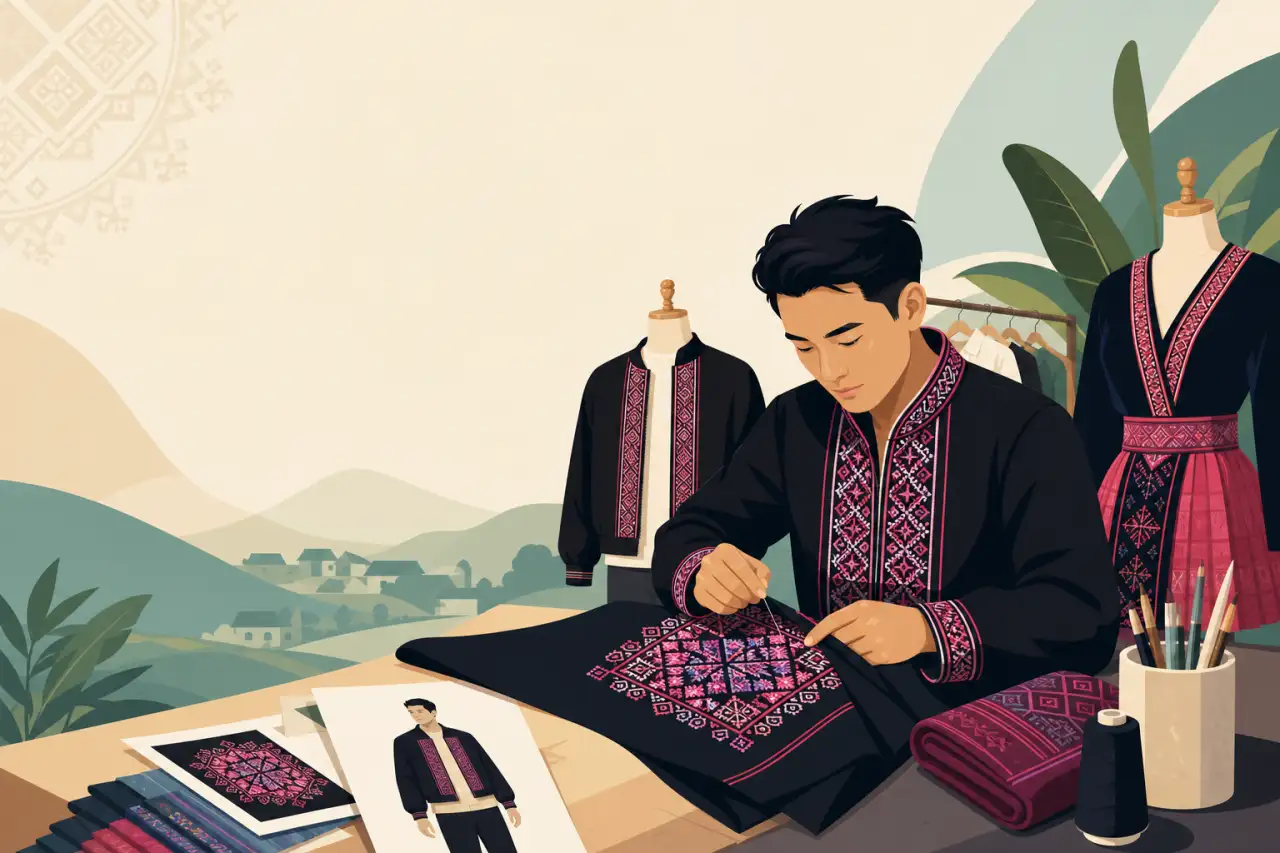
Where Traditional Hmong Fashion Meets Modern Design
TL;DR
A new generation of Hmong designers and small businesses are reworking paj ntaub embroidery and traditional silhouettes into everyday wearable fashion, while working out where fusion ends and appropriation begins.
What Traditional Hmong Clothing Actually Carries
Traditional Hmong clothing was never designed as costume. The embroidery known as paj ntaub, literally flower cloth, was how a community without a shared written script recorded identity:
- Which clan you belonged to
- Which region your family came from
- Sometimes even how skilled a seamstress had become by a certain age
Reverse appliqué, cross-stitch, and batik dyeing each carry their own vocabulary, and the colors used in a Green Hmong sash mean something different than the colors used in a White Hmong one. A grandmother looking at a finished panel can often tell, at a glance, which subgroup made it and roughly how experienced the hands behind it were.
Silver jewelry, pleated skirts, and the layered sashes worn at Hmong New Year are part of the same system, and a full traditional outfit is genuinely expensive to produce - not in dollars alone, but in the months of hand-stitching a family invests in a daughter's or son's clothing before a New Year celebration, a wedding shaped by generations of Hmong wedding traditions, or a funeral. A young woman's outfit at that celebration gets read by the community the way a resume gets read elsewhere: it says something about her family's skill, resources, and pride. That density of meaning is exactly what makes turning any of it into a t-shirt print or a mass-produced pattern risky. The meaning doesn't survive being flattened into decoration, and the people who invested the labor to keep it alive notice first.
Why This Generation Is Bringing It Into Everyday Wear
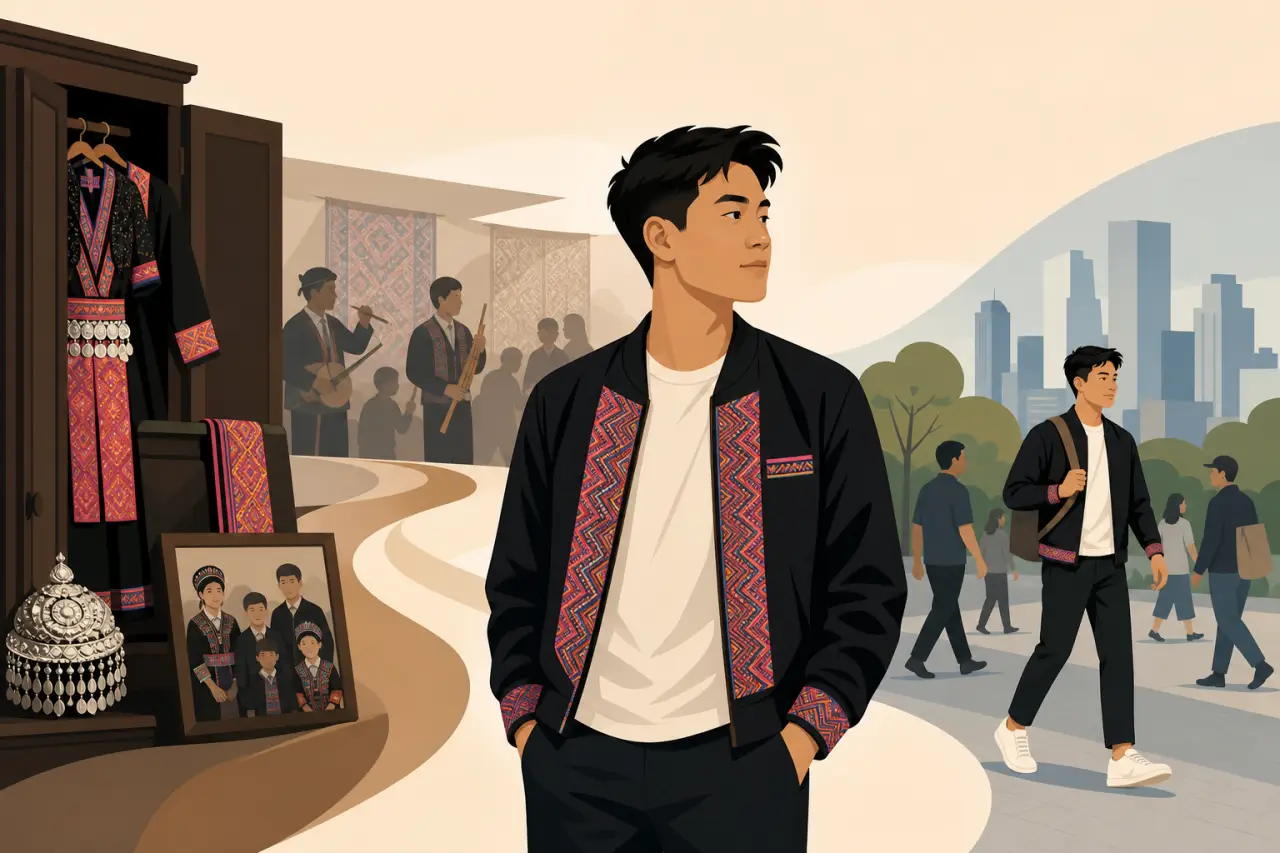
For most of the last few decades, that clothing lived almost entirely in two places: family closets, brought out for New Year, weddings, and funerals, and museum-style displays at cultural events - the kind of gatherings where paj ntaub and the living sound of Hmong music usually share the same room. Kids growing up in the diaspora wore it a handful of days a year and everyday western clothes the rest of the time, which meant an entire wardrobe of meaning sat unworn for 360-some days out of the year. That split is exactly what a growing number of Hmong designers are trying to close - not by replacing the traditional garments, which still matter enormously for the occasions they're made for, but by giving people something they can wear on an ordinary Tuesday that still says something true about where they're from.
The push isn't really about chasing a fashion trend. It's about a second and third generation that didn't grow up sewing paj ntaub themselves, who may not speak fluent Hmong, and who want a way to carry the culture anyway - on a jacket, a pair of earrings, a bag - without needing a formal occasion as the excuse to wear it at all. For a lot of young designers, this work doubles as their own way of relearning the craft: sketching a modern silhouette forces you to actually study what a traditional pattern is doing, which stitch creates which effect, and why a certain motif sits where it does. It's not unusual for a designer in this space to describe the process as much more personal - closer to reconnecting with a grandmother's skill set - than as a straightforward business decision.
How Designers Are Translating Textiles Into Modern Pieces
The most common approach isn't reproducing a full traditional outfit in a new fabric. It's pulling one element and rebuilding a modern piece around it:
- A strip of hand-embroidered paj ntaub set into the yoke of a denim jacket
- A pleated-skirt silhouette shortened and paired with sneakers
- Batik-dyed panels used as an accent on a canvas tote instead of a full garment
Streetwear pieces like hoodies, caps, and sneakers usually carry the motifs as prints or small embroidered patches rather than full panels, which keeps the price and the production time realistic for a small studio to actually produce and restock.
Fabric weight is a real, practical constraint most people outside the craft never think about. Ceremonial paj ntaub is often worked on heavier, stiffer material meant to hold its shape and survive being worn once a year for decades; daily wear needs something that moves and breathes, so a lot of the translation work is figuring out how to keep a stitch pattern legible on a lighter, softer base fabric without the embroidery puckering or distorting. Placement matters just as much as pattern choice - a single embroidered panel on a sleeve or collar reads as intentional and considered, while covering an entire garment in motif can tip into looking like a print rather than a piece of craft, and it drives up both fabric cost and the hours a maker has to put in.
Color story matters as much as motif. Designers working seriously in this space tend to keep the actual clan-associated color combinations intact even when the silhouette is completely modern, because swapping in whatever palette looks trendy that season is one of the fastest ways to drain a piece of its meaning. A jacket can look nothing like a traditional outfit and still read correctly to someone who knows what the stitching and color pattern are saying.
Where Fusion Ends and Appropriation Begins
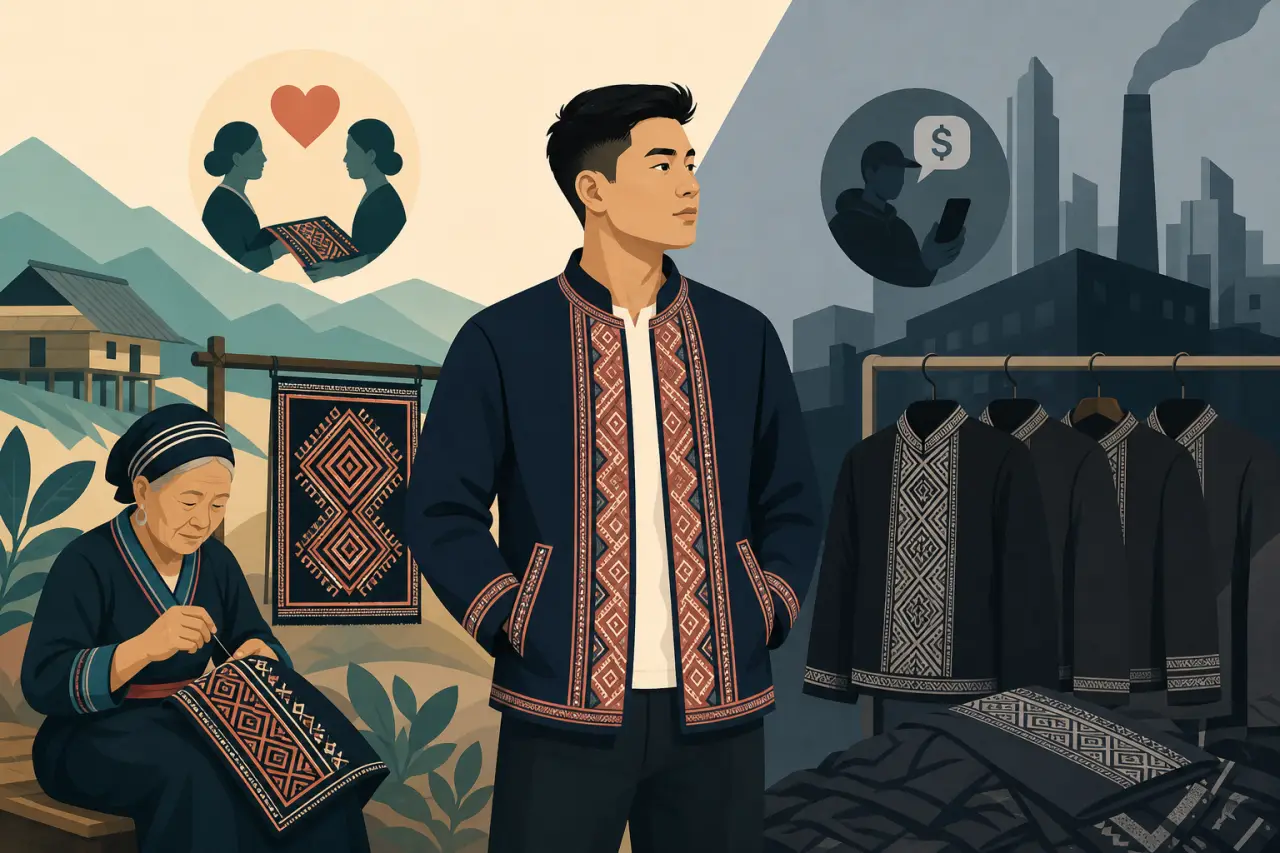
The distinction Hmong designers draw most consistently is about who's doing the work and who's getting paid for it. A Hmong-owned label reworking its own grandmother's stitch patterns into a modern jacket, crediting the maker, and pricing the piece to reflect real embroidery hours is fusion. A large outside brand lifting the same pattern off a photograph, printing it cheaply, and selling it with no attribution or context is the exact thing this community has spent years pushing back against - and it's happened often enough, to Hmong and other indigenous textile traditions alike, that the wariness isn't abstract.
This isn't a debate people running small businesses in this space can afford to treat as academic - it shows up directly in sourcing decisions:
- Who hand-stitches the panel.
- Whether that person is paid a wage that reflects the actual hours involved, since a single panel of fine paj ntaub can take a skilled maker many days, or whether the "authentic touch" gets quietly outsourced to a factory print instead.
Buyers who care about this, and a growing number do, notice the difference and will ask directly - sometimes in the comments on a product listing, sometimes in person at a market booth.
There's a workable middle path worth naming too: collaborations where a non-Hmong brand pays a Hmong artisan or small studio to design and produce a genuine capsule collection, with real credit and real compensation, rather than lifting the pattern secondhand. The difference between that and appropriation isn't subtle once you look at who actually got paid and who gets named.
What This Trend Means If You Sell Hmong Fashion or Textiles
If you run a boutique, an online shop, or a booth at Hmong New Year, this is a real opening, not just a cultural conversation to watch from the sidelines. Customers, both inside and outside the community, are actively looking for pieces that read as genuinely rooted rather than generically "ethnic print." That favors small, Hmong-owned sellers who can speak directly to where a pattern comes from, over big retailers who can't say anything meaningful about it at all.
The practical decision every seller in this space has to make early is how much of a piece is actually hand-made versus machine-embroidered or printed, and whether the listing says so plainly. Being upfront about that - hand-embroidered accent panel, machine-stitched garment - builds more trust than letting a photo imply something the product isn't. Customers in this niche are unusually likely to ask, and a vague or evasive answer costs a sale more often than an honest one does.
It also makes sense to think in tiers rather than one product line:
- A lower-cost, machine-embroidered or printed accessory - earrings, a keychain, a tote bag - gets a customer in the door and covers everyday wear.
- A higher-priced, fully hand-embroidered piece is what a customer buys for a graduation, a wedding, or as a meaningful gift, and it's where the real margin and the real story live.
Selling only at the high end limits your customer base; selling only at the low end undersells the craft.
Telling the Story Behind Every Piece You Sell
A plain product photo of a modern piece with traditional embroidery undersells it badly, because most of the value is in context a customer can't see just by looking at the image. A short paragraph covering:
- Which region or clan the pattern draws from
- Who made the embroidered portion
- Roughly how long it took
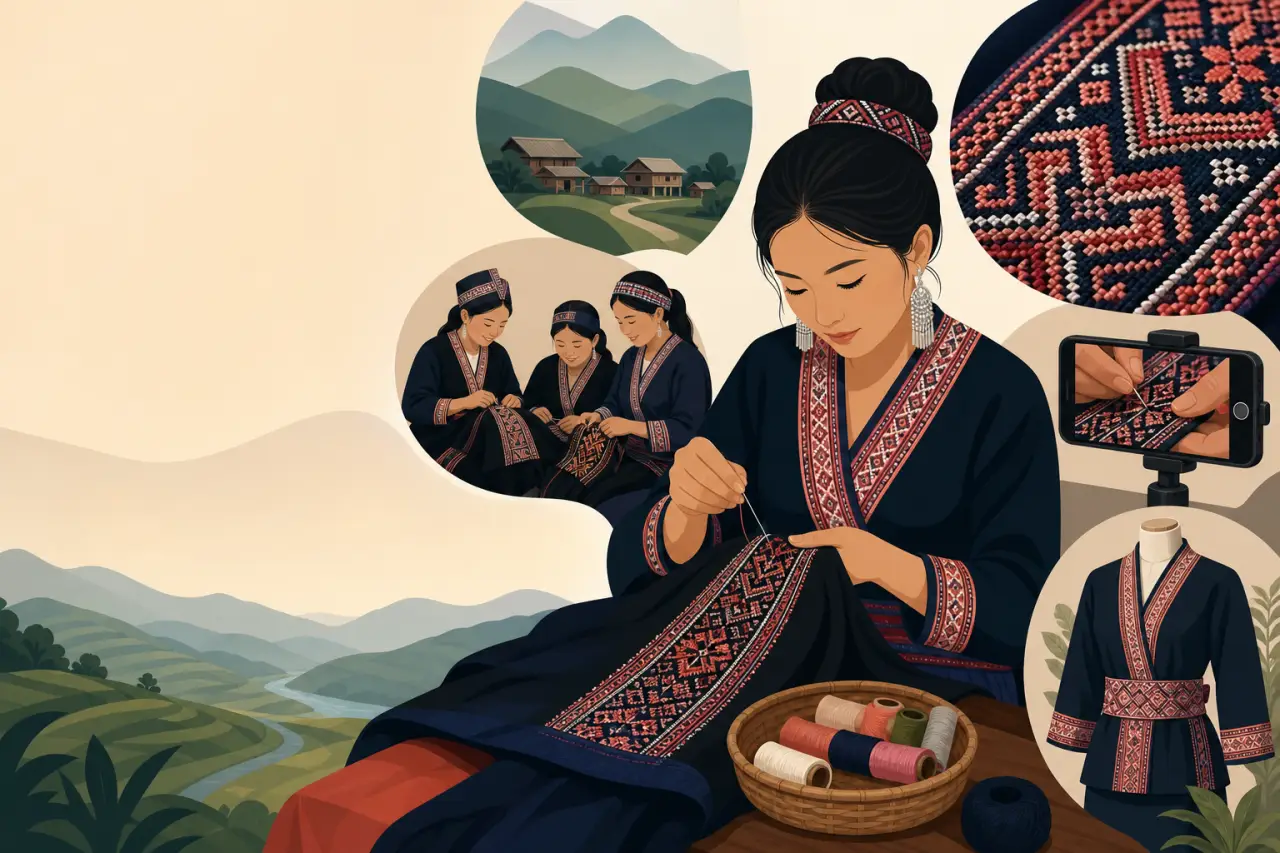
does more for both price justification and repeat customers than another studio photo would. A close-up shot of the stitching itself, showing the texture and thread work that a printed pattern can't replicate, often sells the piece better than a full outfit shot on a model.
Short video - even just a maker's hands working a panel, filmed on a phone - tends to land harder than any written description, because it makes the labor visible in a way words alone can't. This is also where a claimed, complete Hmong Network business listing earns its keep: the same story that goes on a product page can go into the business's long description and into Hmong New Year event promotion, the same discipline of turning culture into content that works across captions, listings, and event pages alike, so a customer who found the shop through a New Year vendor list gets the same context as one who finds it through a search later in the year.
Getting Started: Practical Steps for a Small Fashion Business
- If you're thinking about entering this space rather than already in it, start small and specific instead of trying to launch a full traditional-fusion line all at once. One accessory - earrings, a bag, a sash-inspired belt - lets you test whether customers respond to the story and the price before committing to garment-scale production and the inventory risk that comes with it. A festival booth at Hmong New Year or one of the region's Hmong arts and crafts fairs is a low-risk way to get that first read on demand before building out an online store around it.
- Line up a maker relationship before a design one. The embroidery or batik work is the part that can't be rushed or faked convincingly, so find a skilled paj ntaub maker willing to work with you - often an older relative or someone connected through the community - and build the modern silhouette around what they can realistically produce, rather than the other way around. Price the finished piece to actually cover their hours, not just fabric and your own labor; underpricing hand embroidery is one of the fastest ways this kind of business becomes unsustainable for the person doing the most skilled part of it.
- A made-to-order or small-batch model solves a real problem here: hand embroidery doesn't scale the way a print run does, so committing to a large upfront inventory of fully hand-stitched pieces can tie up cash you don't get back quickly. Taking orders in small batches, being honest about lead time, and reserving full inventory runs for the lower-cost, machine-produced tier keeps the business's cash flow realistic while the hand-made line stays exactly as slow and careful as it needs to be.
Questions people ask
What does traditional Hmong embroidery actually mean?
Traditional paj ntaub (flower cloth) embroidery recorded identity for a community without a shared written script. The stitching, colors, and patterns show which clan someone belonged to, which region their family came from, and sometimes how skilled a seamstress was. A grandmother can often tell which Hmong subgroup made a piece just by looking at it. This meaning is built into every stitch.
How are Hmong designers bringing traditional clothing into everyday wear?
Modern Hmong designers aren't replacing ceremonial clothing. Instead, they're pulling individual elements—a strip of hand-embroidered paj ntaub, a batik-dyed panel, a pleated-skirt silhouette—and rebuilding them into pieces like jackets, bags, and hoodies that people can wear on an ordinary Tuesday. This lets younger generations carry the culture forward without needing a formal occasion as an excuse.
What's the difference between fusion and appropriation with Hmong textiles?
Fusion is when a Hmong-owned label reworks its own patterns into modern pieces, credits the maker, and prices fairly for the embroidery hours. Appropriation is when an outside brand copies a pattern from a photo, prints it cheaply, and sells it with no attribution or real compensation. The key difference: who's actually doing the work and who's getting paid for it.
Should I hand-embroider everything or use machine embroidery?
Think in tiers. A lower-cost, machine-embroidered or printed accessory gets customers in the door for everyday wear. A higher-priced, fully hand-embroidered piece is what people buy for big occasions—weddings, graduations—and that's where the real margin and story live. Selling only at one tier leaves money on the table. Be honest in your listings about which is which.
Written by
Hmong Network Team
Directory & Digital Services
We run the Hmong Network directory and do the web design and SEO/AEO work behind the results in our case studies. These guides come out of that same hands-on work with Hmong-owned businesses — not secondhand research.
