
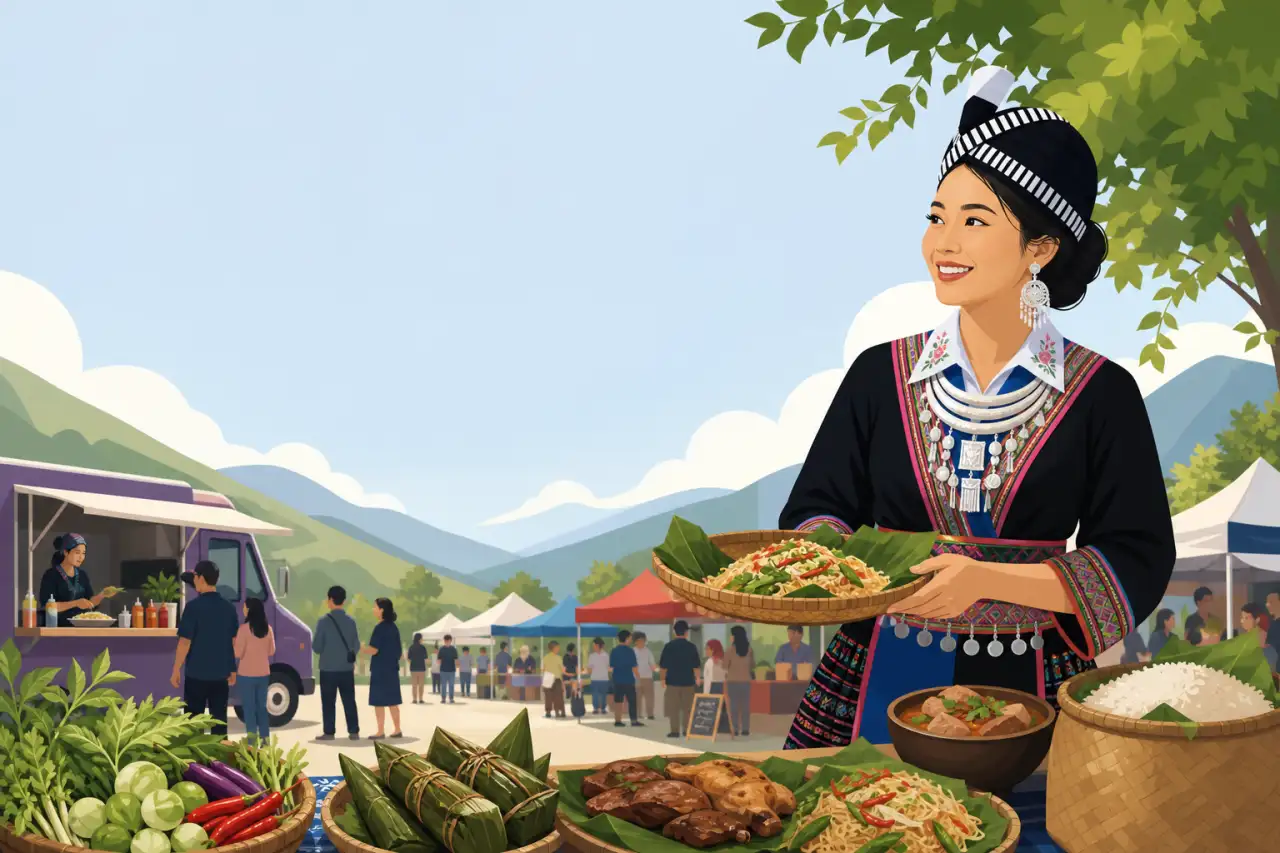
How to Find Real Hmong Food Near You
TL;DR
The best Hmong food rarely shows up on a map search. This is where it actually lives — farmers markets, food trucks, festivals, and family kitchens — and how to find your way in.
Look Beyond the Restaurant Listings
Search "Hmong food near me" and you'll usually get a handful of sit-down restaurants, if your city has any at all. That search is only showing you a fraction of what's actually out there. A lot of Hmong cooking happens outside a storefront entirely: a folding table at a Saturday farmers market, a food truck parked in a church lot on Sunday, a cooler of egg rolls sold out of someone's garage on a community Facebook page. None of that shows up on a map search, because none of it was built to.
The fix is to widen where you're looking, not just how hard you're searching.
- Community Facebook groups for your local Hmong population are often where weekend vendors actually post their locations.
- A Hmong-owned grocery store, if your area has one, is a reliable anchor point — ask at the counter who's cooking that weekend, and you'll usually get a real answer, not a shrug.
- A directory built specifically around finding Hmong-owned businesses near you can also surface listings that never made it onto a general search engine, especially ones run by people who don't have time to manage a website on top of running a kitchen.
It also helps to know where Hmong communities are actually concentrated, since that's where you'll find the widest range of vendors to choose from. The Twin Cities in Minnesota — home to both the Hmong Village marketplace in St. Paul and some of the country's best-known Hmong restaurants in Minnesota — California's Central Valley around Fresno and Merced, Sacramento, and parts of Wisconsin near Wausau and Eau Claire all have long-established Hmong communities, which tends to mean more restaurants, more weekend vendors, and more of the informal network that doesn't show up in a search at all. If you're outside one of those areas, don't assume there's nothing nearby — smaller communities exist in plenty of other cities, they're just easier to miss without asking around first.
Farmers Markets Are Often the Real Test Kitchen
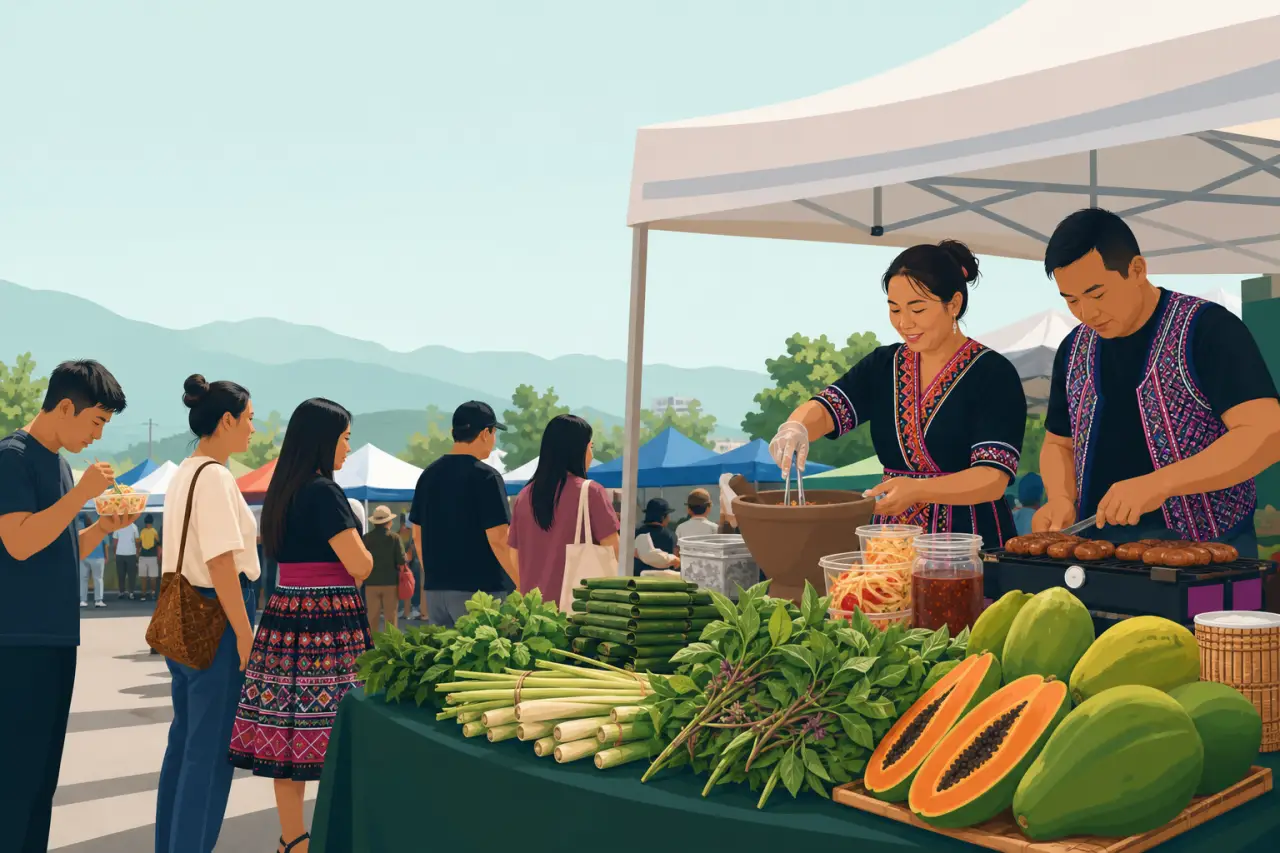
If your city has a farmers market with any Hmong vendors at all, go early and go hungry. It's common for one family to run a produce stand — lemongrass, Thai basil, papayas, banana leaves — right next to a small cooked-food setup, sometimes literally the same table split in half. The lemongrass they're selling raw might be the same batch going into the sausage two feet away.
These setups usually don't have a menu board or a card reader. Bring cash, and don't be surprised if the most popular item — often papaya salad, since it's made fresh to order and doesn't hold well — sells out by early afternoon. If you see a short line of people who clearly aren't there for the produce, that's usually the tell that the food is worth the wait.
Keep in mind most farmers markets only run seasonally, typically from spring through early fall, and a stand you loved in July may not be there in December. If you find a vendor you like, ask them where they go once the market season ends:
- Some move to an indoor space or a flea market.
- Others switch to weekend delivery through a Facebook page.
- A few simply pause until the market reopens the following year.
Food Trucks and Weekend Stands Move — Track Them Like a Regular Would
Hmong food trucks and pop-up stands rarely keep a fixed schedule the way a chain restaurant would. Most post their location for the day on Instagram or Facebook that same morning, which means a bookmark or a saved search won't help you nearly as much as actually following their page. Weekends are when you'll find them most often:
- Outside a community center.
- In a church or temple parking lot.
- At a youth soccer tournament.
- Set up near a Hmong grocery store on a busy Saturday.
Sausage and egg rolls travel especially well, so food trucks are often a good bet if that's what you're after, alongside a grilled plate or a bag of sticky rice to go. If a truck you like has a good weekend spot, ask the person taking your order whether they'll be back next Saturday — most will tell you straight, and it saves you from guessing.
Saving a truck's number, not just following their page, is worth doing too. Plenty of smaller operations will take a text order for pickup even on a day they're not set up publicly, especially for a bigger order like a tray of sausage for a gathering. It's a more direct line than waiting on a social media post, and it's how a lot of regulars end up skipping the wait entirely.
Hmong New Year and Cultural Festivals Are the Best Single Day to Taste Everything
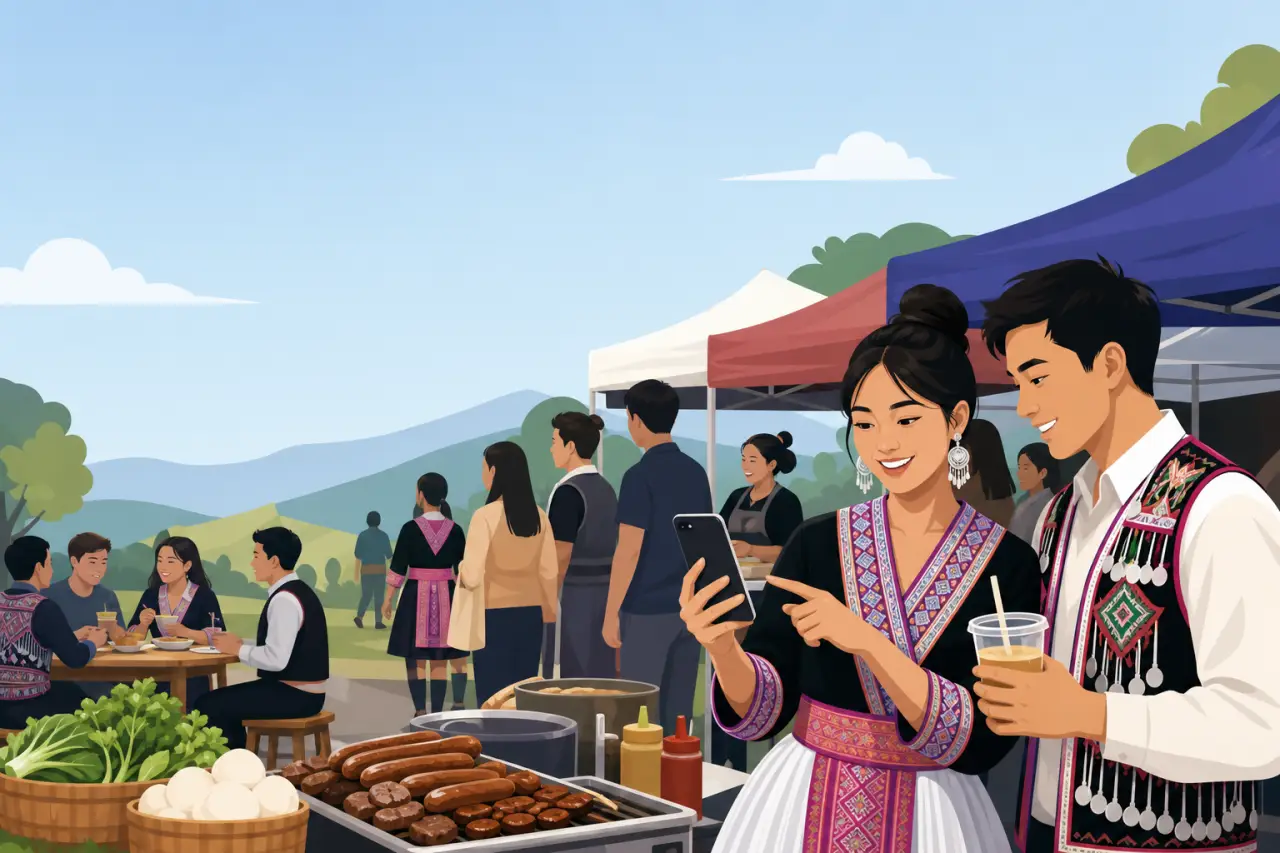
If you only make one trip, make it during Hmong New Year season, which generally runs from late fall into winter depending on the region. These events regularly draw dozens of food vendors into one parking lot or fairground, which means you can sample sausage from one stand, papaya salad from another, and khaub poob — a rice noodle soup in a coconut curry broth — from a third, all within the same afternoon. Some larger events run on a ticket or token system instead of cash at each stand, so check before you're standing at the front of a line with nothing but a card.
Arrive early if you can. Popular stands sell out well before the event winds down, and the best dishes tend to go first. While you're there, it's worth asking a vendor you liked whether they also sell somewhere the rest of the year — a farmers market stall, a weekend truck, a phone number for pre-orders. Festival season is often how people find the vendor they end up ordering from for the next eleven months.
Pace yourself once you're there. With that many vendors in one place, you're better off buying small portions from several stands than one full plate from the first booth you see — most vendors are set up for exactly that kind of grazing, since it's how everyone else at the event is eating too. Bring small bills; change gets scarce fast once a stand has been running a line all afternoon, and a $20 for a $6 order can slow things down for everyone behind you.
What to Order First
If you're new to the cuisine, an introduction to Hmong cuisine is worth reading first, but a few dishes are worth prioritizing right away regardless.
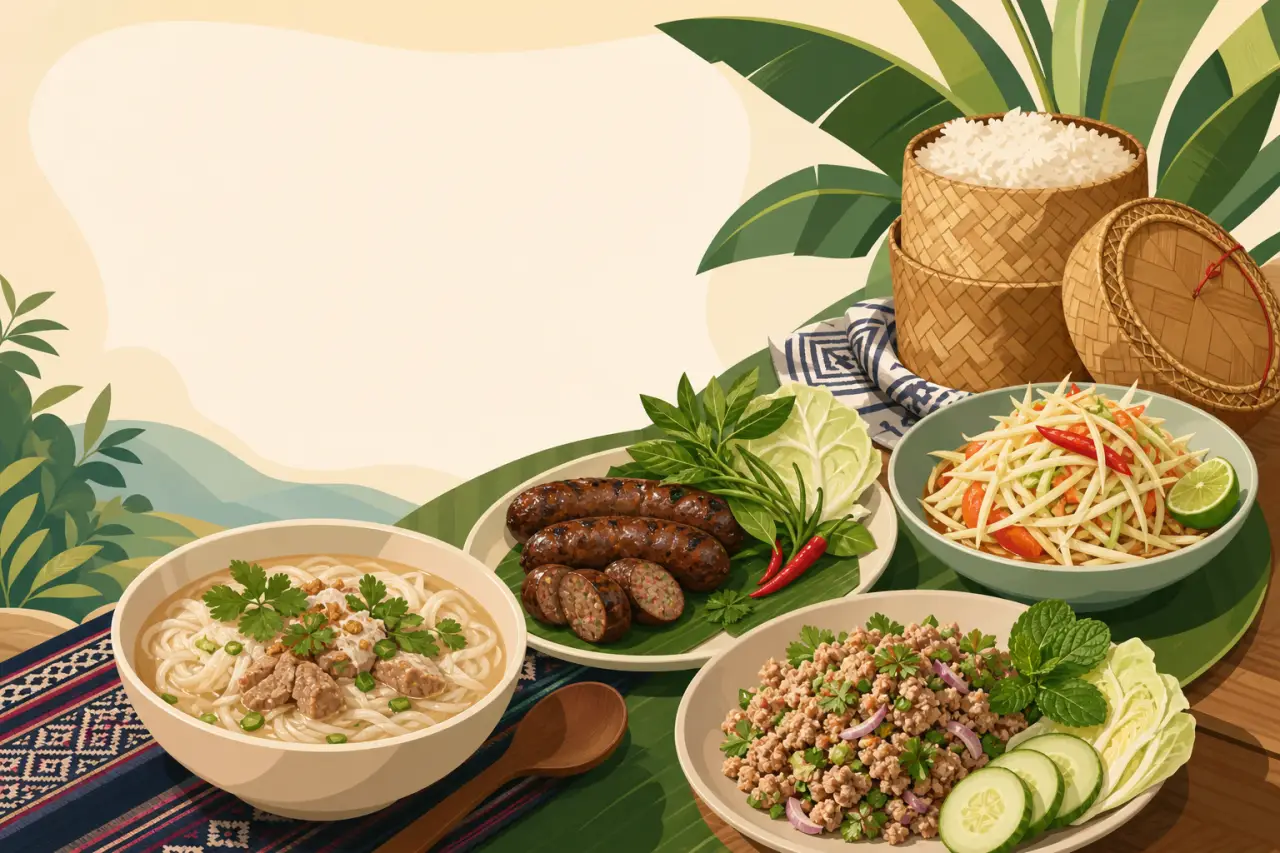
- Sticky rice is the foundation of most meals, served in a woven basket rather than scooped from a rice cooker.
- Herb-forward grilled sausage, often packed with lemongrass and chili, is a safe and satisfying starting point.
- Papaya salad — pounded to order with lime, fish sauce, and fresh chilies — is one of the most iconic dishes, and also one of the spiciest, so it's worth asking for it milder if you're not used to the heat.
- Larb, a minced-meat salad bright with fresh herbs and toasted rice powder, is another dish that shows up at nearly every stand and festival booth.
Don't skip the soups. Khaub poob, a rice noodle soup built on a coconut curry broth, and simpler herb-and-broth chicken soups both lean on the same fresh-herb, citrus-forward flavor that defines the cuisine as a whole. Egg rolls are everywhere and worth trying too, if only because comparing versions from three different vendors is a genuinely fun way to spend an afternoon.
If you're eating with a group, ordering a spread rather than one dish each tends to be the better move — most of these dishes are meant to be shared off a communal plate of sticky rice, not eaten as a single-serving entree. And if someone in your group doesn't eat meat, ask before you order rather than assume there's nothing for them; some vendors keep a vegetable-and-herb version of papaya salad or a tofu option on hand, but it's rarely written on the sign, so it only comes up if you ask.
Reading a Handwritten Sign Without Feeling Lost
Smaller vendors — the ones at farmers markets and festivals especially — often work off a laminated sign or a piece of poster board, sometimes written half in Hmong and half in English, sometimes not in English at all. Don't let that stop you from ordering. Pointing at what someone next to you is eating and asking "can I get that" works just as well here as anywhere else, and most vendors are used to explaining a dish to someone trying it for the first time.
Spice level is worth asking about directly, since the default at many stands runs hotter than most people expect. It's completely normal to ask for something mild, and just as normal to ask for it hotter if that's more your speed. Some stands also sell by weight rather than by the plate — sausage and egg rolls especially — so don't be thrown off if the person taking your order asks how many pounds instead of how many pieces.
If you have a food allergy or a specific ingredient you need to avoid, say so plainly rather than trying to read the sign for it. Fish sauce, shrimp paste, and peanuts show up in dishes where you might not expect them, and a vendor working from memory rather than a printed ingredient list is usually glad to tell you exactly what's in something if you ask directly instead of guessing from the sign alone.
Signs You've Found the Real Thing
A few details tend to separate a vendor who's genuinely cooking traditional food from one that's cutting corners.
- Fresh herbs prepped visibly on site — not poured from a bottle or a jar — is one of the clearest signals.
- So is sticky rice served properly, steamed and held in a basket rather than sitting wet in a metal pan.
- Watch for a family actually working the stand together: someone pounding papaya salad to order, a kid helping bag sausage, an older relative keeping an eye on the grill.
That kind of setup usually means the recipe has been passed down, not looked up.
Cash-only and running out of the most popular items early are both good signs, not red flags — they usually mean the food is made in small batches rather than kept warm under a heat lamp all day. And if you notice a line of other Hmong families waiting at the same stand you're eyeing, that's about as reliable a recommendation as you're going to get without asking someone directly.
Smell is a faster clue than almost anything else. Real papaya salad hits you with lime and fish sauce before you're even close to the table, and sausage grilling over an open flame smells nothing like something reheated from a bag. If a stand smells like very little at all, it's a reasonable guess that whatever's cooking was made somewhere else and just needs warming up — worth trying once, but not necessarily the one to build your whole visit around.
Once You Find a Vendor You Love, Keep Finding Them
The vendors worth coming back to are often the hardest to keep track of, since their location and hours can shift week to week. Following their page is the single most useful thing you can do — that's where the Saturday location, a sold-out notice, or a heads-up about a bigger batch of sausage usually gets posted first. If you're planning for a party or a festival, ask whether they take pre-orders; a lot of home-based vendors will hold food for you if you call or message ahead, which also means you skip the line everyone else is standing in.
Leaving a review, wherever they're listed, genuinely helps — it's often the difference between a vendor showing up in someone else's search and staying invisible to everyone outside the community that already knows them. If they don't have a listing anywhere yet, mentioning a directory built around Hmong-owned businesses is a small thing that can make a real difference for them down the line. And the simplest way to support a vendor you like is still the most effective one: show up again, bring cash, and bring a friend who hasn't tried it yet.
It's also worth asking directly whether a vendor caters. A surprising number of weekend stands and food trucks will put together a full spread for a birthday, graduation, or office event even if catering isn't something they advertise anywhere — it just doesn't come up unless someone asks. That single question is often how a favorite Saturday vendor turns into the person you call every time you're feeding a crowd.
Questions people ask
What's the best way to find Hmong food if it doesn't show up on Google Maps?
Look in community Facebook groups for your local Hmong population, ask at a Hmong-owned grocery store, or check a directory built specifically for Hmong-owned businesses. A lot of Hmong food happens outside storefronts — at farmers markets, food trucks, or from home vendors — so it won't appear in regular search results. Asking around directly in your community usually gets you real answers.
Where should I start if I've never tried Hmong food before?
Begin with sticky rice, served in a woven basket. Then try herb-forward grilled sausage with lemongrass and chili, or papaya salad pounded to order with lime and fish sauce — though ask for it mild if you're not used to spicy food. Larb, a minced-meat salad with fresh herbs, is also worth trying. Most of these dishes are meant to be shared rather than eaten as single servings.
How do I track down a food truck or weekend stand once I find one I like?
Follow their Instagram or Facebook page rather than bookmarking their location — most post where they'll be that morning. Save their phone number too; many will take text orders for pickup even on days they're not publicly set up, and regulars often skip the line this way. Ask in person whether they'll be back the same time next week.
What's the best single day to try lots of different Hmong food vendors?
Hmong New Year season, which runs from late fall into winter, brings dozens of vendors to one location. You can sample sausage from one stand, papaya salad from another, and soup from a third all in one afternoon. Arrive early — popular stands sell out before the event ends. Ask vendors if they also sell elsewhere during the year.
Written by
Hmong Network Team
Directory & Digital Services
We run the Hmong Network directory and do the web design and SEO/AEO work behind the results in our case studies. These guides come out of that same hands-on work with Hmong-owned businesses — not secondhand research.
