
Why Hmong Sausage Tastes Like Home
TL;DR
Hmong sausage carries fresh herbs, a family's own ratio, and years of practice into every link. Here's what actually makes it distinct, how to cook and buy it right, and why a Hmong-owned market is the best place to start.
A Recipe Built on Balance, Not a Formula
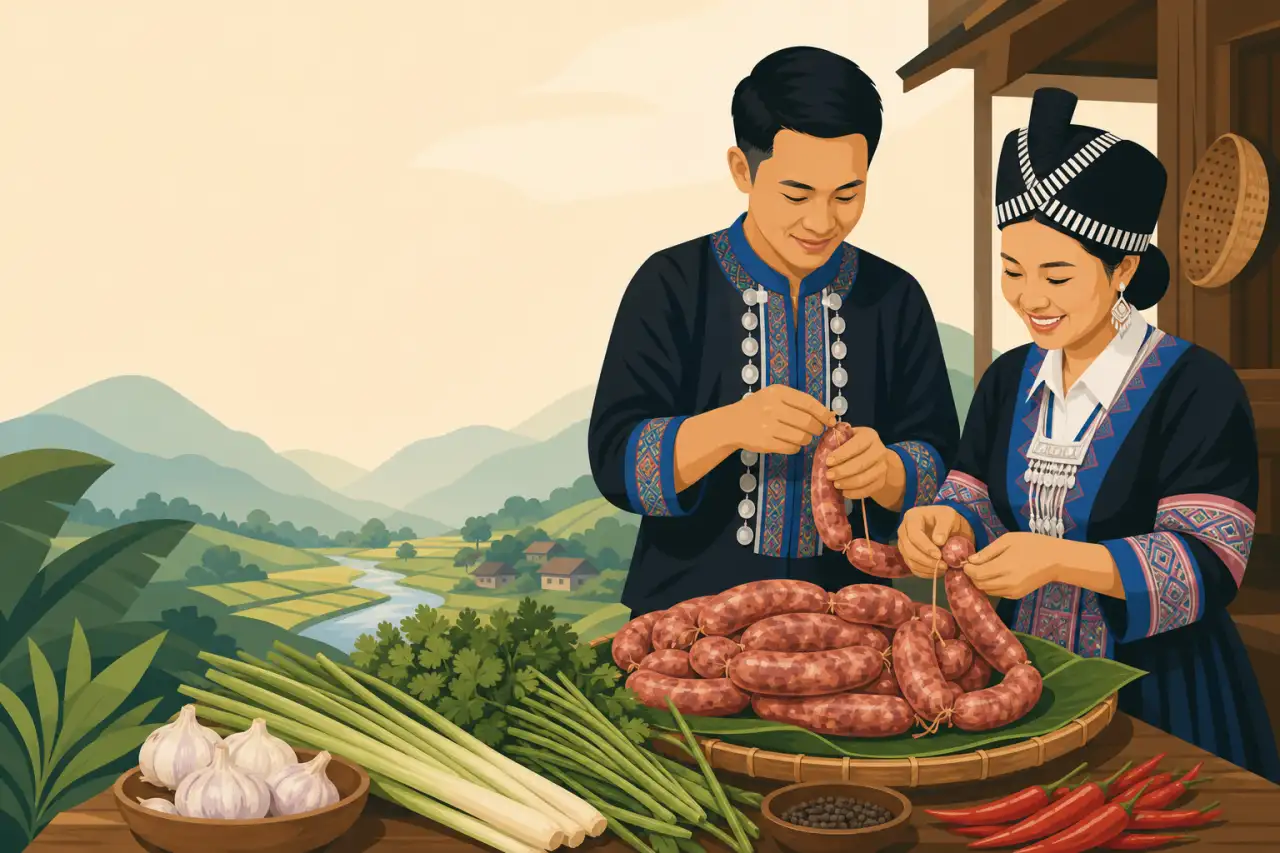
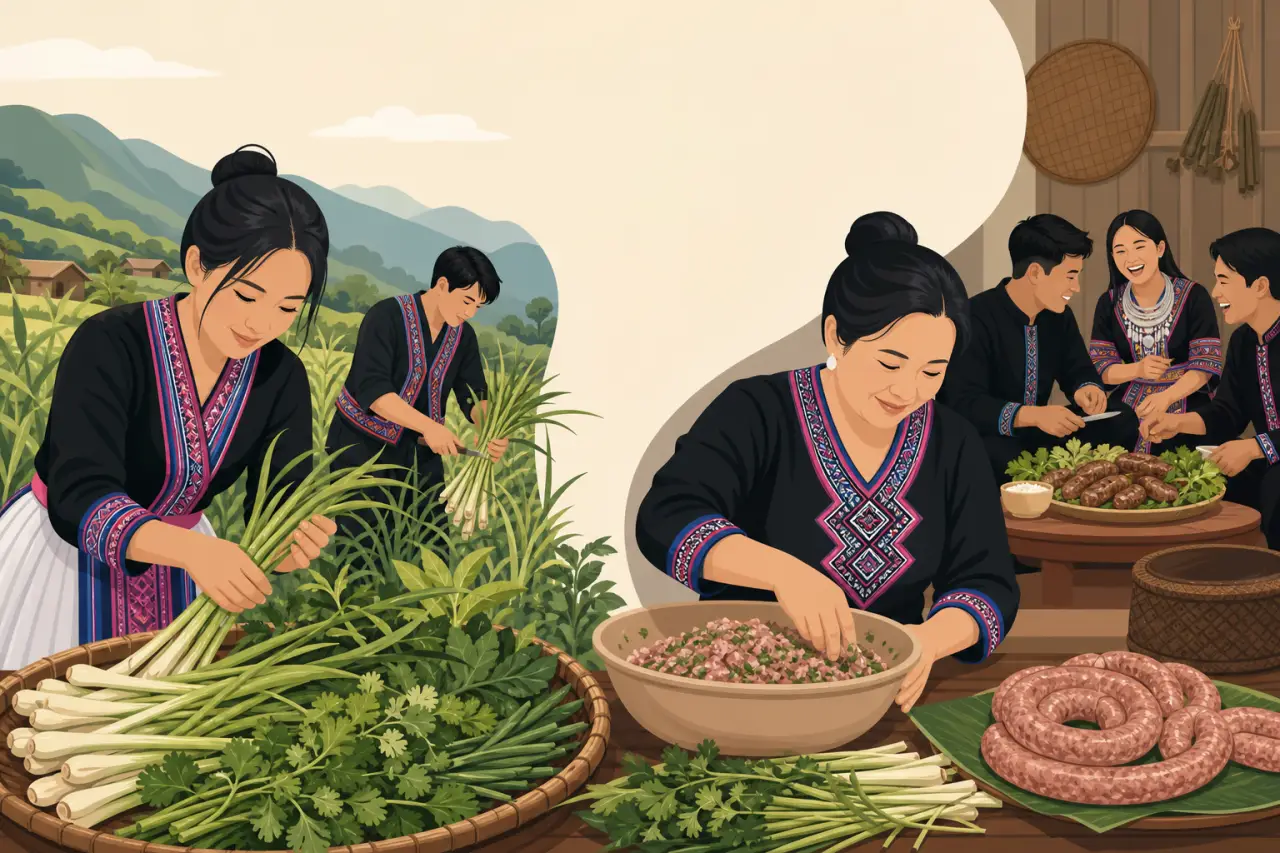
Ground pork forms the base, but what defines Hmong sausage is how much room it leaves for fresh herbs. Lemongrass gets trimmed down to its tender core and minced fine so it disappears into the meat instead of turning stringy. Cilantro and green onion go in by the handful, not the pinch, and fresh chili gets stirred through rather than added as a finishing touch. The result should taste like an herb garden that happens to have pork in it, not the other way around. If you're new to the cuisine altogether, an introduction to Hmong cuisine covers the herbs, rice, and family traditions that shape dishes like this one.
Getting that ratio right is harder than it sounds. Too much lemongrass and the sausage turns bitter and woody; too little and it just tastes like seasoned ground pork. Most home cooks land on their ratio through years of small adjustments, not a written recipe, which is part of why asking someone how they make theirs so often gets you a shrug and "I just know when it's right" instead of a list of measurements.
What Actually Goes Into the Casing
Beyond the core lineup of pork, lemongrass, cilantro, and chili, most recipes lean on a handful of everyday aromatics:
- Garlic
- Shallot or green onion
- A splash of fish sauce or soy sauce, for salt and depth
Some cooks add a spoonful of MSG or bouillon, and there's no shame in either one — it's a seasoning choice, not a shortcut, and plenty of well-loved versions use it. Others skip it entirely and lean harder on the herbs and fish sauce to carry the flavor.
Fat matters more than most first-time cooks expect. Pork that's too lean turns dry and crumbly once it hits the grill; a butcher who trims the fat down to nothing has actually made the sausage worse, not more health-conscious. A good ratio keeps enough fat in the mix that the sausage stays juicy through high heat, which is also part of why store-bought versions trimmed for a wider audience often taste flatter than what you'd get from someone who grew up making it.
The Role of Fresh Chili
The chili itself is worth paying attention to as its own ingredient, not just a heat source. Fresh Thai bird chilies, minced fine, bring a sharper, more floral heat than a dried chili flake would, and they cook down into the meat instead of sitting on top of it. Some cooks seed them to keep the heat manageable for kids and older relatives at the table; others leave the seeds in on purpose because that's the version their family has always made. Neither is more correct than the other — it's a household decision, the same way some families like their sauce sweeter and others like it sharper with lime.
Choosing a Casing
Casing is its own small decision point. Natural hog casing, the traditional choice, usually comes from a butcher counter rather than a regular grocery aisle, and it needs a rinse before use to clear out the salt it's packed in. Families without easy access to it, or without the time to stuff casings by hand, will sometimes shape the mixture into patties or logs and skip the casing step entirely — the flavor holds up fine, even if the presentation and the snap of the bite change. If a market sells it loose or in a tray rather than in links, that's usually why.
Why Fresh-Cut Herbs Change Everything
Most sausage traditions solve the freshness problem by drying, smoking, or curing — techniques built specifically so the product can travel and keep. Hmong sausage does the opposite. It's built around herbs cut that day or the day before, which is why the best versions taste noticeably different depending on the season and even the week. Lemongrass cut in summer, when it's actively growing, has a brighter, more citrusy edge than lemongrass that's been sitting in a refrigerator for two weeks.
This is also why a lot of families who make it don't keep a stockpile — they make what they'll use in the next few days, then make more when the next gathering calls for it. If you're used to sausage as a shelf-stable product, that turnover can be surprising, but it's the entire point. A sausage designed to be eaten within days of being made doesn't need heavy preservatives, and it doesn't pick up the slightly metallic edge that longer-cured meats sometimes carry.
The Grill Matters as Much as the Recipe
Get the seasoning exactly right and you can still ruin Hmong sausage on the grill. Because there's more moisture in the mix from all those fresh herbs, it cooks differently than a drier, spice-cured sausage — it wants steady, moderate heat rather than a screaming-hot flame, or the outside will char before the inside finishes cooking. Many home cooks follow the same basic sequence:
- Start it over medium heat
- Let it firm up
- Move it to a hotter spot at the end just to color the casing
Natural casing, which most traditional versions use, also behaves differently than the synthetic casing on a lot of grocery-store sausage — it's more prone to splitting if it's pierced or moved around too much on the grill, so a light hand with the tongs matters. Done right, you get a casing with a slight char and a little resistance when you bite into it, followed by a juicy, herb-forward interior. Done wrong, you get either a burst casing that's dried out inside or a pale, undercooked one — there's not much middle ground between the two.
A Recipe That Gets Taught by Watching, Not by Writing Down
Ask ten people how they make Hmong sausage and you'll get ten different answers, and most of them won't be able to give you exact measurements. That's not evasiveness — it's how the recipe has actually been passed down. Someone learns by standing next to a parent or grandparent, watching how much lemongrass gets minced, how the herbs get folded in, how the mix gets tasted and adjusted before it goes into the casing. The recipe lives in muscle memory more than in a notebook.
That's part of why the sausage carries so much weight beyond the plate. A particular blend becomes associated with a specific person — an aunt's version runs heavier on chili, a grandmother always used more cilantro than anyone else's family. Losing access to that person can mean losing access to that exact flavor, which is a real reason some families have started writing recipes down or filming a grandparent making it, even informally, just to make sure a specific ratio survives.
Distance has changed how some of that teaching happens, too. For families spread across different states or still connected to relatives overseas, a video call propped up on the kitchen counter has become its own kind of recipe card — someone mincing lemongrass on one end while a grandmother narrates adjustments from the other. It's not the same as standing shoulder to shoulder, but it's kept a few specific family ratios alive that would otherwise have depended on someone flying in for the holidays to relearn it in person.
Where It Shows Up, and Why That Matters
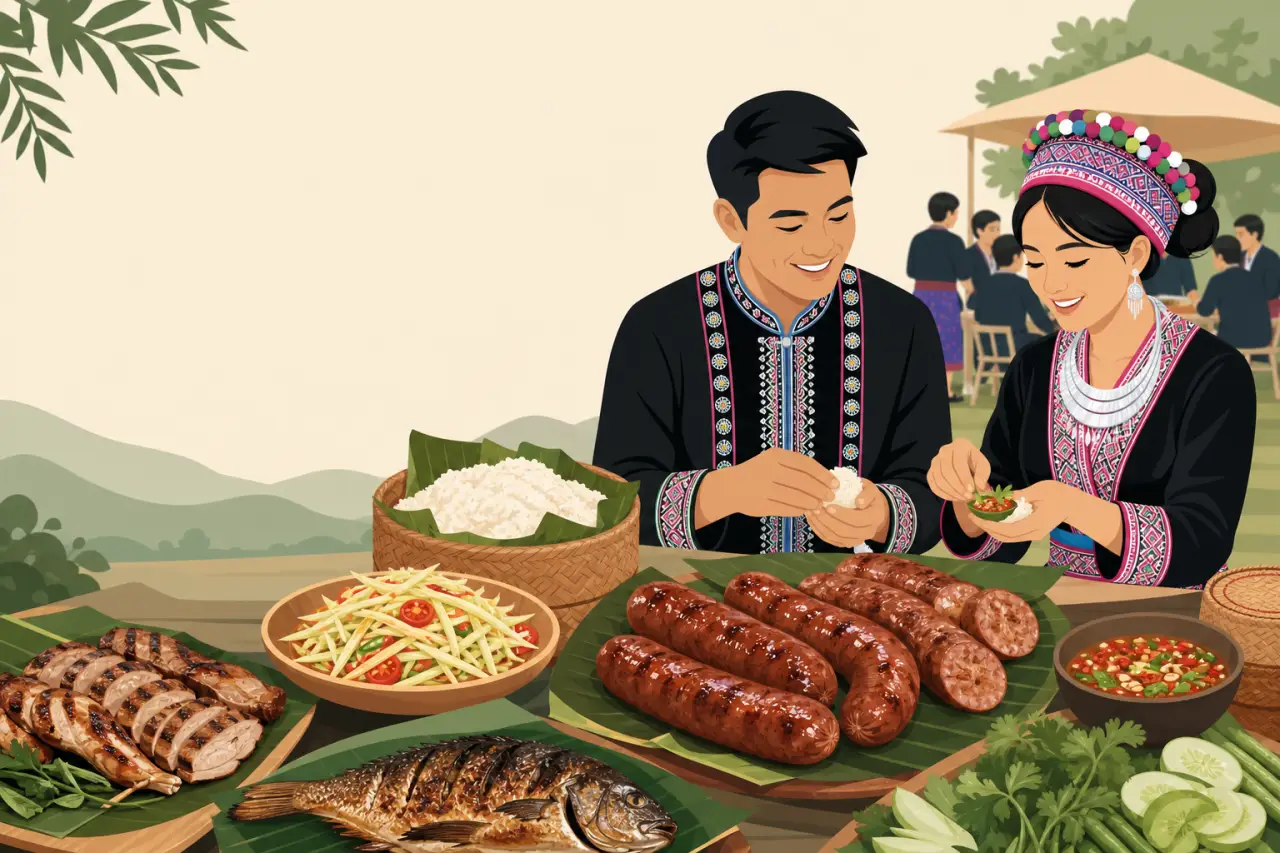
Hmong sausage isn't really a special-occasion food in the sense of something reserved for holidays — you'll see it at New Year celebrations and weddings, but just as often at a regular weekend cookout or a Sunday family dinner. Its role is closer to what a burger is at an American backyard barbecue: familiar, expected, and something everyone has an opinion about. It usually gets served alongside sticky rice and a dipping sauce built around lime juice, chili, and often crushed peanuts or fresh herbs.
The rest of the plate tends to follow a pattern, too. A tangy, shredded green papaya salad shows up often enough to be treated as a default pairing, and grilled meats of other kinds — chicken, beef, or a whole fish — are common table-mates rather than the sausage standing alone. Sticky rice, eaten by hand and used almost like a utensil to scoop everything else up, ties the plate together; it's worth having on hand any time you're serving the sausage, since without it the meal feels noticeably incomplete to anyone who grew up eating it this way.
That everyday presence is exactly why it carries so much emotional weight. It's not a dish people save for rare moments — it's a dish that shows up often enough to become a marker of ordinary family life, which is part of why the smell of it on a grill can be so immediately transporting for someone who grew up around it.
Finding the Real Thing at a Hmong-Owned Market or Restaurant
If you're not part of a family that makes it, the best place to start isn't a big grocery chain — it's a Hmong-owned market or restaurant, ideally one that makes its sausage in-house rather than sourcing it from a large distributor. In-house versions tend to use fresher herbs and a less standardized recipe, which is exactly what makes them good. Staff at these markets are often happy to tell you whether a batch was made that morning or a few days ago, and whether it runs mild or spicy. In the Twin Cities, the Hmong Village marketplace in St. Paul is one of the most concentrated places to find several vendors making it fresh under one roof.
Buying it this way does double duty: you get a better product, and the money goes directly to a small, often family-run business rather than a distributor several steps removed from the person who actually made the food. If you're searching a directory or asking around a community with a Hmong population, look specifically for markets or restaurants that advertise their sausage as house-made — that detail is usually mentioned because it's genuinely a point of pride, not just marketing language. For a broader starting point, finding real Hmong food near you covers markets, food trucks, and festivals beyond just restaurants, and if you're in the upper Midwest, Hmong restaurants in Minnesota is worth a look too.
Bringing It Home: Storing, Reheating, and Serving It Right
Because it's made without heavy preservatives, fresh Hmong sausage doesn't keep as long as a cured, shelf-stable sausage. A few storage basics:
- Refrigerate it and plan to use it within a few days
- Freeze it if you're not cooking it soon — wrap it tightly to protect the herbs from picking up freezer odors
- Thaw it in the refrigerator rather than on the counter
When you're ready to cook it, grilling or pan-searing over moderate heat gets you closest to how it's traditionally made — a hot pan with a little oil works fine if you don't have access to a grill. For leftovers, a quick sear beats the microwave every time, since it brings back some of the char and keeps the casing from turning rubbery.
If you're cooking for someone managing salt or fat intake, or just cooking a smaller batch at home, the recipe adapts more easily than its reputation suggests. Ground chicken or turkey can stand in for pork, though it needs a little added fat or oil worked in to avoid drying out on the grill, since it has almost none of its own. Cutting back the salt and leaning harder on lime juice and fresh chili in the dipping sauce can make up a lot of that difference without flattening the flavor. None of these are the traditional version, but they're reasonable adjustments plenty of home cooks already make.
Serve it the way most families do: with sticky rice, a bright dipping sauce, and whatever vegetables are on hand. It's built to be shared straight off the grill, not plated formally, so don't overthink the presentation.
Questions people ask
What makes Hmong sausage taste different from other kinds of sausage?
Hmong sausage is built around fresh herbs—lemongrass, cilantro, green onion, and fresh chili—added by the handful rather than the pinch. The herbs should dominate the flavor, so it tastes like an herb garden that happens to have pork in it. Most versions skip heavy preservatives and are made to be eaten within days, which keeps the herbs bright and the flavor noticeably fresher than cured, shelf-stable sausages.
How do you know when Hmong sausage is cooked right on the grill?
Start it over medium heat to let it firm up, then move it to a hotter spot at the end just to color the casing. Because fresh herbs add moisture, it needs steady, moderate heat—a screaming flame will char the outside before the inside cooks through. Done right, you get a casing with a slight char and a little resistance when you bite, followed by a juicy, herb-forward interior.
How long does fresh Hmong sausage last in the fridge?
Plan to use it within a few days of buying or making it. Since it's made without heavy preservatives, it doesn't keep as long as a cured sausage. If you're not cooking it soon, wrap it tightly and freeze it to protect the herbs from freezer odors. Thaw it in the refrigerator rather than on the counter.
Where's the best place to buy real Hmong sausage?
A Hmong-owned market or restaurant that makes sausage in-house is your best bet. In-house versions use fresher herbs and less standardized recipes, which is what makes them good. Staff can tell you whether a batch was made that morning or a few days ago, and whether it runs mild or spicy. Look specifically for markets advertising sausage as house-made.
Written by
Hmong Network Team
Directory & Digital Services
We run the Hmong Network directory and do the web design and SEO/AEO work behind the results in our case studies. These guides come out of that same hands-on work with Hmong-owned businesses — not secondhand research.
